truesee's Blog

Stephen Colbert vs. Arianna Huffington: what their spat is really about

Stephen Colbert vs. Arianna Huffington: what their spat is really about

The dispute bubbled up earlier this week when Stephen Colbert complained about The Huffington Post embedding his videos without sending proper payment.

 Add This Twitter Digg StumbleUpon Reddit Facebook

Gloria Goodale

Staff writer

February 18, 2011


Stephen Colbert and Arianna Huffington are grown-ups, right? Yeah, well, in a channeling-their-inner-digital-child sort of way. 

The two are in the midst of an electronic sandbox spat over who is poaching whose online content without properly paying up. Each is one-upping the other with cute moves and fancy talk.

But Mr. Colbert, the Comedy Central host, is never clowning about an issue without something else on his mind, longtime satire experts point out. So, what the heck is going on as these two masters of Internet self-promotion continue to lob cyber sand at one another?

The feud bubbled up earlier this week when Colbert complained about The Huffington Post, Ms. Huffingtons website, embedding his videos on the site without sending along proper payment. I have yet to receive my percentage of the Huff bucks, he complained to his studio audience.

Colbert then posted The Huffington Post on a new website he dubbed The Colbuffington Re-post. Ms. Huffington returned the favor with a newly christened site, Huffbert Nation.

Now, Colbert is cautioning his audience against clicking on the reposted repost, saying, Its like a Russian nesting doll of intellectual theft.

It may be tempting to call for a tired-baby timeout. But all Comedy Central has to do to resolve the issue is deny permission, points out intellectual-property lawyer Mitchell Stein, a partner at Sullivan & Worcester in New York. The Huffington Post cant embed video from any site if that site doesnt give permission, he says.

Assuming that permission is actually being granted in this case, whats the real beef?

This is really about Colbert raising the issue of what original content really means in todays Internet-savvy world, says Amber Day, author of the just-published book, Satire and Dissent: Interventions in Contemporary Political Debate.

Colbert is also drawing attention to the opposite of original content  the websites (including The Huffington Post) that aggregate content produced by other websites. By raising this issue, says Ms. Day, Colbert is pushing his agenda of getting people to think about where their opinions and ideas really originate.

This is his way, she says, of asking the question: If everyone is just quoting everyone else, who is actually doing original thought?

This question lies at the heart of the Internets next big evolutionary stage, says social-media expert and tech entrepreneur Michael Hussey, CEO of PeekYou.com. The goal of using other websites content, he says, is to maximize the position of ones own website in the search-engine listings. This is a commonly used technique known as search engine optimization and can boost ad revenues online.

Other peoples content is a huge attention-grabber for a content-aggregating website such as The Huffington Post. They are masters of the tool, Mr. Hussey points out. This is a main reason, he adds, that AOL recently scooped up the six-year-old site for $315 million and made Ms. Huffington the head of all AOL content.

But Google, the largest Internet search engine, has been under pressure to cut back on search results that dont point to the original sources, Hussey says. If Google begins to de-emphasize sites that are based on aggregating other peoples content, he adds, this could be a game-changer for sites such as The Huffington Post.

All those people who just bought stock in AOL better pay attention, he says.

But if an everyone is doing it ethos governs much of what is aggregated on the Internet, there are still lines between what is legal and illegal, points out media expert Paul Levinson, author of New New Media. We may be in a fluid stage in our concept of intellectual-property rights, but that doesnt mean you can simply profit from the work of others with no limits, he says.

Entry #3,960

'Black Thanksgiving' commences in L.A. this weekend

'Black Thanksgiving' commences in L.A. this weekend


David Aldridge,

Special to CNN

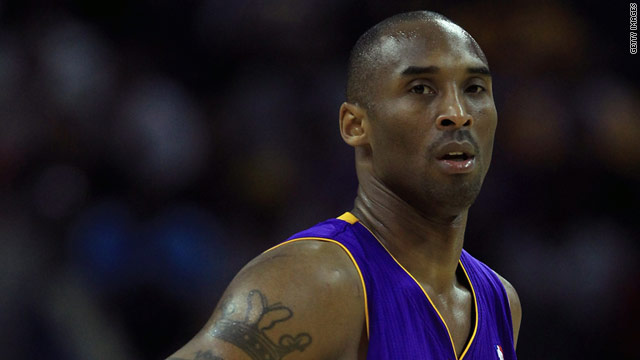
February 18, 2011 2:21 p.m. ESTBasketball fans flock to All-Star weekend events to see players like Kobe Bryant up close.

Basketball fans flock to All-Star weekend events to see players like Kobe Bryant up close.

STORY HIGHLIGHTS
  • Writer refers to NBA All-Star Weekend as 'Black Thanksgiving'
  • Basketball is a culture, and this weekend has become a celebration
  • NBA All-Star Weekend is considered one of the hottest tickets in the sports world

David Aldridge is a longtime NBA reporter and columnist for NBA.com. He also is an analyst for TNT.

(CNN) -- So, you want to know about Black Thanksgiving?

That's what sports writer Mike Wilbon calls NBA All-Star Weekend.

First of all, what you need to know about Wilbon, whom I love, is that he has been known to exaggerate just a touch on occasion. But on this one, he's on point.

For those of us who cover the NBA for a living, like me and Wilbon -- now an ESPN yakker and writer, formerly a Washington Post yakker and writer, and my friend --All-Star Weekend is a long four days of work.

But for most of the people who descend into town -- this year it's Los Angeles, with its still sparkling Staples Center and the surrounding "L.A. Live" area -- it's an opportunity to go wild (sometimes a little too wild, as happened in Las Vegas a few years ago) and get together.

Other folks have Tweetups. Black people have All-Star Weekend, or ASW. It's a national holiday, sort of.

ASW is the only time of the year that people call me. I don't say that to be maudlin, 'cause most of the time, I don't want people to call me. (Dirty little secret: I don't really like talking on the phone.) But they come out of the woodwork this time of year, because NBA players are royalty in Black America, and everyone wants to be near them. The old saying is that ballers want to be rappers, and rappers want to be ballers. That's really, really true.

Basketball is a culture. It isn't for everyone, though the game is loved by people of all colors. There is a rhythm to it, just as if McCoy Tyner was dribbling a ball instead of playing piano.

"Considering that the culture of basketball in a predominantly black league like the NBA is so strongly connected to African American culture, the NBA All-Star weekend has turned into a celebration of African American culture by extension," says Todd Boyd, professor of critical studies at the University of Southern California School of Cinematic Arts.

The season begins just as baseball's ends, when the days grow short and the weather turns windy and cold. The tempo is slow at first, like the beginning strains of John Coltrane's "A Love Supreme," but then, just as with Coltrane, it picks up steam. Rookies like the Clippers' Blake Griffin find their voice, and their game blossoms, as the calendar turns to a new year. While older, wiser veteran players and teams tinker here and there, not much interested in the daily standings, knowing that the important games come in the spring. They can wait.

The NBA Twitterverse keeps track of it all, a nightly update on who's up, who's down. It's a community that needs no self-adulation, no monstrous celebration of itself, like the NFL and its Super Bowl, which is fine if you like naked commerce wrapped in patriotism.

ASW is an integral part of the calendar, a time for assessment. Coming less than a week before the NBA's trade deadline, it is a time when teams take a look at their roster and decide whether its good enough to be a contender, or if it's time to start rebuilding for next season.

Basketball is a culture... There is a rhythm to it, just as if McCoy Tyner was dribbling a ball instead of playing piano.

Sure, new shoes from stars like Kobe Bryant are launched during ASW, and the street vendors try to make a buck selling knockoff Ts. But more than anything, ASW is about access. Because basketball players in general -- and NBA players in particular -- are so visible to their fans, there is a sense of closeness to them that people don't have toward football stars. In football, you root for the uniform. In basketball, you root for Kobe or LeBron James. And so, having the opportunity to be close to them in a social setting trumps all good common sense and proportion.

People will drive for eight hours, fly across the country, take a stagecoach, whatever it takes. Most people who come to ASW, you see, have no tickets for anything. They certainly have no tickets for the game or the dunk contest or three-point shooting contest. (The NBA doles out most of the seats to their corporate partners and those partners' families and friends).

The hope is to get into the numerous, almost unending parties that promulgate the weekend. They're like our solar system. The parties furthest from the orbit of actual NBA players are usually the cheapest and easiest to get into, no more difficult than a garden variety Friday night at your local hip-hop spot.

Then there are parties "sponsored" or "hosted" by an All-Star (Allen Iverson was famous for these), where there's a chance the actual player will show up at some point. If they do, it's usually late in the evening, after they've gone to the more swank parties. They're almost always surrounded by security and quickly wind up in the VIP section, walled off from their adoring fans. (Although, truth be told, occasionally a young, attractive woman may, somehow, be let inside the velvet ropes.)

Then there are parties that the All-Stars actually sponsor, usually for a charity or some such cause, such as Magic Johnson and Alonzo Mourning's celebrity pool tournament. The "Players' Party," sponsored by its union, is the most sought-after ticket of ASW. The few tickets and passes to these events go out quickly and quietly to assorted friends, sponsors, media (yes, I get invited to a few) and fellow ballers. Unless you have an "in," these are very difficult to get into. Which is why people call. I try not to have tickets on purpose for this very reason; somehow, word always leaks out when you have an extra pair, and you suddenly become the most interesting man in the world.

But it really doesn't matter to a lot of folks if they get into any of these events. The important thing is being there -- with your best girlfriend, or the fellas, or your frat. There may be some people who try to take advantage of all the money and the bling that come to town. But that's not the vibe that runs through ASW. It's a party, to be sure. But it also is a family portrait.

"Baseball's Negro League All-Star Game was once the biggest national black social event of the year." Boyd of USC said. "It seems that the NBA All-Star Game serves a similar purpose now, but on a much bigger platform."

Warts and all, it celebrates the extended community --the incredible athletic, improvisational ability of the NBA's best players; the incredible economic power of those stars, the sway they hold over the media and corporate America, a reality that would not have been thinkable 40 years ago.


UPDATE


CNN 'Black Thanksgiving' NBA Article Stirs Controversy

First Posted: 02-18-11 04:35 PM   |   Updated: 02-18-11 04:41 PM  Huffington Post

CNN is stirring controversy with an article that calls the upcoming NBA All-Star Game "Black Thanksgiving."

The article, by longtime NBA analyst David Aldridge, calls All Star Weekend a "national holiday" for African Americans, and quotes USC professor Todd Boyd as saying that "the NBA All-Star weekend has turned into a celebration of African American culture by extension."

The article also ran in the middle of the front page of CNN's home page.  But some of the hundreds of commenters who flooded the story were not happy. "Shame on you CNN for perpetuating the racism in America...and for what, to get readers? Are you that desperate?" commenter yippidy wrote.

"You managed to include every Black stereotype known to the Western world in this article," rockhanna said.

The article drew a big response on Twitter as well.

Entry #3,958

Why Michael Vick Cancelled His Appearance on Oprah

Were His Dogs' New Owners or PETA Behind Michael Vick's Oprah Audible?

Hollie McKay

February 18, 2011| FoxNews.com


     Michael Vick will appear on Oprah's show

Michael Vick will appear on Oprah's show

What caused Michael Vick to get cold feet and pull out of his Oprah interview?

Oprah Winfrey said Thursday that Vick canceled an interview with her scheduled for next week.

"He said personal reasons," Winfrey told The Hollywood Reporter. "We did a field trip with him. We had been shooting with Michael Vick. And the fact that he pulled out and all his peopleWe move on."

Could those "personal reasons" have something to do with the people who now own and care for the dogs he abused?

Some owners of dogs rescued from his dogfighting ring said he pulled out of the interview because he did not want to be confronted by them on TV, the New York Post reports. 

Vick, who served 21 months in prison before resurrecting his NFL career with the Eagles, pulled out of a rare TV interview after the dog owners contacted Winfrey's producers asking for the chance to confront him on "Oprah," one claims.

"One of the adopters was contacted by one of Oprah's producers Tuesday night, who said there was preliminary interest in doing something with the dogs," said Richard Hunter, a Dallas radio personality who adopted one of the dogs. "Then, that same night, Vick's rep told Oprah's producers he was backing out [of the interview]. It would certainly be a coincidence if one didn't have something to do with the other."

FOX411s Pop Tarts also learned that after being informed of the planned interview, the People for the Ethical Treatment of Animals (PETA) sent a letter to Oprah to express their concerns that Vick may win her over with his tricks.

Oprah was our Person of the Year in 2009 for championing the causes against factory farming and fur. However, PETA President Ingrid Newkirk, who met privately with Michael Vick, wrote to Oprah with a concern over her upcoming interview, a representation from the animal rights organization said. We wanted to make sure that Oprah does not fall for the trick that Vick tried on PETA, saying that, to him, pet dogs were different from the avatars used in his fighting pit.

Although the NFL star told Newkirk when they met that he viewed his pet differently, a U.S Department of Agriculture (USDA) report on his dog fighting activities revealed that he even threw his own family dogs into the fighting pit to be torn to shreds while he laughed.

"Just as convicted pedophiles aren't allowed free access to children, anyone who is responsible for hanging, electrocuting, or shooting dogs and who got a rush out of killing them, as he admitted and his friends confirmed, and who caused them to suffer in other horrific ways, should never again be allowed access to dogs, Newkirk wrote in the letter to Winfrey. 

Since going to jail for the dogfighting ring, Vick has been working with the Humane Societys anti-dog fighting program, and the organization argues he should be able to own a canine once again.

It is too soon for Michael Vick to have a dog. Pet-keeping is a privilege and he lost that privilege when he committed atrocious acts of cruelty in the months and years before his arrest in 2007, The Humane Society of the United States' President and CEO Wayne Pacelle wrote in a recent http://hsus.typepad.com/wayne/2010/12/michael-vick-pet.html blog. I do think that if his rehabilitation progresses and he handles the probation period flawlessly, it could be a good thing for Michael Vicks family to have a pet at the end of that process."

- Deidre Behar contributed to this report

Entry #3,957

4 Inch Dagger Discovered in Man's Head

4 Inch Dagger Discovered in Man's Head

X-rays of man with 4 inch dagger in head

X-rays of man with 4 inch dagger in head

KTLA News 12:19 p.m. PST, February 17, 2011

 
CHINA -- Doctors in China have solved a mystery that had been plaguing a man for years, They discovered a 4 inch dagger in the man's head that had been lodged there for four years.

Mr. Ni told doctors that he had been suffering from a severe headache but was unable to figure out why.

After a careful examination, doctors discovered a metal substance in his head that turned out to be a knife.

"We checked his mouth, but no wound or scar has been found. It is very strange as to how the blade got into his head," said Xu Wen, deputy director of the stomatology department of the People's Hospital in Yuxi city.

Mr. Ni was stabbed in the lower right jaw when fighting with a robber four years ago, according to officials. After the attack, he began to suffer from frequent headaches, bleeding in his mouth and had difficulty swallowing food. His voice also became hoarse and spoke gibberish. He had been to the hospital several times but no one could find out what was causing the symptoms.

"As time goes on, I used injections to kill pains in head and ears. It is now already four years," Mr. Ni told doctors.

The rusty blade did not touch the brain artery nor did it affect important facial nerves, doctors said. That's what kept him alive.

He is now recuperating at the hospital and is expected to survive
Entry #3,954

Judges Putting Forensic Evidence Under the Microscope

Forensics Under the Microscope

More courts are starting to question the facts proved by scientific evidence.


Beth Schwartzapfel

Newsweek

February 17, 2011 

Warren Horinek did not murder his wife.  Thats what he said, thats what the medical examiner said, thats what the homicide sergeant said.   Even the district attorneys office in the Horineks hometown of Ft. Worth, Texas, agreed that he was innocentnot something a Texas prosecutor typically says.  But when Bonnie Horinek died in 1995, her parents refused to believe what the evidence strongly suggestedthat Bonnie shot herselfand instead they enlisted the services of a blood-spatter analyst to prove that it was their son-in-law who had killed their daughter.

The spatter analyst zeroed in on the blood-soaked T shirt Horinek was wearing when the paramedics arrived.  To him, the fine spray of blood on Horineks left shoulder was not from administering CPR, as Warren said it was, and as the 911 recording seemed to indicate, but from shooting Bonnie at close range.  On the basis of that testimony, Horinek was convicted of murder and sentenced to 30 years.  But did they really get their man?  Horineks lawyers have filed a writ of habeas corpus to try to have him released, based in part on the National Academys report; much of the spatter analysts testimony, the lawyers argue, was contrary to known and accepted science.

In the age of CSI and Dexter, were led to believe that forensic science is a high-tech discipline, powerful and sophisticated enough to catch any criminal.

As it turns out, whether blood-spatter analysis and disciplines like it qualify as science at all is a matter of increasing debate.  In a sharply critical report issued in 2009, the National Academy of Sciences said, The simple reality is that the interpretation of forensic evidence is not always based on scientific studies.  Taking aim at disciplines as varied as ballistics, hair and fiber analysis, bite-mark comparisoneven fingerprintsthe report declared, This is a serious problem.

The last few years have seemed to bear out the report.  Dozens of elite crime labs all over the country, from Nassau County, N.Y., to San Francisco, to Virginia, Cleveland, Oklahoma, and Baltimore, have been involved in scandals involving mishandled evidence and false or misleading forensic testimony.  This past summer, a North Carolina attorney generals audit discovered that the states Bureau of Investigation had withheld or distorted evidence in more than 200 cases.

Even some of the best funded and most sophisticated crime-fighting organizations are being taken to task for their use of forensic evidence.  This week, the New York Times reported that the Federal Buerau of Investigation had overstated the strenght of genetic analysis during the investigation of Bruce E. Ivins, who allegedly mailed anthrax to newsrooms and Senate offices in the wake of the 9/11 attacks.

A year-long investigation by the independent journalism nonprofit ProPublica revealed major problems in the nations coroner system: pathologists not certified in pathology, physicians who flunk their board exams, even coroners who are not physicians at all.  In nearly 1,600 counties across the country, the investigation found, elected or appointed coroners who may have no qualifications beyond a high-school degree have the final say on whether fatalities are homicides, suicides, accidents or the result of natural or undetermined causes.

For his forthcoming book, Convicting the Innocent: Where Criminal Prosecutions Go Wrong (Harvard University Press, April 2011), University of Virginia law professor Brandon Garrett examined the trial transcripts and other legal documents of the first 250 people to be exonerated by DNA in this country.   He discovered that in more than half these cases, trials were tainted by invalid, unreliable, concealed, or erroneous forensic evidence.  The errors ranged from analysts making up statistics on the fly, implying that their methods were more scientific than they actually were, and exaggerating or distorting their findings to support the prosecution.

Peter Neufeld, a lawyer in New York and cofounder of the Innocence Project, which has helped to facilitate many of these exonerations, calls it the elastic expert: no matter what you see, I can distort it so that it would be a match.

This elasticity is possible because the tests are largely subjective.  Just how much human judgment is required depends on the discipline: DNA testing is mostlythough not entirelydone by machine, for instance, whereas microscopic hair comparison is based solely on the analysts opinion.  Even fingerprints, which many of us regard as foolproof tools for identifying culpritsthink Dexter feeding a print into his computer and a bad guys photo and drivers license appearing on the screenin fact rely largely on human interpretation, and therefore are subject to human error.

One of the most famous examples of the danger of fingerprints was the case of Oregon lawyer Brandon Mayfield, arrested in 2004 in the wake of the Madrid train bombings.  Working from a partial print that Spanish authorities had found on a plastic bag of detonators, several top FBI analysts declared Mayfields print a match.  That is, until Spanish authorities identified Ouhnane Daoud, now wanted for terrorism in connection to the crime.  When it became clear that Daouds prints were a much better match, the FBI was forced to admit that its own bias and circular reasoning had led them to Mayfield, who had no involvement in the bombings.

Part of the problem is what social scientists call context bias.  Most forensics labs are located within police departments, so analysts may see themselves as working for the prosecution.  They also usually have information about the evidence theyre testingfor example, that the suspect has a prior record. Theres a lot of research to suggest that knowledge could have biasing effect, says Jennifer Mnookin, a professor at the UCLA School of Law.

In a recent Supreme Court case, Justice Antonin Scalia, writing for the majority, said that whether consciously or not, an analyst responding to a request from a law enforcement official may feel pressureor have an incentiveto alter the evidence in a manner favorable to the prosecution.  The judges ruling means that forensic test results may be subject to the same kind of scrutiny as any other evidence, and an analyst from the lab that ran the test must be present in court to be cross-examined, just like any other witness.

Obviously, most people in this community are trying to do their jobs well and are not trying to frame innocent people, says the University of Virginias Garrett.  But what weve seen come out of these exoneration cases and in additional scandals at the laboratories is that this is not a problem of a few bad apples.  Who is the competent analyst that can testify about a technique thats fundamentally unreliable?  Thats not a bad-apple problem.  Thats a serious problem with our entire system.

At the heart of these criticisms is the issue of what scientists call validity and reliability.  A test is valid if its results are factually accurate.  A test is reliable if multiple tests will lead to the same conclusion.  Some forensics tests, like blood typing, are very reliable: no matter how many times your doctor draws your blood, you will always have the same blood type.  Occasionally there are mistakes, of course, but they are predictable: blood-typing tests have well-documented and well-understood error rates.  Others, like hair comparison, are unreliable: studies have shown that multiple technicians examining the same two hairseven the same technician examining the same two hairs at different timescome to multiple conclusions.  Critics say that many of forensic sciences most basic tools are neither reliable nor valid.

For example, at the trial of Jimmy Ray Bromgard, who served more than 14 years of a 40-year sentence for sexual intercourse without consent until he was exonerated in 2002, the director of the Montana State Crime Lab told the jury that hairs found on a blanket in the victims house matched hairs taken from Bromgards body.  There were so many hairs that matched so well, the analyst said, that there was a one in 10,000 chance the hairs could have come from anyone else.

But no one has ever established any statistics about the microscopic characteristics of hair, so one in 10,000 odds isnt based on scientific consensus.  How common is it for a person to have a particular hair color, or for a hair to crinkle or curl just so?  Scientists have never answered that question systematically. And what does match mean, anyway?  There are no uniform guidelines to say how many characteristics two hairs must have in common before theyre said to match.  It varies entirely from one lab to the next, from one technician to the next.

Barry Fisher, who served as the crime-laboratory director for the Los Angeles Sheriffs Department for more than 20 years, was often stymied by this problem when he took the stand.  How do you convey the level of certainty?  Fisher asks.  Do you say to the jury, Im pretty sure?  Im very sure?  What do these things mean?

To get around this problem, Garrett found, forensics experts too often overreach in their testimony.

When Ray Krone was convicted of murder in Arizona and sentenced to death in 1995, the testimony of a bite-mark analyst was key to the states case.  This is really an excellent match, the analyst said on the stand, comparing Krones teeth with a bite mark on the murder victim.  That tooth caused that injury.

In fact, in its report the National Academy of Sciences found that, among all the forensic disciplines, only DNA has proved capable of individualizationthat is, demonstrating a connection between evidence and a specific individual or source. When the DNA in the Krone case was tested year later, he was exonerated, but only after spending a decade in prison.

The report has led a small but growing number of judges to take a more skeptical approach to forensics. In addition to the Supreme Court case, Melendez-Diaz v. Massachusetts, U.S. District Court Judge Nancy Gertner announced in March that she will allow forensic evidence in her courtroom only if a lawyer first proves in a pretrial hearing that the method is scientifically sound.  In the past, the admissibility of this kind of evidence was effectively presumed, largely because of  the fact that it had been admitted for decades, Judge Gertner wrote in her order.  The NAS report suggests a different calculus.

The National Institute of Justice has funded some preliminary studies to establish the scientific information that has so far been missing;   UCLAs Mnookin and her colleagues are less than a year into a two-and-a-half-year grant to develop a more formalized and scientifically validated approach to fingerprint analysis.  Its not that we know that they dont work, Mnookin says of fingerprints and other forensic methods.  Its that we dont have enough evidence about when they work, how they work, when they might not work.  The report also led to a series of Senate Judiciary Committee hearings. In January Senator Patrick Leahy (D-Vt. introduced a bill to address some of the major issues in the nations forensic system.  The The Criminal Justice and Forensic Science Reform Act takes up many of the issues identified in the NAS report.  Although the report has gotten a chilly reception from many forensics experts and prosecutors, many others in the field, like Fisher, believe reforms in the system are long overdue.

Geoffrey Mearns, a former federal prosecutor who helped try both Oklahoma City bombers Terry Nichols and Timothy McVeigh, regularly used forensics in his work.  Mearns served on the committee that wrote the academys report. I had assumed that there were well-established uniform processes and procedures in place.  I really had faith in the accuracy, reliability, and that it was well grounded in science, says Mearns, now provost and senior vice president for academic affairs at Cleveland State University.  When I realized my faith was not well placed, I was very concerned about the damage that it was doing to the accuracy and efficiency of law-enforcement investigations.  Because if the science is not accurate, and is leading us to the wrong person, its not only causing a terrible injury to the wrong person, but its leading you away from the right person.

The 265 innocent people so far exonerated by DNA are lucky.  Among the hundreds, if not thousands of people that the Innocence Projects Peter Neufeld estimates were wrongfully convicted on the basis of faulty forensics, only a small percentage have DNA available to test.  What is their recourse? Neufeld says his organization is counseling attorneys to submit a writ of habeas corpusthe legal systems document of last resorton the basis of newly discovered evidence: the fact that forensic science is not as scientific as it purported to be at the time of trial.  However, given the reluctance of judges to ever set aside convictions with anything less than DNA, says Neufeld, I am not as optimistic as I would like to be despite the fact that theres a matter of fairness.

One of those exonerated after 15 years in prison was Roy Brown.  He was convicted of murder in 1992 and sentenced to 25 years to life, partly on the basis of a bite-mark analyst who said that Browns teeth matched a wound on the victim to a reasonable degree of dental certainty.  The fact that whoever had bitten the victim had six teeth on his upper jawthe wound clearly had six impressionswhereas Roy Brown had only four was inconsistent, the analyst admitted, but explainably so in my opinion.

DNA proved him innocent in 2006.

Beth Schwartzapfel is a Brooklyn freelance journalist with an interest in criminal justice issues.


LINK TO PHOTOS:

http://www.newsweek.com/photo/2011/02/07/faulty-forensics.html

Entry #3,953

Michael Jackson's estate made $310 million since singer's death in 2009

Michael Jackson's estate makes whopping $310 million since singer's drug overdose death in 2009

Nancy Dillon
DAILY NEWS WEST COAST BUREAU CHIEF

Thursday, February 17th 2011, 7:39 PM

Michael Jackson, pictured in 2005, died in June 2009 from a drug overdose.

Mariant/APMichael Jackson, pictured in 2005, died in June 2009 from a drug overdose.

LOS ANGELES - Michael Jackson's estate keeps raking in the cash.

A new accounting of the King of Pop's posthumous empire shows executors have made a whopping $310 million since the singer's death from a drug overdose in June 2009.

The Jackson kingdom, once on the verge of collapse with $400 million owed various creditors, has been able to pay down roughly $159 million in debts and expenses, new documents first obtained by TMZ.com reveal.

The "This Is It" movie has been a huge contributor, grossing more than $261 million worldwide, according to boxofficemojo.com.

And then there are the sizable music and merchandising deals.

The behemoth estate has paid for "substantial improvements" to the famous Jackson family compound in Encino, Calif., and supports Jackson's mother and three kids.

Still, Katherine Jackson has complained publicly that the $7,000 to $8,000 cash allowance she receives each month has not been enough to cover expenses.

Entry #3,952

Boy missing part of his brain baffles Doctors

Boy Without a Cerebellum Baffles Doctors

Feb 12, 2011 ? 1:42 PM

Lisa Holewa


Heather and David Britton want everyone to understand a few things about their giggling, bespectacled 3-year-old son, Chase.

"He's happy. We call him the Little Gremlin. He loves to play tricks on people. He loves to sing. His goal in life is to make people smile," Heather Britton told AOL News.

"He's got so much love around him. We're an extremely happy family. His story is not tragic."

But to an outsider, the Brittons' story might seem heartbreaking.

Another son, Trey, was born 11 weeks early and only expected to live moments. Instead, he died six weeks after his birth in 2008, on the same day he was scheduled to receive a liver transplant. Cleared to get pregnant again, the couple was thrilled when Chase was conceived, Britton said. They were eager to give older son Alex, 13, a sibling.

Chase was also born prematurely, and he was legally blind. When he was 1 year old, doctors did an MRI, expecting to find he had a mild case of cerebral palsy. Instead, they discovered he was completely missing his cerebellum -- the part of the brain that controls motor skills, balance and emotions.

"That's when the doctor called and didn't know what to say to us," Britton said in a telephone interview. "No one had ever seen it before. And then we'd go to the neurologists and they'd say, 'That's impossible.' 'He has the MRI of a vegetable,' one of the doctors said to us."

Chase is not a vegetable, leaving doctors bewildered and experts rethinking what they thought they knew about the human brain.

"There are some very bright, specialized people across the country and in Europe that have put their minds to this dilemma and are continuing to do so, and we haven't come up with an answer," Dr. Adre du Plessis, chief of Fetal and Transitional Medicine at Children's National Medical Center in Washington, D.C., told Fox News affiliate WGRZ.

"So it is a mystery."

Chase also is missing his pons, the part of the brain stem that controls basic functions, such as sleeping and breathing. There is only fluid where the cerebellum and pons should be, Britton said.

Britton's pregnancy was complicated, so doctors closely monitored her. Deepening the mystery, she has detailed ultrasound pictures of Chase's brain during various stages of fetal development and the images clearly show he once had a cerebellum.

"That is actually a fundamental part of the dilemma," du Plessis told WGRZ. "If there was a cerebellum, what happened to it?"

Doctors found no signs of a brain bleed, hemorrhage or stroke, and no damage to any other part of his brain, Britton said. Technically, his diagnosis is cerebellar hypoplasia, which normally means a small cerebellum rather than a missing one.

Chase's case, du Plessis said, challenges "fundamental principles." And its impact is certain to reach far beyond one little boy and his family.

"It is cases like this that rally the support of the medical community, that harness the interest of other investigators, that stimulate people to try and find solutions," he told WGRZ, "and those repercussions will have an impact on a much broader population of kids."

But what the Brittons know is this: Chase eventually managed to sit up on his own, something he shouldn't have been able to do without a cerebellum to provide balance. Next he learned to crawl, first dragging himself military-style, then pushing himself upright. Now, he's learning to walk.

"He keeps going," his mom said. "He keeps picking up new things and progressing. We call it, 'Chase pace.'"

In the fall, Chase started going to a specialized preschool near his New York home three days a week.

"I'm in awe of him every day," Sharon Schultz, his teacher at CHC Learning Center in Williamsville, N.Y., told WGRZ.

"Things that, based on that diagnosis, he should not be able to do, he is doing. I mean, walking up and down the hall, riding a bike, holding a pencil or a pen to work on projects, using scissors."
Sponsored Links
Chase also loves to play on his Ipad with doting brother Alex. A team of therapists has been working with him since he was an infant, and he has a special "sensory room" at home full of lights and sounds and tactile things -- like mirrors -- to visually motivate him, Britton said. Soon, she hopes he can begin horseback-riding therapy.

"We're throwing as much at him as possible to make sure he's as stimulated as possible," she explained.

Her message, she said, is simple: "Don't give up on your kids."

"Don't believe everything the doctors say. Don't get me wrong. I love doctors. But they can be wrong. ... Chase is extremely healthy. And he's extremely smart -- his motor skills just haven't caught up," she told AOL News.

"People could view this as a tragic story. But that depends on how you look at life. You can be angry or you can appreciate what you have been given," she said.

"Chase was meant to be with us."

LINK TO VIDEO:

http://www.www.wgrz.com/video/default.aspx?bctid=785198266001

Entry #3,950

Girl born with 12 fingers and 14 toes

With 12 fingers, 14 toes, girl from Myanmar reaches for a world record

Sixteen-month-old Lei Yadi Min plays on a chair at her house in South Okkalarpa township on the outskirts of Yangon, Myanmar, on Tuesday, Feb. 15, 2011. The Myanmar girl was born with six fingers on each hand and seven toes on each foot on Oct. 18, 2009. (AP Photo/Khin Maung Win) (Khin Maung Win, AP / February 15, 2011)


Associated Press

12:45 a.m. EST

February 16, 2011

 
YANGON, Myanmar (AP)  A mother in Myanmar says her baby girl's 12 fingers and 14 toes have been no disadvantage  her grip may even be stronger than normal  and now she's grasping for a Guinness record.

Phyo Min Min Soe, 26, knew her girl Le Yati Min had a little something extra since nearly the moment she was born.

"I asked the nurses whether my kid was born complete with hands and legs," says her mother. "They replied that the baby even has more than she needs."

Born with 12 fingers and 14 toes, Le may be the most "digitally enhanced" person in the world. Now, the 16-month-old girl's family in impoverished Myanmar is seeking a Guinness World Record to prove it.

A neighbor is helping her mother apply to claim the record hearing that a boy from India currently holds bragging rights for the most digits, with 12 fingers and 13 toes.

Polydactylism  being born with an extra finger or toe  is fairly unusual, but it is even more rare for someone to have spare functional digits on both hands and feet, as Le does.

Le lives with her family in a small wooden house on the outskirts of the Southeast Asian country's former capital of Yangon, where she runs around with seven toes on each foot.

Proud mom Phyo Min Min Soe, 26, said Tuesday that she'd be happy to see Le gain a world record, but even without that, her daughter already has a happy life, and even some natural advantages.

"She seems to have a stronger grip on things  so she doesn't drop things much," she says, as Le plays nearby with a mobile phone.

According to the Guinness World Records website, the record for most fingers and toes for a living person is currently held by two people in India, who have 12 fingers and 13 toes each.

Dr. Craig Camasta, a surgeon in Atlanta, Georgia, said many parents of babies with polydactylism choose to have an operation to get rid of the extra fingers or toes to avoid social stigma, but that "It's not necessary that the extra digits be removed."

LINK TO VIDEO:

 http://www.orlandosentinel.com/videobeta/0e9fc714-2abd-4ade-ab17-e8c4cac9f30a/Technology/Girl-with-12-fingers-14-toes-aims-for-a-record

Entry #3,948

Police officer paid 7 years not to work

Davie paying officer to not work  for 7 years

Kevin Kilpatrick was put on paid leave after rift with department's top brass, his attorney says

Davie Officer Kevin Kilpatrick

Officer Kevin Kilpatrick has been fired twice by the Davie Police Department and won his job back both times, once through arbitration and once through a federal court settlement. (Davie Police Department, courtesy)


Susannah Bryan

Sun Sentinel

6:30 p.m. EST

February 15, 2011


DAVIE

The Davie Police Department hasn't let Officer Kevin Kilpatrick report to duty for seven years  but still pays him $80,275 annually.

He has made more than $550,000 for not working.

Kilpatrick, 41, has been investigated on accusations involving a domestic abuse call cover-up as well as a DUI charge. The department fired him twice, and twice he won his job back  once from an arbitrator, once from a federal judge.

"There was nothing wrong with him," said Romin Currier, Kilpatrick's attorney. "This guy was completely railroaded by the department." 

Under the settlement in the federal case, Kilpatrick was supposed to return to work and get a job behind a desk.

Kilpatrick, who was hired in February 1994, has said all along that he wanted to come back to work. But his attorney says the town has put "hoops" in Kilpatrick's way, insisting that he complete a polygraph even though that was not part of the settlement. Town officials have since backed down, but are now requiring him to complete his recertification as a police officer so that he can return to work.

Town officials have argued that Kilpatrick is "permanently unfit for duty," based on the opinion of one psychologist given in December 2007. The officials say they worry the "unfit for duty" finding could make the town liable in court if Kilpatrick got involved in a shooting, Town Attorney John Rayson said.

But a more recent opinion from a psychiatrist selected by the town's pension board disputes that earlier finding. Given in August 2008, it says Kilpatrick is indeed fit for duty and able to work as a cop both mentally and physically.

"Do you think the town wants to pay him to sit home on his fanny?" Rayson said. "The town wanted him back to work, but in dispatch or a desk job. The town is in kind of a Catch-22. The town is duty-bound under the [settlement] agreement to pay him."

Through his attorney, Kilpatrick declined to comment.

By all accounts, Kilpatrick was an exceptional police officer with an impeccable record. He won high praise from supervisors during his first 10 years with the department. He was quickly promoted to K-9 officer, served on the SWAT team and also worked undercover as a narcotics detective.

Currier says the department's top brass targeted Kilpatrick after a rift developed in 2003 between him and Police Chief John George, who has since retired and could not be reached for comment.

According to court records, George placed Kilpatrick on paid leave in October 2003 over complaints about "actions you have taken toward your fellow officers" and launched an internal investigation into whether he violated a direct order to stay away from members of the department's Special Investigation Unit. The case ended with a finding that he violated lawful orders.

While still on paid leave, Kilpatrick became the subject of another internal investigation, into an alleged DUI. A jury found him not guilty in September 2004 but, after an internal affairs investigation into the incident, the chief fired Kilpatrick the following February for violating department policy.

A year later, an arbitrator ruled Davie was wrong to terminate Kilpatrick and reduced his discipline to a 10-day suspension. The arbitrator awarded back pay and restored Kilpatrick's benefits and seniority.

Still, the town wouldn't let him go back to work. As court records show, Kilpatrick had already been found fit for duty in two separate psychological exams, but officials insisted he had to pass another one, given by an expert picked by the city. Meanwhile, he remained on paid leave.

This time, the psychologist found Kilpatrick "permanently unfit for duty." Based on that, the department fired him again in January 2008.

Kilpatrick filed a federal lawsuit in May 2008, arguing that Davie had violated his federal rights. The town settled in August 2009, agreeing to reinstate him and pay him $300,000 in back pay and attorneys' fees.

But to this day, he remains on paid leave, not allowed to work. Davie is still negotiating the terms of his employment, the town attorney said.

Rayson said Police Chief Patrick Lynn has resisted putting Kilpatrick back to work because Lynn "believes there are ambiguities in the settlement agreement and he wants clarification. But if we go back to court for clarification, it will cost the town more money. I say enough with going back and bothering the judge. There is no reason why we shouldn't be able to get him back to work."

In the meantime, Kilpatrick has continued to collect yearly raises and benefits negotiated by the police union over the past seven years.

Kilpatrick has agreed to retire in February 2014, when he is eligible to receive his full pension.

"He's more than happy to go back to work or take the retirement," his attorney said. "He doesn't care."

Entry #3,947