truesee's Blog

Armed Man Arrested At Airport Where Obama Was

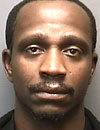
Joseph McVey, Armed Man, Arrested At Airport Where Obama Was Leaving

04/25/10 11:53 PM AP


Joseph Mcvey Arrested

ASHEVILLE, N.C. — An armed man spotted at a North Carolina airport parking lot just after Air Force One departed Sunday told an officer he wanted to see the president and had a car equipped with police gear, including a siren and flashing lights, authorities said.

Joseph Sean McVey, 23, of Coshocton, Ohio, is charged with going armed in terror of the public, a misdemeanor, said Asheville Regional Airport Police Capt. Kevan Smith.

Security was heightened at the airport because President Barack Obama was leaving after spending the weekend vacationing in Asheville. He was headed to a memorial service for 29 West Virginia coal miners killed in an explosion.

At about 2 p.m., airport police saw McVey get out of a maroon car with Ohio plates and that he had a sidearm, Smith said. Both airport police and the Secret Service questioned him and he was taken into custody. The suspect was nowhere near the president's plane, which had just departed, and was in a rental car return lot that is open to the public, Smith said.

His car was equipped with clear LED law enforcement-style strobe lights in the front and rear dash, Smith said. The car also had a mounted digital camera in the front window, four large antennas on the trunk lid, and under the steering wheel was a working siren box. Smith said McVey was not in law enforcement.

When McVey got out of the car, he was listening to a handheld scanner and radio that had a remote earpiece, Smith said. Police said he was monitoring local agencies and had formulas for rifle scopes on a note in his cup holder. Police did not immediately elaborate on what the formulas might mean and Smith was not available to comment late Sunday.

McVey gave authorities an Ohio driver's license, but a computer check failed to show the number was valid, police said. His hometown of Coshocton is about halfway between Pittsburgh and Columbus, Ohio.

When Officer Kaleb Rice asked him what he was doing, McVey told him he heard the president was in town and wanted to see him.

Rice removed the firearm and took McVey into custody. He was being held at the Buncombe County jail on $100,000 bond.

The investigation into what McVey was doing with a gun, with formulas for rifle scopes and why his car was equipped with police gear was continuing, Smith said. The Secret Service had no comment on the arrest, deferring to airport police.

A jail officer said it didn't appear McVey had an attorney.

Entry #2,182

Get ready Arizona Al Sharpton is on the way

Sharpton pledge to fight Ariz. immig bill

AP
Last Updated: 1:14 PM, April 25, 2010
Posted: 1:13 PM, April 25, 2010

The Rev. Al Sharpton says he will challenge Arizona's new immigration bill in court and on the streets.

Sharpton is joining Lillian Rodriguez Lopez from the Hispanic Federation to announce a legal challenge to the bill. They say activists are also prepared to commit civil disobedience to fight the Arizona immigration bill.

Arizona Gov. Jan Brewer signed the bill Friday. It requires police to question people about their immigration status — including asking for identification — if they suspect someone is in the country illegally.

The law will take effect in late July or early August.


robert millerRev. Al Sharpton said he'll fight the Arizona immigration bill, by civil disobedience if necessary. 

Rev. Al Sharpton said he'll fight the Arizona immigration bill, by civil disobedience if necessary.

President Barack Obama has called the new law "misguided" and has instructed the Justice Department to examine it to see if it's legal.


Read more: http://www.nypost.com/p/news/local/sharpton_pledge_to_fight_ariz_immig_O7cdlDmQ5GwTBrqZrorD5O#ixzz0mA2dr2qD

Entry #2,181

The new fight club: Teens fighting teens

April 25, 2010

The new fight club: Teens bashing teens

MITCH ALBOM
FREE PRESS COLUMNIST

They are all over the Internet, short video clips with titles out of a boxing poster. "Raul vs. Pedro." "Red vs. Robert." "Twinkie vs. Saylor." 

But these are not professional fighters. These are kids. High school kids, middle school kids. They punch each other, pound each other, slap, yank, pull, tackle, rip, scratch and kick each other.

And all the time, someone is filming.

Ten Seconds is what some call it, a macho exercise in which children inflict as much pain as they can for 10 seconds. Perhaps the thinking is "you can't get killed in 10 seconds" -- but you sure can do damage.

Recently, a Troy middle school student was taken to a hospital after he and two classmates staged their own 10 Seconds routine. They were suspended from school -- because they conducted this violence in the school restroom.

The school restroom?

Yep. And if you go to YouTube you'll see many more. Filmed on cell phones. Shot in bathrooms. Or in parking lots. Or out in fields.

On one video, a big kid chases a smaller kid, spins him, grabs him, lifts him from around the neck and slams him to the ground -- all while another kid tags behind.

Not stopping it.

Filming it.

Fighting just for the cameras

Now, fighting as kids is nothing new. I did it. Maybe you did, too. But this is not one of those generation gap issues. There are serious and disturbing differences between the eras.

For one thing, when we fought, there was a reason. Kids didn't just say, "Hey, let's pound the crap out of each other after school today."

And secondly, no one recorded it. The sickest part of this phenomenon is that anger is not igniting these fights -- fame is. These kids see this as their piece of the Internet pie. YouTube has flattened the Earth into a single stage on which anyone can perform. That is too tempting for kids who are growing up in a "fame is everything" world. They may not be able to act. They may not be able to sing or dance. But anyone can punch.

Or try to. The thing is, once you start hitting someone, anger may not be the catalyst, but it quickly can become the gasoline. And a staged routine can turn to serious violence.

In less than 10 seconds.

The obvious response to this is, "Why don't parents teach their kids that this is wrong?" My guess is many do. My guess is even more are totally unaware of what's going on. Ask yourself this, Mom and Dad: How many YouTube fights have you watched lately?

Well, go online and type "10 seconds" and "fight" and see what comes up. Then, after you watch two teens claw and yank as their shirts ride up and their arms flail wildly, see how many other sometimes longer clips come up. They appear endless. "Toker vs. Daniel." "Alejandro vs. Jonathon and William." There's one labeled "10 Seconds" that shows a bunch of kids in a school band room pounding each other between the instruments and the music stands.

New lessons of the fight game

How can this go on, you ask? Well, remember, these kids live in a world of mixed martial arts fighting. MMA was created as a way of using anything and everything in a fight -- boxing, karate, jiujitsu, you name it. And while it has been cleaned up lately and its practitioners are well-trained, it began with an almost fight-to-the-death mentality.

And that is the approach being mimicked by the 10 Seconds kids who, for the most part, aren't trained or accomplished, or even aware of the consequences.

They are hyped-up kids in a hyped-up world, where doing things for the camera is the only reason to do anything at all. To some of these kids, seeing their name on the side of a YouTube page is a narcotic hit that is addicting.

And so maybe our conversations need to change. Not long ago, a father took his son outside and taught him to hold up his fists, but also said, "Don't hit anyone unprovoked."

Today, we need to say, "Son, YouTube is not worth getting your face bashed in."

You might also remind him that Andy Warhol predicted everyone, one day, would be famous for 15 minutes.

And he was off by 14 minutes and 50 seconds.

Entry #2,180

Woman calls 911 for taxi ride to nightclub

Conn. cops to woman: 911 isn't a taxi service


02:57 p.m.

Sunday, April 25, 2010

NEW HAVEN, Conn. (AP) — If you're going out to a nightclub, New Haven police have a word of warning: Don't call 911 for a ride home.

Officers say 28-year-old Quandria Bailey did just that, calling the emergency line six times to request a ride from a New Haven nightclub back to her Meriden home.

New Haven police charged Bailey with six counts of misuse of the 911 system early Sunday. She was released on a $1,000 bond and is scheduled to appear in court May 5.

A telephone number for Bailey could not immediately be located Sunday and it was unclear whether she had an attorney.


Entry #2,179

Church Launches Commercials To Stop Summer Violence

Church Launches Commercials To Stop Summer Violence

Pastor hopes campaign gets parents attention

Stephanie Scurlock


11:50 AM CDT, April 25, 2010


Church Launches Commercials To Stop Summer Violence

FAST FACTS:
  • South Memphis church launches commercial campaign to stop senseless killings
  • Operation Stop started on church's door step
  • Church hoping to prevent violent summer
(Memphis 04/25/2010) - A small South Memphis church takes its campaign to save lives to the entire community. Just over a year ago, True Life Outreach Ministries launched Operation Stop. They are expanding the program to include television commercials in hopes the movement to stop senseless killings will make a difference this summer.

Church for the Members of True Life Outreach Ministries takes place not just inside the walls of their South Memphis sanctuary but outside in the community. The church started Operation Stop in hopes of putting a stop to violence. They're asking for help via the airwaves.

"I hope that we can reach out like Jesus did when he hung out on the cross. He put his arms out so he could reach everybody. So, that all people will understand that what goes on in our community, each one of us is responsible," said Rev. Sam Blount, True Life Outreach Ministries.

The church started Operation Stop after the murder of 30 year old Kendrick Powell in Memphis' Oakhaven neighborhood. Powell's father, Willie Frazier, is the police chief of Earle, Arkansas. He attends True Life. His son's murder is still unsolved. The church is hoping its commercial campaign will be the catalyst to stopping this kind of crime.

Rev. Blount said, "We understand we're looking forward to a long hot summer and when school is out with the crime that is existing in the school system at this time, with police present, I wonder what will happen on the playgrounds when police are not present."

Blount's wife, Nancy, is a state representative from Marianna, AR. She is also involved in the campaign.

"The real work is done out in the community and parents, teachers, ministers, community at large, must work together to develop the entire child," said Nancy Blount.

The Blounts say the commercials will allow their ministry to reach inside homes, even those where they're not normally invited.

"We don't need to have a million man march. We just need to have a million households of parents that will be responsible for their own child," said Rev. Blount.
Entry #2,178

Nightclub for dogs

Nightclub for pooches

GINGER ADAMS OTIS


Last Updated: 11:49 AM, April 25, 2010
Posted: 3:08 AM, April 25, 2010


The woof, the woof, the woof is on fire.


Manhattan mutts will soon have a place to shake their tails on a Friday night -- the Fetch Club. 

The 3,000-foot indoor dog park/canine club slated to open next month in the heart of the Financial District will be tricked out with sybaritic amenities synonymous with Wall Street: special spa baths, holistic mud masks and facials, homemade meals, manicures -- and even a doggie disco.

"If an owner wants to go out one night, they can drop their dog off at our nightclub," said owner Peter Balestrieri, who hopes to even outfit the doggie dance club with a disco ball.


DISCO PUP: DJ in da' doggy club.


DISCO PUP: DJ in da' doggy club.

"We're serious about the well-being of animals, but we also want them to have fun," said co-owner Jenna Lee, a former finance worker now taking veterinary courses.

The more sedate canines can swing by Fetch Club during the day for playtime (chasing tennis balls), movie hour (classics like "101 Dalmatians" and "Lassie"), trot on a tiny treadmill (that has a TV), or just play on the 3,000-foot dog run in the back of the massive space -- for $35 a day.

Inside the renovated space at 85 John St. -- a 200-year-old former tobacco factory -- will be a high-end boutique with doggie clothes and toys, plus a "human lounge" where owners can grab a coffee, use an iPad to check e-mail, and watch their pampered pooches play.

"The dogs are our clients, so all our services are geared to them," said Lee, who plans to offer daily homemade entrées to owners who don't want their dogs eating commercial pet food.

But the downtown entrepreneurs nearly got muzzled last month when concerned residents went barking to the local community board.

"We heard about it from neighbors who were concerned that overnight boarding would create noise, sanitation and health issues," said Community Board 1 director Julie Menin.

That got the Department of Buildings involved, and a stop-work order was issued in early April. According to Menin, the DOB reviewed Fetch Club's permits and ruled the building wasn't zoned for kennels -- meaning Fetch Club can't board dogs overnight.

Building resident Sean Daly told The Post his main concern was noise. "The space between our floors is really thin -- we hear everything from neighboring apartments," he said.

Balestrieri invested $50,000 in additional noise insulation for Fetch Club -- adding about 8 inches of padding to his walls and ceiling. 

Read more: http://www.nypost.com/p/news/local/manhattan/lift_ya_legs_in_the_air_IezB8oOiKNpjPPF2AtJa5K#ixzz0m9UAkp41

Entry #2,177

A new way to count inmates

Baltimore will gain residents in prison count shift

New Maryland law, first of its kind, tallies inmates as residents of last permanent address, not location of prison

By Erica L. Green, The Baltimore Sun

10:28 PM EDT, April 24, 2010

For more than two decades, Rico Marzano called prison cells in Jessup and Cumberland his home.

But this year, the convicted murderer serving four consecutive life sentences will be recorded as a Baltimore resident, even though he won't step foot in his Frankford neighborhood any time soon.

Marzano and thousands of other Maryland inmates are being reclassified under a contentious law approved this month by Gov. Martin O'Malley that alters how prison populations are counted during the once-a-decade census.

Maryland became the first state to decide that inmates should be considered residents of the jurisdiction of their last permanent address, and not of the prisons where they are housed. The change came after the Census Bureau announced it would be providing states with detailed data about institutionalized groups such as the military and college students in time for redistricting efforts.

The decision has significant implications for Baltimore, which has been losing population for decades, and which produces as many as 6 in 10 of the state's 21,000 inmates.

Baltimore's official population could grow by 12,000 because of the new law, an increase that could help preserve the city's political clout when congressional and state legislative district lines are redrawn to reflect the 2010 census.

Urban-area lawmakers and civil rights activists lauded the move, calling it a proper solution to a history of inflated population in prison towns.

"There's enough people moved around to break how democracy works," said Peter Wagner, executive director of the Prison Policy Initiative, a nonprofit organization based in Massachusetts, who testified in favor of the Maryland law.

State Sen. Catherine Pugh, a Baltimore Democrat and lead sponsor of her chamber's version of the legislation, emphasized that the plan does not affect how much money the city and other jurisdictions will receive based on census counts. It only applies to the drawing of election district lines.

But the new program is being lambasted by officials in rural parts of the state that contain large prisons. They see a bald effort by Baltimore City and Prince George's County in particular to maintain and build power, at the expense of their communities.

"Baltimore City is trying to pad their numbers in the census, because they're scared they're going to lose representation," said Del. Kevin Kelly, a Democrat who represents Allegany County. "I don't see where the fairness is."

Kelly said the 4,500 state and federal inmates kept in Cumberland will cost the county money for years. The prisoners in his county are doing enough time to make them more a part of his communities than their hometowns, he said.

"When they have to be hospitalized, they're going to be treated in our hospitals," Kelly said. "My phones ring when the correctional officers are injured or worse, and I deal with the community concerns."

With Allegany losing residents, Kelly anticipates that the lines of his legislative district will shift when prisoners are excluded.

No apologies

Many Baltimore leaders make no apologies for the gains they'll see in population count and argue that many areas of the city are unfairly losing leverage.

"I don't think fairness and political power are mutually exclusive," said Sen. Verna L. Jones, a Baltimore Democrat, adding that the neighborhoods she represents in the city's central and southwest areas have lost enough population to jeopardize the interests of those remaining.

"It is about fairness, because you have these individuals who have families living in these communities, and because the lines are going to be redrawn, Baltimore might have been in danger of losing representation that we could not afford to lose," she said.

Opponents scoffed at the argument that prisoners' displacement from Baltimore is often temporary.

"To close your eyes and tap your shoes three times and pretend that they're going to be returning and that they are not in our jurisdiction is just disingenuous," said Del. Christopher Shank, a Republican who represents Washington County. The county is home to three correctional facilities in Hagerstown, with 6,000 inmates.

"It is a blatant power grab…and Baltimore City is looking at losing seats in the General Assembly because of its declining population," Shank added.

Losing representation

Baltimore's leaders have long sought ways to preserve the city's influence in Annapolis and Washington as its population declined.

The number of city residents peaked at nearly 950,000 in 1950 and has dropped every decade since, even as the population of the state has grown.

Recent figures show that the city lost about 14,000 residents between 2000 and 2008 and had a population of about 637,000.

Since 1974, each statewide reapportionment has cost the city at least one Senate district.

As recently as 2002, 10 of Maryland's 47 state senators represented all or part of Baltimore. In that year, Maryland's highest court threw out a plan that included Senate districts that crossed the city-county line, a redistricting plan created by then-Gov. Parris N. Glendening to preserve Baltimore's influence. That costs the city four of its senators.

Currently, six state senators represent Baltimore, and the inclusion of inmates could provide a buffer against a further loss. A state Senate district will contain about 120,000 residents after the next redistricting, up from about 112,000 now.

Other states are considering population rules similar to the one approved in Maryland.

In New York, some local lawmakers are pushing a plan to exclude prisoners from reapportionment drawings entirely.

"They play no part in our community," said Edward P. Welsh, a Republican county legislator from Utica. "They can't vote, they can't take part in the community, and I'm assuming they don't want to be here — so why are they being counted here?"

Some states are using the new census information differently. Kansas officials want to remove college students and military personnel from redistricting calculations.

Diversity on the Shore

In Somerset County on Maryland's Eastern Shore, officials hope the new rule leads to the election of the county's first-ever black county commissioner.

A prison built in the 1980s, they said, disrupted a settlement of a Voting Rights Act lawsuit intended to create a majority-minority county legislative district.

Though the county is 40 percent black, no black representative has ever been elected to office.

"It's been a long time coming. I believe that people in the county, both black and white, are ready for change," said Clarence Bell, who was the county's first black police chief.

Lawmakers said they were pleased that the new law could bring diversity to places like Somerset.

"I am so proud that Maryland did this, I think that it speaks highly of us," said Del. Joseline Pena-Melnyk, a Prince George's County Democrat who was a lead sponsor of the House legislation.

"It's really a civil rights issue, a fairness issue and an equality issue — plain and simple."

Entry #2,176

Public-sector unions bankrupting America

Friday, April 23, 2010


EDITORIAL: Public-sector unions bankrupting America

State and local governments face looming pension crisis

THE WASHINGTON TIMES

Usually it takes a national government to spend itself into a debt measured in the trillions. Yet it comes as little surprise that the same profligacy that pervades the corridors of federal power infects this country's 87,000 state, county and municipal governments and school districts. By 2013, the amount of retirement money promised to employees of these public entities will exceed cash on hand by more than a trillion dollars.

That's according to the Center for Retirement Research at Boston College, which earlier this month released a troubling analysis of 126 state and local pension plans. The center's researchers found in the wake of the stock market collapse that measures of pension program solvency hit a 15-year low with no signs of improvement on the horizon. This means taxpayers will be left picking up the tab.

The reason pension plans are headed toward financial disaster is simple. Ever-expanding public-sector unions have flexed their political muscle and larded up with lavish benefits to be be paid out decades from now. In a properly run,private-sector business, future retirement benefits are paid for using present-day contributions. This is not the case when lawmakers have the power to boost public-employee benefit packages while using accounting gimmicks to conceal and pass on the debt to future generations.

California's public-employee retirement system stands in the most perilous condition, facing a half-trillion in unfunded liabilities. That's not surprising when you consider a California highway patrol officer can retire at age 50 and collect up to 90 percent of his salary for the rest of his life. According to the agency's website, a typical officer's pay will reach $109,147 after just five years on duty - an amount that can rise significantly with overtime benefits. That means a fit and healthy 50-year-old "retiree" who began work at age 20 would receive $98,232 a year from taxpayers for the rest of his life, and nothing prevents him from taking another government job to collect two paychecks. This form of double-dipping is rampant.

While most private-sector firms have trimmed their work force during the recession to achieve more efficient and profitable operations, public agencies have expanded. State and local governments employ about 15 million individuals, a figure that has jumped up 40 percent from 1992. By 2016, the number of state and local bureaucrats is projected to reach 20 million. Too many of these people are being promised far too much money, leaving state and local systems as bankrupt as Social Security, Medicare and other multitrillion-dollar federal entitlements.

To his credit, California Gov. Arnold Schwarzenegger considers addressing his state's "pension bubble" to be one of his top priorities. On Wednesday, he introduced legislation that would raise the full retirement age for new police hires to 57 and reduce the benefit paid in our example to $88,409. It also would reclassify billboard and milk inspectors as "miscellaneous" employees, instead of "safety" workers entitled to bigger handouts.

Despite the modest nature of the proposed changes, it's unclear whether California lawmakers have the backbone needed to pass the measure over the objection of the all-powerful union voting bloc. The rest of voters across the nation, the ones who will be paying for this mess, need to wake up and encourage legislators to reform public pensions before it's too late.

Entry #2,175

Don't Call It Pot in This Circle

Don’t Call It ‘Pot’ in This Circle; It’s a Profession

Jim Wilson/The New York TimesJeremy Ramsay checked marijuana to be sold at the Harborside Health Center in Oakland, Calif.


JESSE McKINLEY

April 23, 2010 

OAKLAND, Calif. — Like hip-hop, health food and snowboarding, marijuana is going corporate.


Steve DeAngelo, the chief executive officer of the Harborside center, in the clinic’s dispensary.

Jim Wilson

The New York Times

Varieties of medical marijuana were on view in a glass-covered display case at the Harborside Health Center.

As more and more states allow medical use of the drug, and California considers outright legalization, marijuana’s supporters are pushing hard to burnish the image of pot by franchising dispensaries and building brands; establishing consulting, lobbying and law firms; setting up trade shows and a seminar circuit; and constructing a range of other marijuana-related businesses.

Boosters say it is all part of a concerted effort to trade the drug’s trippy, hippie counterculture past for what they believe will inevitably be a more buttoned-up future.

“I don’t possess a Nehru jacket, I’ve never grown a goatee, I’ve never grown my hair past the nape of my neck,” Allen St. Pierre, the executive director of the National Organization for the Reform of Marijuana Laws said. “And I don’t like patchouli.”

Steve DeAngelo, the president of CannBe — a marketing, lobbying and consulting firm here — will not even use the word “marijuana.” Calling it pejorative, he prefers the scientific term “cannabis.”

“We want to make it safe, seemly and responsible,” Mr. DeAngelo said of marijuana.

That extends to his main dispensary and headquarters, the Harborside Health Center in Oakland, with its bright fluorescent lights, a clean, spare design, and a raft of other services including chiropractic care and yoga classes. On a recent Friday, the center was packed, with a line of about 50 people waiting as the workers behind the counter walked other customers through the various buds, brownies and baked goods that were for sale.

“If we can’t demonstrate professionalism and legitimacy, we’re never going to gain the trust of our citizens,” Mr. DeAngelo said. “And without that trust, we’re never going to get where we need to go.”

The ultimate destination, for many supporters, is legalization. Californians will decide in November if that is where they want to go, when they vote on a ballot measure that would legalize, tax and regulate marijuana.

Regardless of the outcome, CannBe says it expects to expand its business model nationwide to become what admirers say will be “the McDonald’s of marijuana.”

The for-profit company is made up of four proprietors of nonprofit dispensaries and their lawyer. Mr. DeAngelo calls them an “A-team of cannabis professionals.”

In late March, it helped lobby the City Council in San Jose, the nation’s 10th-largest city, to pass ordinances regulating dispensaries, a crucial step toward a legitimate industry. And last week at a cannabis conference in Rhode Island, Mr. DeAngelo was diversifying his product line, introducing a kind of “pot lite” with less psychoactive agents than regular marijuana and thus popular with what he calls “cannabis-naïve patients.”

John Lovell, a California lobbyist who represents two major police groups that oppose legalization, scoffed at the notion that marijuana proponents were cleaning up their act or gaining traction with the public, citing a recent decision by the Los Angeles City Council to sharply curtail the number of medical marijuana dispensaries there. 

“They are a neighborhood blight,” he said. “Here you have dispensaries that have cash and dope. So, duh? Is it any surprise that they’ve been magnets for crime?”

But advocates call that characterization unfair and outdated.

“This is an emerging business opportunity, as it would be in any other area,” said Ethan Nadelmann, the founder and executive director of the Drug Policy Alliance, which favors legalization.

In California, dispensaries already employ all manner of business gimmicks to survive in an increasingly competitive market. West Coast Cannabis, a trade magazine, has dozens of advertisements for daily specials, free samples, home delivery, gift certificates, scientific testimonials, yoga classes, hypnotherapy, Reiki sessions, coupons, recipes and, of course — being California — free parking.

There are also new schools and seminars that can be used as credit for required continuing education classes for doctors and lawyers.

That includes the Cannabis Law Institute, which was certified last month by the California state bar. It was co-founded by Omar Figueroa, a graduate of Yale University and Stanford law school, who is hosting a seminar in Sonoma County in June that promises to teach attendees about “this fascinating area of the law.”

Mr. Figueroa, who said he was voted “most likely to fail a Senate confirmation hearing” at Stanford, said he was earning a good living in marijuana law, but was in it for the experience. “My passion has always been cannabis,” he said. “It’s the world’s most interesting law job.”

But it is not just California. Business is also booming in Colorado, which has seen an explosion in the number of dispensaries in the last year. That rapid expansion has alarmed some authorities and sent legislators scrambling to pass new regulations, but has been a boon for law firms like Kumin Sommers L.L.P. in San Francisco, which has merged with Warren C. Edson, a lawyer in Denver representing about 300 Colorado dispensaries. Mr. Edson said many of his clients were curious about decidedly staid fields like workers’ compensation, tax withholding and occupational safety.

“There’s this real Al Capone fear that they’re going to get our guys, not on marijuana, but on something else,” Mr. Edson said, referring to how Capone was eventually charged with tax evasion rather than criminal activity.

The federal government continues to oppose any decriminalization of the drug. And while the Obama administration has signaled some leeway when it comes to medical marijuana, raids on dispensaries and growers by law enforcement agencies are still common — even in California, where the industry effectively began in 1996, with the passage of the landmark Proposition 215, which legalized medical marijuana.

Today, rules vary widely in the 14 states that allow medical marijuana, and a final vote on legalization is pending in the District of Columbia. Some states require sellers to prove nonprofit status — often as a collective or cooperative — and all states require that patients have a recommendation from a physician. But even those in favor of medical marijuana believe that the system is ripe for abuse or even unintentional lawbreaking.

“Almost all the dispensaries in California are illegal,” said William Panzer, an Oakland lawyer who helped draft Proposition 215. “They’re sole proprietorships, not collectives”

Mr. Nadelmann’s organization, the Drug Policy Alliance, says it does not take a position on whether those who sell the drug should be nonprofit or not. But he added, “The key people involved are not becoming personally wealthy.”


Entry #2,174

Vet fakes paralysis to avoid Iraq

Vet fakes paralysis to avoid Iraq

Jim Shur - Apr. 23, 2010 03:19 PM
Associated Press

EAST ST. LOUIS, Ill. - A military veteran who claimed a rollover wreck left him paralyzed collected hundreds of thousands of dollars in taxpayer benefits and was kept stateside when his Army unit shipped off to Iraq.

Doctors could never pinpoint why Jeffrey Rush was a paraplegic, but Kansas prosecutors had an explanation Friday: the 27-year-old was a habitual liar.


While his unit was off to war, Rush snorkeled in Florida and schmoozed at an inaugural ball in Washington in a wheelchair, this time insisting that serving in Iraq cost him his ability to walk. Yet, his legs stayed muscular and he fathered a child with his wife.

Five months after pleading guilty to conspiracy and fraud, Rush stood fully upright before U.S. District Judge William Stiehl on Friday as he was sentenced to more than six years in prison for a scam that he said simply spiraled out of control.

Rush also tearfully asked for lenience for his ex-wife, Amy Rush, who awaits sentencing Monday.

The judge, an 84-year-old Navy veteran of World War II and the Korean War, listened to Rush's sometimes rambling plea for leniency, but sided with prosecutors and ordered him to pay back $314,806.11.

"It's clear to me, Mr. Rush, you do have a problem - your principal problem is telling the truth," the longtime federal judge said.

Rush, who now lives in Nashville, Tenn., insisted he could make things right, claiming he had the inside track on a possible multimillion-dollar real estate deal. Stiehl wasn't convinced, and prosecutor Suzanne Garrison called Rush a "habitual liar."

After the hearing, Stiehl said his own military past had no bearing on the sentence. He allowed Rush to remain free on bond until he reports to prison. A date has not been set.

Authorities said the Rushes stuck to his bogus story that he had lost the use of his legs after a 2004 rollover crash, just weeks before his Army unit from Kansas was deployed to Iraq.

The deception ultimately unraveled after the couple sued Ford Motor Co. in 2005, along with the maker of the seat belts in the 2002 Explorer Sport Trac he wrecked. The suit blamed both companies for his supposed paralysis and his wife's resulting "loss of consortium and conjugal relations." The Rushes had a son in July 2006.

Rush wrongly got $107,857 in benefits from the Department of Veterans Affairs and scammed $28,730 from the Social Security Administration, according to court records. Stiehl also ordered Rush to pay tens of thousands of dollars to hospitals where he was treated, the Army, Ford and the attorney who helped the Rushes' sue the auto maker, Bruce Cook, who has said he was duped by the couple and apologized to Ford.

Rush has insisted that he told doctors at a VA hospital in St. Louis that he could walk, sometimes by using a cane, and over time grew less reliant on assistance.

"I was trying to get out of this mess that I was in," Rush told the judge Friday in his bid for lenience, at one point attributing his scam to growing up with an inattentive parent. "My ex-wife and I felt so stuck in this situation, we didn't know how to get out because we were so deep in this lie."

"This defendant's lifestyle is indicative of a lack of self-discipline," Garrison said, casting Rush as an unemployed aspiring songwriter who has drifted between sales and truck-loading jobs.

"He needs to come to the understanding that working 40 hours a week is a lot better than to be in prison," the prosecutor said, arguing that Rush had a "certain moral deficit."

Entry #2,173

Deadly new fungus strain rolling across U.S.

Deadly new fungus strain rolling across Northwestern U.S.

Ethan Sacks
DAILY NEWS STAFF WRITER


Originally Published:Friday, April 23rd 2010, 1:39 PM
Updated: Friday, April 23rd 2010, 2:09 PM


The new strain of Cryptoccus gatti
PLOS Pathogens

The new strain of Cryptoccus gatti


A mysterious new strain of airborne fungus that has mystified scientists is rolling through the Northwestern U.S. and Canada, leaving at least six people dead in its wake.

A study found that the new strain of Cryptoccus gatti, previously native to tropical and subtropical regions like Australia and South America, is spreading through Washington and Oregon and heading towards Northern California, National Geographic reported.

"The alarming thing is that it's occurring in this region, it's affecting healthy people, and geographically it's been expanding," study co-author Edmond Byrnes, a graduate student at Duke University, told the magazine.

Experts are baffled as to how the fungus reached North American and how  it could survive in a colder climate.

Even more worrisome for health experts are reports that the victims had relatively healthy immune systems, according to National Geographic. Twenty one known cases have been recorded in humans, and six have been fatal. 

A 1999 outbreak of a similar strain of the fungus in British Columbia, Canada,  had a much lower mortality rate, killing 19 out of 218 recorded victims.

There is currently no vaccine for the fungus strain, which causes an infection which may not display symptoms -- including a bad cough and shortness of breath - until months after exposure.

"The enhanced virulence of isolates from the outbreak region, when compared with those from other regions, suggests that the genotypes circulating in the Pacific North West are inherently increased in their predilection to cause disease in mammalian hosts," the study authors wrote in the April 22 issue of the scientific journal, PLOS Pathogens.

Read more: http://www.nydailynews.com/lifestyle/health/2010/04/23/2010-04-23_deadly_new_fungus_strain_rolling_across_northwestern_us.html#ixzz0lynLUVZj

Entry #2,170

Robber caught because of untimely bathroom break

Suffolk police: Man caught urinating behind business he robbed


Sean P. Almond, 43, of Windsor, is charged with one count of armed robbery.

Sean P. Almond, 43, of Windsor, is charged with one count of armed robbery.


Kristin Davis

The Virginian-Pilot
April 23, 2010

SUFFOLK

Police say a man accused of robbing a convenience store last night was caught minutes later relieving himself behind the business.

A man came into the Kangaroo Mart on Wilroy Road about 11:30 p.m., threatened the clerk, threw her on the ground and robbed the place, according to a city news release. The clerk called the cops, who were already nearby, and pointed them toward the back of the building -- the direction she saw him flee.

Police immediately arrested the man and took him to headquarters. He was carrying the stolen cash, police said.

Sean P. Almond, 43, of Windsor, is charged with one count of armed robbery. Charges of assault and urinating in public are also pending, police said. Almond is being held at Western Tidewater Regional Jail without bond.

Entry #2,169

While economy crumbled SEC surfed for porn on Internet

While economy crumbled, top financial watchdogs at SEC surfed for porn on Internet: memo

Leo Standora
DAILY NEWS STAFF WRITER


Originally Published:Friday, April 23rd 2010, 12:59 AM
Updated: Friday, April 23rd 2010, 7:31 AM


Who watches the watchmen? SEC senior staffers used government computers to browse for booty, according to a memo. Galante/Getty

Who watches the watchmen? SEC senior staffers used government computers to browse for booty, according to a memo.

At the SEC, all they thought about was SEX.

The country's top financial watchdogs turned out to be horndogs who spent hours gawking at porn Web sites as the economy teetered on the brink, according to a memo released Thursday night.

The shocking findings include Securities and Exchange Commission senior staffers using government computers to browse for booty and an accountant who tried to access the raunchy sites 16,000 times in one month.

Their titillating pastime was discovered during 33 probes of employees looking at explicit images in the past five years, said the memo obtained by The Associated Press.

It says 31 of those probes occurred in the 2-1/2 years since the country's financial system nearly crashed. 

The report was written by SEC Inspector General David Kotz in response to a request from Sen. Charles Grassley (R-Iowa).

Among the startling findings:

- A senior attorney at the SEC's Washington headquarters spent up to eight hours a day looking at and downloading pornography. When his government computer ran out of hard drive space, he burned the files to CDs or DVDs. He later agreed to resign.

- An accountant was blocked more than 16,000 times in a single month from visiting "sex" or "pornography" sites, but still managed to amass a collection of "very graphic" material by using Google to bypass the SEC's internal filter. He wound up with a 2-week suspension.

- Seventeen of the randy employees were "at a senior level" earning salaries of up to $222,418.

- The number of cases jumped from two in 2007 to 16 in 2008. The cracks in the financial system emerged in mid-2007 and spread into full-blown panic by the fall of 2008.

California Rep. Darrell Issa, the top Republican on the House Committee on Oversight and Government Reform, said it was "disturbing that high-ranking officials within the SEC were spending more time looking at porn than taking action to help stave off the events that put our nation's economy on the brink of collapse." An SEC spokesman declined to comment last night. 

Read more: http://www.nydailynews.com/money/2010/04/23/2010-04-23_porn_among_daily_duties_of_top_sec_honchos_sez_report.html#ixzz0lxj369jt

Entry #2,168