Two women tried to smuggle dead relative on airplane
Entry #2,060



The time is now 9:47 am
You last visited
June 8, 2026, 7:45 pm
All times shown are
Eastern Time (GMT-5:00)

Rielle Hunter (l.) will open her doors to Oprah Winfrey for a sit-down interview slated to air in May.
John Edward's gal pal Rielle Hunter is heading into the arms of the same woman who provided a shoulder to Edwards' wife - Oprah Winfrey.
Winfrey's camp confirmed Tuesday that the videographer turned Edwards' baby mama will spill her secrets - or what's left of them - on the popular daytime show.
"'The Oprah Winfrey Show' will have the exclusive, first TV interview with Rielle Hunter," a spokeswoman said.
A specific air date for the show has not been confirmed, however the National Enquirer, which broke the news, reported it will air in May and be done at Hunter's Charlotte home.
Winfrey's spokeswoman revealed no other details.
It was just last May that Winfrey visited the Edwards' home and interviewed Elizabeth Edwards about her book, the couple's troubled marriage and her husband's affair.
Since then, former Sen. John Edwards, after long-denying that he fathered Hunter's child, has admitted the kid is his offspring.
The Winfrey chat follows on Hunter's blockbuster interview with GQ magazine, where she spilled juicy details about their relationship. She also appeared in photos wearing a white shirt, pearls and a smile.
A source told the Enquirer that John Edwards encouraged Hunter to do the Winfrey interview.
"John wants the world to see Rielle in a different light, not like the home wrecker she's been portrayed," the insider told the Enquirer.
"She's excited about giving her account of how she met John, how the affair began and what's in store for her future," the source told the Enquirer. "Rielle also wants to clear the air about the GQ photos - she's basically doing it to get the truth out and tell her side of the story."
May is a sweeps month when TV shows like Winfrey's stock up on high-profile interviews as a way to boost ratings, which are then used by local stations around the country to set future advertising rates.
Winfrey has also had a front-row seat of sorts for the Edwards' family drama. Besides Elizabeth Edwards, and now Hunter, she had former Edwards' right-hand-man Andrew Young and his wife, Cheri, on the show in February to talk about his book, the scandal and the existence of an Edwards-Hunter sex tape.
Read more: http://www.nydailynews.com/gossip/2010/04/06/2010-04-06_oprah_winfrey_lands_first_tv_interview_with_john_edwards_mistress_rielle_hunter.html#ixzz0kLKtvVPT
Disabled mother forced to sell home to pay compensation after mobility scooter injures supermarket worker's knee
Daily Mail Reporter
Last updated at 11:39 AM on 06th April 2010
A disabled mother whose mobility scooter injured the knee of a supermarket worker has been forced to sell her house after she was sued for damages.
Gloria Brown, 61, has been ordered to pay nearly $6,000 in damages and $10,000 in court costs after the scooter collided with the woman who was stacking shelves.
But Mrs Brown, who lives with her husband, Norman, 73, and daughter Susan, 42, said she hasn't got the money, so has been forced to put the family home on the market.
Mrs Brown, from Rhyl, North Wales, said: 'How else could I find the cash? It wasn't even my fault, I was hit from behind by another mobility scooter and there was a shunt.
'I'd gone to the milk counter when someone hit me. Then I ran into a flatbed trolley which hit the assistant's leg.
'I was badly shaken and couldn't go on with my shopping because the scooter was so badly damaged. I paid for my goods then reported the accident to customer services and asked if she was OK.'
Denise Bird, 42, who had been stacking shelves at the milk counter, injured her knee in the incident at the Morrisons supermarket in Rhyl, in December 2005.
Miss Bird asked her union to sue and the costs under the 'no win no fee' basis came to $7,169 - far more than the compensation.
Mrs Brown filed a counter claim that the accident was caused by a shunt after a woman on one of Morrison's own mobility scooters had bumped into her. But it was rejected and solicitors acting for the supermarket were awarded costs of $2,960.
Mrs Brown now has to pay costs totalling $10,129 - in addition to £5,628 in damages for negligence.
Miss Bird had alleged that Mrs Brown's scooter was being driven too fast and that she had failed to keep a proper lookout while moving it.
But Mrs Brown said that was not the case and that she would have called an eye-witness to back up her claim, but believed he had died.
Witness Kenneth Rigby, 76, of Rhyl, said: 'I definitely saw another scooter hit this woman, whom I know by sight, and she was sent forward.
'The accident wasn't her fault and it's wrong she has to pay all this money. I'd have gone along to the court case had I been asked.'
Miss Bird is now working in the petrol station at Morrisons.
Her mother Valerie, 62, said: 'Denise is entitled to something because she was off work for several weeks and still has a problem with her leg.
'She didn't feel safe working on the shop floor any more and so moved to the petrol station.'
Mrs Bird said she hadn't known that Mrs Brown was selling her home to find the cash.
She said: 'No one likes to hear that someone is losing their home. Perhaps it would have been better if she could have paid in weekly installments.'
Mrs Brown's support worker Geraldine Griffiths, 62, said : 'In my opinion there has been a miscarriage of justice. People are very angry that a disabled woman should lose her home because of an accident we say wasn't her fault. Gloria has been terribly depressed.
'The other parties at the hearing in January had barristers but Gloria couldn't afford a solicitor.'
Morrisons denied during the case that there was a shunt, or that one of their own mobility scooters was involved, and this was upheld.
There will be another hearing at Rhyl County Court next month to discuss Mrs Brown's bill.
A spokeswoman for the company said : 'As the legal process is ongoing, it would be inappropriate for us to comment any further at this time.'

DUBAI: Court upholds one-month jail sentence for couple smooching in public
April 4, 2010 | 7:32 am
A kiss on the cheek is one thing. But don't get caught smooching in public in Dubai, or you might end up serving time behind bars.
A court in the United Arab Emirates city-state upheld the one-month prison sentence Sunday of a British couple accused of locking lips and touching each other at a restaurant, in violation of public decency laws, the daily paper Gulf News reported.
Dubai resident Ayman Najafi, 24, and visitor Charlotte Adams, 25, both British nationals, were arrested in November and charged with indecent behavior and public drunkenness after they were accused by an Emirati woman of locking lips at a restaurant in front of her kids.
The high-profile case is the latest in which the loose lifestyles of the United Arab Emirates' large expatriate community have run up against the prim and puritanical values of the Arabian Peninsula.
It began when the Emirati woman was dining at the 1950s-America-themed Bob's Easy Diner franchise in the upscale Jumeirah Beach Residence section of Dubai, home to many Westerners living in the city-state.
One of her kids became upset.
"My daughter told me that the accused were kissing on the mouth," the Emirati women told the court, according to a March 14 ABC News report.
"Then I spotted them doing so myself," she said. "I also saw them touching each other, as they were seated two to three meters away from our table. A number of customers witnessed the scene as well."
To hear her tell it, the two were practically on top of each other.
But ABC News cited an employee at the restaurant saying there was nothing inappropriate going on.
"They were just sitting, laughing like everyone else," the employee told ABC News. "The managers wouldn't let it happen. We know the culture of the country, and we would not allow this at all."
On second thought, maybe even that peck on the cheek is a bad idea.
Borzou Daragahi in Beirut
Photo: Charlotte Adams and Ayman Najafi.
CENTRAL PHOENIX
Arpaio gets inmates moving on electricity-generating cycles
|
Courtney Craig
|
| PHOENIX -- Maricopa County Sheriff Joe Arpaio is implementing a new inmate program at Tent City Jail called “Pedal Vision.”
The program uses inmate-powered cycles to generate electricity for televisions. Reports say Arpaio’s recent visit to Tent City inspired the idea, when he saw that many of the inmates were overweight. The stationary bikes are customized so that as an inmate pedals, a connected television is powered once the cycle generates 12 volts of electricity. One hour of pedaling equals one hour of television viewing for the inmates, according to Arpaio. Arpaio said the inmates will only be able to watch television in the television room if they choose to pedal. "I started with the females because they seemed more receptive to the idea," Arpaio said. "The only exercise the females get right now is speed-walking around the tents yard and few are doing that. This gives them a reason to get moving and a way to burn up to 500 calories an hour. They won't be charged a monthly gym fee but they will have to sign a contract." Sheriff Arpaio debuted the pilot program on April 1. |
Special Report: Holy bubble! Churches struck down by foreclosures

Tom Hals
Thu Apr 1, 9:10 am ET
FORT WASHINGTON, Md (Reuters) – By the time thousands of parishioners stream into the 3,000-seat Ebenezer AME Church on Easter Sunday, church leaders hope to have something else to celebrate: financial revival.
The congregation, one of America's largest, has been scrambling to raise funds to save the arena-sized sanctuary from potential foreclosure. To that end, it has enlisted national leaders, such as the Reverend Jesse Jackson and Harvard Law School's Charles Ogletree, who was President Barack Obama's law professor.
Thanks to its 10,000-member congregation and connections with business and civic leaders, Ebenezer expects to avoid the fate of a growing number of U.S. churches, which are defaulting on loans, facing foreclosure and even declaring bankruptcy at an unprecedented pace.
"It's happening to virtually every church," said the Rev. Grainger Browning, senior pastor of Ebenezer. "At a recent meeting with the 100 top pastors in the country, it was amazing how all of us were facing some sort of challenge with the banks."
Supercheap, few-questions-asked loans were a temptation even churches could not resist, but now they are paying for their sins as the debt crisis enters the house of God.
Long considered among the safest of borrowers, churches gambled on real estate at a time when credit copiously flowed and lenders were startlingly lax.
But places of worship have since been battered by the economic downturn. Donations have dipped, investment returns have plunged and bank credit is still hard to come by.
"You build it and they will come. It really was true through the years," said Brad Hampton, executive pastor at the Faith Center of Rockford, Illinois. "They like newness," he says of younger churchgoers.
Hampton's megachurch was erecting a new sanctuary that could seat almost 2,000 when his lender refused further credit beyond an initial $4.2 million. The Faith Center, which also has a 48,000-square-foot "life center" that operates various ministries, is being foreclosed upon.
"People call and say 'You're not alone'," Hampton said.
FORECLOSURE FILINGS TRIPLE
Getting a complete picture of the financial health of churches across the country is difficult. But a review of filings in the Thomson Reuters Westlaw legal database shows foreclosure proceedings against U.S. churches have nearly tripled since December 2007, when the recession began, compared with the previous seven years, which included the dot.com bust and economic downturn.
Court records also reveal more than 100 churches have declared bankruptcy in the last year, often in a last-ditch attempt to halt a sheriff's sale. That number could rise fast.
An investigation by a Memphis television station found hundreds of churches in the city fighting foreclosure. Jackson estimates thousands of African-American churches nationwide are in danger of foreclosure, with 200 in Atlanta alone.
Ebenezer AME got into trouble when its cash reserves fell below $750,000, tripping a covenant on its loan.
Its lender, Bank of America, initially insisted that the church hire a consultant, at a cost of $5,000 a day, to keep a watch on its finances, and required cuts to pastoral benefits such as a car allowance. The bank eventually dropped those demands, along with a plan to raise the interest rate on the church's $8.5 million mortgage, so long as Ebenezer AME found another lender to take over the loan.
Other lenders have been somewhat less forgiving. Court records show that JPMorgan Chase & Co relied on a private investigator to compile evidence against Hopewell Baptist Church, which operates out of the former B'nai Jeshurun synagogue in Newark, New Jersey, and is the home of "kosher gospel" music.
The private investigator, according to the court documents, photographed the license plates of everyone who drove up, in an apparent attempt to determine if the church was operating and likely to be collecting rent.
The court ended the church's bankruptcy protection and it is slated for sheriff's sale in April.
Of course, things are not uniformly bleak. In the case of Ebenezer, the Maryland megachurch, its prayers may be answered. The church hopes to finalize a deal with a new lender, Industrial Bank of Washington, DC, to take over the loan this week.
NEW LENDING FUELED BUILDING BOOM
Churches emerged from previous economic downturns relatively unscathed, lenders noted. But the recent recession was preceded by an unusual boom in church building.
Spending on construction of religious buildings rose sharply in the late 1990s, climbing 70 percent from 1995 to 1999 to an annual rate of $7.3 billion. New building continued to tick up, eventually reaching an annual rate of nearly $9 billion in 2003 before leveling off, according to data from the U.S. Census Bureau.
As was the case in the residential housing market, the church property boom was accompanied by the rise of more specialized lending. Church lending was historically done by community banks, which sometimes have ties through a member of a congregation. Loans were often set at a fixed rate and for a set term.
The emergence of larger congregations and the rush to build venues to accommodate them encouraged specialized lending that grew more aggressive.
Evangelical Christian Credit Union, America's Christian Credit Union and Strongtower Financial began to expand rapidly and compete for new business. Some regional and community banks that were nudged out of residential lending by Wall Street banks also discovered lending to churches as a relatively fragmented and inviting business with a history of low defaults.
"They entered the business with an absolute vengeance," said Phil Myers, president of the American Church Mortgage Co. "Five or six years ago there may have been two or three lenders competing on a deal. Now there were five. Those loans are coming home to roost."
Traditional church lenders such as American Church Mortgage Co and Bank of the West found themselves struggling to compete as competitors stretched lending guidelines and dangled ever larger loans in front of church administrators and pastors.
"We often lost business when offering $8 million and someone else would come in and offer $10 million," said Dan Mikes, who heads church lending for Bank of the West.
Bank of the West has zero nonperforming loans to churches, which the bank attributes to its prudent lending guidelines.
Many of the loans made in recent years contained many of the same features that exacerbated the residential real estate crash, such as low-interest teaser rates, securitized loans and balloon payments.
As a result, bad loans are rising rapidly for those lenders that pushed aggressively into church finance. Delinquent loans at the Evangelical Christian Credit Union, which expanded its loan portfolio from about $225 million to more than $1 billion over the last decade, have risen to 7.4 percent of their loans from 3.6 percent a year ago. Until 2007, the lender did not have a loan in foreclosure.
Ministry Investment Partners Co, which finances evangelical churches and purchases loans from the Evangelical Christian Credit Union, reported 13.3 percent of its loans were nonperforming, up from 1.9 percent a year ago.
And in 2008, the Church Mortgage and Loan Co filed for bankruptcy after a third of its outstanding loans were in foreclosure.
As these lenders struggle or disappear, many churches are finding their lifeline of credit has dried up. What is more, the value of many of the buildings and properties owned by churches has fallen sharply, sometimes even below the mortgage used to finance a project, making refinancing almost impossible.
"It's an unprecedented time," Mikes said.
CUTTING STAFF AND REDUCING PROGRAMS
Even the richest, most established churches have not been immune to this economic downturn. A study by the researcher Barna Group found more than half of U.S. churches said they have been hurt by the recession, with one church in six cutting staff.
The Episcopal Church in the United States, one of the wealthiest U.S. denominations, is feeling the pinch from a $1 billion loss in the combined investment portfolio for 2008, according to Kirk Hadaway, the head of congregational research for the Episcopal Church.
Yet the financial woes appear to be the most severe among nondenominational churches which were also among the fastest growing over the past decade. Many churches attracted younger members and families by offering an array of activities and events, and began building centers with health clubs, meeting rooms, cafes and sports fields.
The new-look houses of worship were often located along busy commercial strips on major thoroughfares, and bear little resemblance to the steepled churches that dot rural New England.
"Churches were trying to fill many roles," said Faith Center's Hampton. "They were trying to fill cultural gaps."
Without the support of a large national organization, some churches felt the need to take on debt to support their growth and building. Now, many are cutting staff, reducing programs and reining in expenses. "Churches have downsized staff, moved from full-time to part-time clergy, because the revenues are not coming in," said Scott Thumma, a sociology of religion professor with the Hartford Institute for Religion Research.
One-time emergency giving campaigns can also fill a short-term gap. Rick Warren, who delivered a prayer at President Barack Obama's inauguration, recently raised more than $2 million during a one-weekend emergency appeal for funding.
And churches have given up immediate plans for building. "They've decided to rent movie theaters or contract with local hotels to have multiple services," rather than build a new building, Thumma said. "They might have a worship service with a live band but the main sermon is from a live feed. That's becoming more common because of the economy."
African American churches in particular appear hard hit. Their congregations have suffered higher unemployment, and often the churches provide more services.
"It's devastating," Reverend Jackson said. "They are closing down services to seniors. They are closing down feeding programs. Demand for services are on the rise and the ability to provide services is decreasing," he said.
Jackson is organizing a campaign against church foreclosures. "It's our largest single institution," he said, "the greatest cash-flow institution."
Simon Johnson
MIT Professor and co-author of 13 Bankers
There are two kinds of bankers to fear. The first is incompetent and runs a big bank. This includes such people as Chuck Prince (formerly of Citigroup) and Ken Lewis (Bank of America). These people run their banks onto the rocks -- and end up costing the taxpayer a great deal of money. But, on the other hand, you can see them coming and, if we ever get the politics of bank regulation straightened out again, work hard to contain the problems they present.
The second type of banker is much more dangerous. This person understands how to control risk within a massive organization, manage political relationships across the political spectrum, and generate the right kind of public relations. When all is said and done, this banker runs a big bank and -- here's the danger -- makes it even bigger.
Jamie Dimon is by far the most dangerous American banker of this or any other recent generation.
Not only did Mr. Dimon keep JP Morgan Chase from taking on as much risk as its competitors, he also navigated through the shoals of 2008-09 with acuity, ending up with the ultimate accolade of "savvy businessman" from the president himself. His letter to shareholders, which appeared this week, is a tour de force - if Machiavelli were a banker alive today, he could not have done better. (You can access the full letter through the link at the end of the fourth paragraph in this WSJ blog post; for another assessment, see Zach Carter's piece.)
Dimon fully understands -- although he can't concede in public -- the private advantages (i.e., to him and his colleagues) of a big bank getting bigger. Being too big to fail - and having cheaper access to funding as a result -- may seem unfair, unreasonable, and dangerous to you and me. But to Jamie Dimon, it's a business model -- and he is only doing his job, which is to make money for his shareholders (and for himself and his colleagues).
Dimon represents the heavy political firepower and intellectual heft of the banking system. He runs some of the most effective -- and tough -- lobbyists on Capitol Hill. He has the very best relationships with Treasury and the White House. And he is determined to scale up.
The only problem he faces is that there is no case at all for banking of the size and form he proposes. Consider the logic he presents on p.36 of his letter.
He starts with a reasonable point: Large global nonfinancial companies are an integral and sensible part of the American economic landscape. But then he adds three more steps:
1. Big companies need big banks, operating across borders, with large balance sheets and the ability to execute a wide variety of transactions. This is simply not true - if we are discussing banking at the current and future proposed scale of JP Morgan Chase. We go through this in detail in 13 Bankers - in fact, refuting this point in detail, with all the evidence on the table, was a major motivation for writing the book. There is simply no evidence - and I mean absolutely none - that society gains from banks having a balance sheet larger than $100 billion. (JP Morgan Chase is roughly a $2 trillion bank, on its way to $3 trillion.)
2. The US banking system is not particularly concentrated relative to other OECD countries. This is true - although the degree of concentration in the US has increased dramatically over the past 15 years (again, details in 13 Bankers) and in key products, such as credit cards and mortgages, it is now high. But in any case, the comparison with other countries doesn't help Mr. Dimon at all - because most other countries are struggling with the consequences of banks that became too large relative to their economies (e.g., in Europe; see Ireland as just one illustrative example).
3. Canada did fine during 2008-09 despite having a relatively concentrated financial system. Mr. Dimon would obviously like to move in the Canadian direction - and top people in the White House are also very much tempted. This is frightening. Not only does it represent a complete misunderstanding of the government guarantees behind banking in Canada (which we have clarified here recently), but this proposal - at its heart - would allow, in the US context, even more complete state capture than what we have observed under the stewardship of Hank Paulson and Tim Geithner. Place this question in the context of American history (as we do in Chapter 1 of 13 Bankers): If the US had just five banks left standing, would their political power and ideological sway be greater or less than it is today?
For a long time, our leading bankers hid behind their lobbyists and political friends. It is most encouraging to see Mr. Dimon come out from behind those layers of protection, to engage in the intellectual fray.
It is entirely appropriate -- and most welcome -- to see him make the strongest case possible for keeping banks at their current size and, in fact, for making them bigger. We should encourage such engagement in public discourse, but we should also examine carefully the substance of his arguments.
As we point out in the Washington Post Outlook section this week, Theodore Roosevelt carefully weighed the views of J.P. Morgan and other leading financiers in the early twentieth century - when they pushed back against his attempts to rein in their massive railroad and industrial trusts. Roosevelt was not at that time against big business per se, but he insisted that big was not necessarily beautiful and that we also need to weigh the negative social impact of monopoly power in all its economic and political forms.
If we don't find our way to a modern version of Teddy Roosevelt, Jamie Dimon -- and his successors -- will lead us into great harm. It's true that, after another crash or in the midst of a Second Great Depression, we can reasonably hope to find another Roosevelt -- FDR -- approach. But why should we wait when such a disaster is completely preventable?
Errant text message leads to heroin bust
Michael Valkys
Poughkeepsie Journal
April 3, 2010
PINE PLAINS — Dialing a wrong number could mean felony convictions for three people accused of dealing heroin.
The three are due Wednesday in town court after authorities said they texted a potential buyer to set up a transaction — only to learn the customer was an agent with the Dutchess County Drug Task Force.
Authorities said the agent received a text message around 7:30 p.m. Wednesday from someone who had mistaken the agent's number for that of a drug customer.
The agent assumed the role of a buyer and, after several texts back and forth, set up a meeting at a business on South Main Street.
Around 9 p.m., authorities said, the suspects approached the agent to complete the deal and were arrested. The task force recovered 20 bags of heroin.
Agents also went to an apartment on Church Street and arrested another suspect. Authorities said they recovered 40 bags of heroin there.
Arrested on South Main were Pine Plains resident Crystal Mazzella, 23, and Bronx resident Quamian R. Hardy, 20. They were each charged with felony criminal possession of a controlled substance.
Arrested in the Church Street apartment was City of Poughkeepsie resident Leo R. Thompson, 37. He was also charged with criminal possession of a controlled substance.
Task force Sgt. Brett Orlich said authorities were happy to get the text message.
"Their bad luck is our good luck," Orlich said.
GOP, Democrats in close race for lavish spending
Hotels, caterers raking it in; high-flying on Moby Dick
Paul West
April 4, 2010
For days last week, Democrats gleefully hammered away at the Republican National Committee's payment of $1,946 for "meals" at a West Hollywood strip club, which led to the firing of a committee staffer and continues to focus unwanted attention on National Chairman Michael Steele's management of the RNC.
One jab, in the form of an MSNBC YouTube clip being circulated by the Democratic National Committee, highlights criticism of Steele by Tony Perkins, a leading social conservative. Perkins, president of the Family Research Council, is advising members to stop donating to the RNC until the national party gets its financial act together.
"We're simply telling folks, 'Look, don't give your money there,' " said Perkins, whose appearance on the liberal network was interspersed with file footage of Steele and a private jet coming in for a landing.
After suffering perhaps the worst publicity of Steele's 14-month tenure as chairman, RNC officials responded by pointing out that Democrats haven't been exactly pinching pennies under their national chairman, Tim Kaine.
"The DNC spent at least $2,204,000 for luxury hotels and caterers," Doug Heye, the RNC's top spokesman, wrote in an e-mail.
The nonpartisan Center for Responsive Politics, a Washington watchdog on money in politics, attempted to sort out the facts, concluding that the national committees of both major parties "sometimes spend lavishly on travel, catering, resorts and hotel accommodations."
On its informative Open Secrets Web site, it invited any interested parties to dig into the fine print and do their own investigating. The same information can also be accessed (in the form of searchable PDF files) from the original source, the Federal Election Commission.
As presented by the Center for Responsive Politics, Democrats indulged their taste for the good life at the Mandarin Oriental in Washington, the Westin St. Francis in San Francisco and the Beverly Hills Hilton, three of the tonier hostelries in America.
Steele got whacked last week for spending RNC money at the Beverly Hills Hotel. A room there will set you back a minimum of $390 (taxes not included) for a randomly selected night in April. The same night at the Beverly Hills Hilton, the DNC's hotel choice, goes for $345, though you can get a nonrefundable rate of $231.
The No. 2 vendor in the country on the RNC's spending list was the Gaylord National Resort in Maryland. The RNC dropped $172,494 at the National Harbor hotel, located on Steele's Prince George's home turf and personally chosen by the chairman for a special national committee meeting last year. No doubt the county's Democratic establishment would have nothing but praise for Steele's decision to stimulate the local economy and bring many national media and political figures to the Potomac River resort for the first time.
No. 3 on the RNC spending list: the Four Seasons Resort in Jackson Hole, Wyo., (in the heart of Cheney country and a favorite of deep-pocketed financiers) at $148,128. No. 6 on the RNC spending list was $206,541 for Moby Dick Airways, which arranges private charter flights.
The top recipient of spending by either national committee was $298,989 by the DNC to Avalon Caterers, which buys a lot of boiled shrimp. The caterer's satisfied clients, according to Avalon's Web site, include such blue-collar favorites as ExxonMobil Corp., Air Bus Industrie of North America and mega-defense contractor SAIC, as well as The Washington Post and CBS.
The Baltimore Sun
More Evidence Emerges That Pope Benedict Helped Shield Pedophiles Before He Became Pope
MATT SEDENSKY
04/ 3/10 10:21 AM
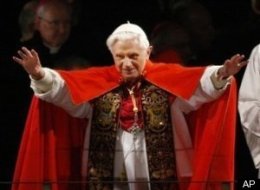
 The abuse cases of two priests in Arizona have cast further doubt on the Catholic church's insistence that Pope Benedict XVI played no role in shielding pedophiles before he became pope.
Documents reviewed by The Associated Press show that as a Vatican cardinal, the future pope took over the abuse case of the Rev. Michael Teta of Tucson, Ariz., then let it languish at the Vatican for years despite repeated pleas from the bishop for the man to be removed from the priesthood.
In another Tucson case, that of Msgr. Robert Trupia, the bishop wrote to then-Cardinal Ratzinger, who would become pope in 2005. Bishop Manuel Moreno called Trupia "a major risk factor to the children, adolescents and adults that he many have contact with." There is no indication in the case files that Ratzinger responded.
The details of the two cases come as other allegations emerge that Benedict – as a Vatican cardinal – was part of a culture of cover-up and confidentiality.
"There's no doubt that Ratzinger delayed the defrocking process of dangerous priests who were deemed 'satanic' by their own bishop," Lynne Cadigan, an attorney who represented two of Teta's victims, said Friday.
The Rev. Federico Lombardi, a Vatican spokesman, called the accusations "absolutely groundless" and said the facts were being misrepresented.
He said the delay in defrocking Teta was caused by a hold on appeals while the Vatican changed regulations over its handling of sex abuse cases. In the meantime, he said, cautionary measures were in place; Teta had been suspended since 1990.
"The documents show clearly and positively that those in charge at the Congregation of the Doctrine of the Faith ... have repeatedly intervened actively over the course of the 90s so that the canonic trial under way in the Tucson diocese could dutifully reach its conclusion," Lombardi said in a statement.
In the 1990s, a church tribunal found that Teta had molested children as far back as the 1970s, and the panel determined "there is almost a satanic quality in his mode of acting toward young men and boys."
The tribunal referred Teta's case, which included allegations that he abused boys in a confessional, to Ratzinger. The church considers cases of abuse in confessionals more serious than other molestations because they also defile the sacrament of penance.
It took 12 years from the time Ratzinger assumed control of the case in a signed letter until Teta was formally removed from ministry, a step only the Vatican can take.
Teta was accused of engaging in abuse not long after his arrival to the Diocese of Tucson in 1978. Among the eventual allegations: that he molested two boys, ages 7 and 9, in the confessional as they prepared for their First Communion.
Teta was removed from ministry by the bishop, but because the church's most severe punishment – laicization – can only be handed down from Rome, he remained on the church payroll and was working with young people outside the church.
In a signed letter dated June 8, 1992, Ratzinger advised Moreno he was taking control of the case, according to a copy provided to the AP from Cadigan, the victims' attorney. Five years later, no action had been taken.
"This case has already gone on for seven years," Moreno wrote Ratzinger on April 28, 1997, adding, "I make this plea to you to assist me in every way you can to expedite this case."
It would be another seven years before Teta was laicized.
Lombardi, the Vatican spokesman, said Teta was ordered defrocked in 1997. But Teta appealed, and the appeal remained on hold until the new regulations took effect in 2001.
"Starting in 2001, all the appeals that were pending were promptly taken up, and Teta's case was one of the first to be discussed," Lombardi said.
But this still took time, he said, because the documentation that had been presented was "especially voluminous." The sentence was upheld and in 2004 Teta was laicized.
The case of Trupia shows the fragmented nature of how Rome handled such allegations before 2001, when Ratzinger dictated that all abuse cases must go through his Congregation of the Doctrine of the Faith.
Before then, files were sent to varied Vatican departments, as they were in the case of Trupia. Moreno suspended Trupia in 1992, but again faced delays from the Vatican in having him formally removed from the church.
Documents show at least two Vatican offices – the Congregation for the Clergy and the Apostolic Signatura, the highest judicial authority of the Catholic Church – were involved in the case at least as early as 1995.
Moreno pleaded with the Congregation for the Clergy to do something, writing, "We have proofs of civil crimes against people who were under his priestly care" and warning Trupia could "be the source of greater scandal in the future."
Ultimately, the case landed in Ratzinger's office.
On Feb. 10, 2003, a day after the Arizona Daily Star reported that Trupia was living in a condo near Baltimore, driving a leather-seated Mercedes-Benz with a rosary hanging from the rearview mirror, Moreno wrote to Ratzinger again.
Sick with prostate cancer and the beginning stages of Parkinson's disease, Moreno was approved for early retirement by Pope John Paul II.
Before he was replaced, the bishop wrote Ratzinger yet again. Moreno's replacement, Bishop Gerald Kicanas, sent similar requests to Ratzinger and his subordinates.
"My experience – and as I've looked at the records in our serious cases – the Vatican actually was prodding, through the Congregation of the Doctrine of the Faith and Cardinal Ratzinger, to try to get this case going," Kicanas said.
Finally, in August 2004, Trupia was laicized.
"The tragedy is that the bishops have only two choices: Follow the Vatican's code of secrecy and delay, or leave the church," Cadigan, the victims' lawyer, said Friday. "It's unfortunate that their faith demands that they sacrifice children to follow the Vatican's directions."
Trupia's former attorney, Stephen A. Shechtel of Rockville, Md., said Friday that he never dealt with the church on his client's behalf and that Trupia was aware he would be defrocked and didn't fight it.
Bishop Gerald Kicanas, Moreno's replacement, defended the Vatican's handling of the Arizona cases, citing the prolonged process of internal church trials that he acknowledged could be "frustratingly slow because of the seriousness of the concerns."
Kicanas said suggestions that Ratzinger resisted addressing the issues of sexual abuse in the church were "grossly unfair."
"Cardinal Ratzinger, as the head of the Congregation for the Doctrine of the Faith, was always receptive, ready to listen, to hear people's concerns," Kicanas said. "Pope Benedict is the same man."
Couple's fight leads to crash with ambulance, police say
April 4, 2010
A Middle Smithfield Township couple's domestic dispute escalated to a wild ride with the husband clinging to the hood of his wife's car and ended when the car collided head-on with an ambulance.
Ricardo Amman, 48, was flown to Lehigh Valley Hospital-Cedar Crest, where he was listed in critical condition Saturday.
State police at Swiftwater said Amman and his wife, Judith, 52, had an argument at their home. Police said Judith Amman tried to drive away and her husband jumped on the hood of her car.
Judith Amman drove south on Edward Smith Boulevard and turned onto busy Route 209, which is also Milford Road, for roughly a half-mile while her husband hung on, police said.
The car was heading south on Route 209 while a Bushkill Township ambulance was traveling north on Route 209 with its emergency lights and siren on.
Police said Judith Amman hit the front bumper of the ambulance, sending Ricardo Amman into the hood of the ambulance.
Judith Amman was taken to Pocono Medical Center-East Stroudsburg. The ambulance driver, Ryan Felmy, 26, of Bushkill Township, and passenger, Joseph Bolger, 21, East Stroudsburg, were also taken to Pocono Medical Center. No information on their conditions was available.
Tyrone Richardson
The Morning Call
Sentinel exclusive
Doctor tells Obama supporters: Go elsewhere for health care
A Mount Dora doctor posted a sign telling Obama health care supporters to go elsewhere.
 |
|
Dr. Jack Cassell
|
|
Sign at the office door of Dr. Jack Cassell, a Mount Dora urologist. (Photo courtesy of Deirdre Lewis via Rep. Alan Grayson / April 1, 2010)
|
Orlando Sentinel
4:50 p.m. EDT, April 2, 2010

