truesee's Blog

Trucker has 28,000 pounds of pot

Trucker admits hauling 14 tons of marijuana on Interstate 15

10:49 PM PST on Wednesday, January 20, 2010

SARAH BURGE

The Press-Enterprise

An Ontario man arrested in what Riverside County sheriff's officials described as the largest marijuana seizure in county history pleaded guilty this week to transporting about 14 tons of marijuana with the intent to distribute it, federal court records show.

Angel Guillen Raya, 51, is scheduled for sentencing April 12.

His attorney, Jan Edward Ronis, said Guillen Raya has been a truck driver all his life and is married with stepchildren.

He was pulled over Aug. 26 on Interstate 15 south of Temecula driving a big rig stuffed with bundles of marijuana. According to the plea deal with the U.S. attorney's office, Guillen Raya had agreed to haul 28,000 pounds of marijuana from San Diego County to San Bernardino County in exchange for $10,000.

It wasn't the first time. Guillen Raya admitted he had been driving similar loads of marijuana for at least three months before his arrest, but the court documents do not specify how many trips he made.

According to an affidavit filed with the court, a Riverside County sheriff's deputy was driving north on Interstate 15 in a marked police vehicle about 9:30 a.m. when he saw a semitrailer tailgating another truck. As the deputy pulled alongside the semitrailer, the driver, later identified as Guillen Raya, changed lanes and nearly crashed into the deputy's vehicle, court records show.

The deputy pulled Guillen Raya over for making an unsafe lane change. A few minutes later, another deputy arrived with a drug-sniffing dog that "alerted" deputies to the presence of drugs in the truck, court records show.

Inside the trailer, deputies found pallets of marijuana stacked to the ceiling. Guillen Raya said it was the second delivery he had made that week to Ontario, court records show.

Sheriff's officials have said the deputy had no advance information about the truck and that the stop was purely the result of the deputy witnessing the unsafe lane change.

Thom Mrozek, spokesman for the U.S. attorney's office, said no else has been charged in connection with the case but there is an ongoing investigation into the source of the marijuana.

Entry #1,665

John Edwards Admits Paternity of Child with Mistress

John Edwards Admits Paternity Of Quinn

MIKE BAKER

01/21/10 11:22 AM  AP


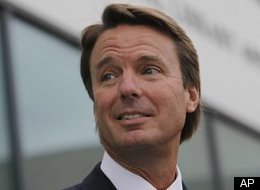
John Edwards 

RALEIGH, N.C. — Former Democratic presidential candidate John Edwards finally admitted Thursday he fathered a child during an affair before his second White House bid, dropping long-standing denials just ahead of a book by a former campaign aide who initially took the fall.

Edwards released a statement admitting paternity of the girl, Frances Quinn Hunter, who was born in 2008 to videographer Rielle Hunter as the result of an affair Edwards has already confessed to.

"It was wrong for me to ever deny she was my daughter," he said, adding he was providing financial support for the child and mother. "I am Quinn's father."

The admission comes ahead of the Feb. 2 release of a book by former Edwards aide Andrew Young that is expected to describe how Edwards worked to hide his paternity with Young's help.

Young initially claimed he was the child's father shortly before the 2008 presidential primary contests began. Word that Young was naming Edwards as the father first came when details of his book proposal were reported by The New York Times in September. Edwards' lawyer at the time declined to comment.

The child was born Feb. 27, 2008, indicating that she was conceived in the middle of 2007, several months after Hunter stopped working for Edwards. John and Elizabeth Edwards renewed their wedding vows in July of 2007 to celebrate their 30th wedding anniversary.

Hunter's lawyer, Michael Critchley, said the admission is "good for everyone."

Critchley said Edwards' statement amounted to a public acknowledgment of something that was known privately.

He said Hunter did not have an immediate comment. It is not clear where she and the child are living.

In an excerpt of an ABC News interview released Thursday, Young says that Edwards asked him to arrange a fake a paternity test.

"Get a doctor to fake the DNA results," Young said Edwards told him. "And he asked me ... to steal a diaper from the baby so he could secretly do a DNA test to find out if this (was) indeed his child."

An Edwards spokeswoman declined to comment on the ABC interview.

Elizabeth Edwards, whose cancer returned in an incurable form in March 2007, has stood by her husband despite the affair. She has said that it does not matter to her whether her husband fathered a child with Hunter, saying, "that would be a part of John's life, but not a part of mine."

Harrison Hickman, a longtime friend of John Edwards who worked as his political pollster, said Elizabeth Edwards was supportive of the decision of her husband to come forward.

"She's hoping, like a lot of people are hoping, that its the beginning of the end of the public part of this," Hickman said.

Since admitting the affair in August 2008, Edwards has largely gone into seclusion. He has acknowledged a federal investigation into his campaign finances while both Young and Hunter – with her child – have made appearances at a federal courthouse in Raleigh.

In his statement, Edwards said, "I will do everything in my power to provide her (the child) with the love and support she deserves. I have been able to spend time with her during the past year and trust that future efforts to show her the love and affection she deserves can be done privately and in peace."

Edwards also said, "It was wrong for me ever to deny she was my daughter and hopefully one day, when she understands, she will forgive me."

"I have been providing financial support for Quinn and have reached an agreement with her mother to continue providing support in the future," the statement said. "To all those I have disappointed and hurt, these words will never be enough, but I am truly sorry."

Edwards' attorney, Wade Smith, said Edwards wrestled with the decision to come forward but took so long to do it because "he's not the only person involved in this."

"It's a complex family situation, and he had to keep in mind that other people have concerns and worries about it," Smith said.

Smith said there would never be a logical explanation for why Edwards initially denied being the father. But he added that Edwards was "very pleased" to finally set the record straight.

"To say that life has been hard for John Edwards for the past year would be an enormous understatement," Smith said. "His life has totally fallen apart. It's been a very difficult time for him. He recognizes that he has been at fault."

Edwards, a former U.S. senator representing North Carolina from 1998 until his vice presidential bid in 2004, acknowledged in May that federal investigators were looking into how he used campaign funds. Grand jury proceedings are secret, and the U.S. attorney's office in Raleigh has declined to confirm or deny an investigation. Smith declined to comment Thursday about the probe.

Edwards adamantly denied during an interview with ABC News last summer that he had fathered a child with Hunter, and he welcomed a paternity test. He said then that the affair had ended in 2006. That year, Edwards' political action committee had paid Hunter's video production firm $100,000 for work.

Entry #1,664

United in anger Tea Party shows its muscle

Tea Party shows its muscle in Bay State

Stephanie Ebbert
Globe Staff
January 21, 2010

The anger driving this loose coalition of activists, united by a distrust of government, helped vault a little-known Republican state lawmaker into the Senate seat held for 47 years by liberal icon Edward M. Kennedy.

As Scott P. Brown’s populist message began making inroads into Democrat Martha Coakley’s commanding lead, the call went out online, via e-mail and in chat rooms, drawing Tea Party activists to Massachusetts to woo its famously liberal electorate.

“It was a miracle moment,’’ said Christen Varley, a 39-year-old blogger from Holliston who helped found the Greater Boston Tea Party last year. “Boom, he went from zero on the radar screen to what everyone was paying attention to.’’

Several Tea Party activists now are considering candidacies for state representative and state auditor, as well as Congress, said Varley. But many are focused on just making a statement, rather than building a viable third political party.

“I guess it’s just a way to vent our frustration, to make our voice heard,’’ said Barbara Klain, who cofounded the Greater Lowell Tea Party with a bunch of signs and no e-mail address. People were not sure what to make of their Tea Party Boat Float in the Chelmsford Fourth of July Parade, she said. Now she has about 400 members.

“It seems to be working,’’ Klain added. “I had no idea we were going to have this impact when I started last year. It’s very satisfying. And it’s a little scary, too.’’

Until recently, the Tea Party movement had not seemed to be surging in Massachusetts. Activists in Boston, Worcester, and Lowell held protests on tax day, April 15, like their compatriots. Some joined a Sept. 12 protest in Washington, D.C. But Varley’s group launched a website only in December, a month after meeting with other Massachusetts activists and deciding that they would not endorse a Senate candidate.

Enthusiasm for Brown began to soar, however, after the campaign asked Varley to recruit voters for a fund-raiser and about 150 of those on her e-mail list of 1,300 turned out for a snowy morning breakfast fund-raiser in Westborough. He spent 2 1/2 hours, Varley said, talking to conservative voters who urgently wanted to be heard.

“I spent the next two days saying, if you like Scott Brown, go out and spread the word,’’ Varley said. “That’s what they did. And it exploded.’’

The same thing was happening elsewhere, as conservative pundits began training their attention on the race and activists from states including Rhode Island, Connecticut, and New York began flocking to Massachusetts to hold signs, make calls, or do whatever it took to help block health care reform through Brown’s election.

That word-of-mouth fervor was helpful for a minority-party candidate who had limited infrastructure in Massachusetts and no funding expected from the national party that had given up on the seat.

Brown’s candidacy began going viral among conservatives just after the new year, at about the same time the campaign launched a controversial ad showing President John F. Kennedy’s likeness morph into Brown’s and at a time when Brown was hitting the conservative airwaves and the Coakley campaign was mostly dormant.

Brown was not a perfect fit for the Tea Party platform, an amalgam of antigovernment complaints that coalesce around issues of shrinking government and preventing national health care reform.

In a scorching analysis circulated a week before the election, Massachusetts small-government activists Michael Cloud and Carla Howell tried to dissuade Tea Party voters from supporting Brown, noting that as a legislator he had supported health care reform in Massachusetts and urged voters to defeat their popular but unsuccessful 2008 ballot question to eliminate the income tax.

“Scott Brown is the worst fake tax-cutter in the Massachusetts legislature,’’ they wrote. “And a fake ally is more dangerous than an open enemy,’’

Senate candidate Joseph L. Kennedy, a 38-year-old Libertarian from Dedham who was a Tea Party enthusiast before he was a candidate for the Senate against Brown, thinks he should have been the beneficiary of the activists’ fervor.

“The people in the tea parties sold their own soul,’’ Kennedy said.

Yesterday, as the next round of challengers lined up to continue the electoral surge, Brown endorsed Republican Bill Hudak’s candidacy against US Representative John Tierney.

Martin Lamb of Holliston plans to challenge US Representative Jim McGovern; Brad Marston is running for state representative, and independent Kamal Jain of Lowell for state auditor, members of the group said. Massachusetts GOP chairwoman Jennifer Nassour was leery of giving too much credit to the insurgent Tea Party movement.

“I couldn’t tell you who they were if they walked past me,’’ said Nassour. “I think that really, the people that got involved on Scott’s race were the ones that just really were motivated for things to be different here.’’

That said, she is not going to decline the assistance when the party represents such a small fraction of the state’s voters.

“We’re 12 percent, so quite honestly, anyone who’s going to come along and help us are welcome,’’ said Nassour.


LINK TO VIDEO:

http://www.boston.com/video/viral_page/?/services/player/bcpid19067533001&bctid=62518656001

Entry #1,663

Wide-Bodied Passengers Charged Double To Fly

Wide-Bodied Passengers Charged Double To Fly

1:20pm UK, Wednesday January 20, 2010


Izzy Broughton

Sky News 

Overweight passengers who cannot squeeze into a single plane seat are to be charged double to fly with Air France.

Air France is to make larger passengers pay for two seats

People who cannot fit into a standard seat will be asked to pay for two seats, or not be allowed on board for "safety reasons", according to the airline.

Air France spokeswoman Monique Matze said: "We have to make sure that the backrest can move freely up and down and that all passengers are securely fastened with a safety belt.

"The charge will only apply on flights that are fully booked. They will get their money back on flights where spaces are available."

The airline intends to charge passengers 75% of the cost of the second seat on top of the full price for the first. 

Air France was ordered to pay £5,000 damages in 2007 for "humiliation" to a 27-stone passenger at an airport check-in desk in New Delhi.

Frenchman Jean-Jacques Jauffret, 43, had his stomach measured by Air France staff before being told he needed to buy two seats.

Mr Jauffret claimed he was told: "People as fat as you need to buy two seats." 

United Airlines introduced the same policy last year, making passengers with extra-wide bodies pay for an extra seat.

Air France's new charges will apply for people who book their tickets from February 1 for all flights from April 1.

Entry #1,662

Sitting Too Much Could Be Deadly

Experts: Sitting Too Much Could Be Deadly

Scientists Say Exercise Won't Necessarily Cancel Out Prolonged Sitting

MARIA CHENG

AP Medical Writer

POSTED: 10:42 am EST January 20, 2010
UPDATED: 6:33 pm EST January 20, 2010

LONDON -- Here's a new warning from health experts: Sitting is deadly.

Scientists are increasingly warning that sitting for prolonged periods -- even if you also exercise regularly -- could be bad for your health. And it doesn't matter where the sitting takes place -- at the office, at school, in the car or before a computer or TV -- just the overall number of hours it occurs.

Research is preliminary, but several studies suggest people who spend most of their days sitting are more likely to be fat, have a heart attack or even die.

In an editorial published this week in the British Journal of Sports Medicine, Elin Ekblom-Bak of the Swedish School of Sport and Health Sciences suggested that authorities rethink how they define physical activity to highlight the dangers of sitting.

While health officials have issued guidelines recommending minimum amounts of physical activity, they haven't suggested people try to limit how much time they spend in a seated position.

"After four hours of sitting, the body starts to send harmful signals," Ekblom-Bak said. She explained that genes regulating the amount of glucose and fat in the body start to shut down.

Even for people who exercise, spending long stretches of time sitting at a desk is still harmful. Tim Armstrong, a physical activity expert at the World Health Organization, said people who exercise every day -- but still spend a lot of time sitting -- might get more benefit if that exercise were spread across the day, rather than in a single bout.

That wasn't welcome news for Aytekin Can, 31, who works at a London financial company, and spends most of his days sitting in front of a computer. Several evenings a week, Can also teaches jiu jitsu, a Japanese martial art involving wrestling, and also does Thai boxing.

I'm sure there are some detrimental effects of staying still for too long, but I hope that being active when I can helps," he said. "I wouldn't want to think the sitting could be that dangerous."

Still, in a study published last year that tracked more than 17,000 Canadians for about a dozen years, researchers found people who sat more had a higher death risk, independently of whether or not they exercised.

"We don't have enough evidence yet to say how much sitting is bad," said Peter Katzmarzyk of the Pennington Biomedical Research Center in Baton Rouge, who led the Canadian study. "But it seems the more you can get up and interrupt this sedentary behavior, the better."

Figures from a U.S. survey in 2003-2004 found Americans spend more than half their time sitting, from working at their desks to sitting in cars.

Experts said more research is needed to figure out just how much sitting is dangerous, and what might be possible to offset those effects.

"People should keep exercising because that has a lot of benefits," Ekblom-Bak said. "But when they're in the office, they should try to interrupt sitting as often as possible," she said. "Don't just send your colleague an e-mail. Walk over and talk to him. Standing up."

Entry #1,661

Men Try To Rob Store, But Nobody's There

Jan 20, 2010 9:21 am US/Central

Men Try To Rob Store, But Nobody's There

Robbers Stick Up Store In Joliet That Has No Customers Or Employees

JOLIET, Ill. (Sun-Times Media Wire) 

 
CBS


If you arm yourself, put on a ski mask and walk up to the counter demanding money but nobody is around to hear it, is it still a robbery?

Police say it's an attempt. Two men and one juvenile face charges after reportedly trying to pull a stickup that lacked victims.

Deputy Chief Mike Trafton said Sanjuan F. Reyes, 22, Jose M. Torres, 17, and a 16-year-old Joliet boy met around 7:30 p.m. Monday in an alley near Supermercado Viva Mexico, at 600 E. Jackson St. in Joliet.

"They'd decided to rob the grocery store and put on ski masks and bandanas. The 16-year-old went inside with an air pistol while the other two acted as lookouts," Trafton said.

The two men reportedly told detectives they saw the teen walk up to the register, look around and come back outside.

"He said, 'What the (expletive)? No one's in the store,'" Trafton said.

Reyes and Torres allegedly told police they laughed when informed of the lack of visible customers and employees, but decided to remain in the area.

But a neighbor already had called police about the masked men carrying weapons outside.

As customers went inside, the trio allegedly went back inside the store. That's when police arrived.

Reyes remained inside, but Torres and the juvenile ran in different directions, police said. Both were caught after short footchases and a weapon was found on the juvenile, Trafton said.

"An officer began to interview Reyes as a witness, but his nervous behavior started to reveal (him as a) suspect," Trafton said. Police reportedly found Reyes was carrying a bandana with eyeholes cut in it.

After he was questioned at the police station, a detective allegedly found a second BB gun hidden behind some juice boxes in a cooler in the store.

"All three of the suspects admitted to trying to rob the store," Trafton said.

The juvenile was booked into the River Valley Juvenile Detention Center. Reyes and Torres were charged with attempted robbery. Reyes was also charged with obstructing justice and for failing to appear on three outstanding warrants.

In August, Reyes was reportedly clocked driving 20 miles over the speed limit on Route 53 in Elwood. When he pulled over, police learned the unlicensed driver's vehicle, a 2004 Mitsubishi Endeavor, had been reported stolen from Joliet that day.

Torres was also charged with resisting a police officer. Before being booked into the county jail, a Joliet officer reportedly saw him scratching paint off the cell doors of the police station's holding area.

Torres reportedly said he was attempting to remove graffiti already scratched into the door that was "dissing his gang."
Entry #1,660

Man Tells Police He Paid For Sex, Didn't Get It

Police: Man Says Woman Refused Sex After He Paid For It

Man, Woman Both Charged With Prostitution

WMUR 9

5:46 pm EST January 19, 2010

MARLBOROUGH, N.H. -- A man and a woman were charged with prostitution Tuesday after, police said, the man called them to report that the woman didn't have sex with him after he paid for it.

Jeanna Mercure, 22, of Manchester, N.H., and Robert Smith, 32, of Marlborough, were charged with prostitution.

Police said Smith called the Marlborough Police Department on Monday and reported that he had paid Mercure and a third party $150 to have sex with him on Sunday night. Smith called police after Mercure failed to have sex with him, police said.

Mercure is scheduled to be arraigned on May 24, and Smith is scheduled to be arraigned on Feb. 11.

LINK TO PHOTOS:

http://www.wmur.com/news/22276692/detail.html

Entry #1,659

Speaker Nancy Pelosi will use intimidation after political setback

POLITICAL SETBACK

With 60th vote gone, a search for a new strategy

Democrats split on starting anew on health deal

WORK TO DO Speaker Nancy Pelosi should be willing to use intimidation, said Ross Baker of Rutgers University.

WORK TO DO


Speaker Nancy Pelosi should be willing to use intimidation, said Ross Baker of Rutgers University.

Lisa Wangsness

Globe Staff

January 20, 2010

WASHINGTON - Republican Scott Brown’s victory has deprived President Obama and his party of the crucial 60th Senate vote they were counting on to pass a sweeping overhaul of the US health care system in the coming weeks, sending Democratic leaders racing to devise an emergency alternative strategy and creating the very real possibility the effort could collapse.

Democrats were sharply divided over what to do. Some vowed to press on. But a number of others rejected the notion of using parliamentary maneuvers or having the House quickly pass the Senate bill, saying it was time to step back and reevaluate their approach.

“It would be wrong substantively and politically for Democrats to try to pass the bill despite the election,’’ said Representative Barney Frank, Democrat of Massachusetts. “I think we now have to begin some negotiations over a different bill.’’ He said the next step should be to see whether Republicans will make good on their persistent offers to start anew on a bipartisan deal.

The loss of the 60th Senate vote means Democrats will need at least one Republican to accomplish virtually anything on their or the president’s agenda. Relations between the parties have soured to such a degree that even relatively routine matters became full-fledged partisan parliamentary battles late last year.

Failure to enact a health care bill, which the president made his top domestic priority and Congress spent a year pursuing, could be a political disaster of epic proportions for Democrats, casting serious doubt on their ability to govern and further jeopardizing their political position heading into this year’s elections.

After President Clinton’s health bill died in 1994, Democrats suffered record losses in the midterm elections.

And if the legislation dies, there is no telling when any president or Congress might try again to address the problem of the nation’s nearly 50 million uninsured.

“Members will feel there is no political upside for dealing with it,’’ said Ron Pollack, executive director of Families USA and a leading proponent of the overhaul effort. “I think it is now or one or more decades from now.’’

Democratic leaders showed little interest in trying to hurry up and pass a compromise bill based on the House-Senate negotiations of this month before Brown is formally seated.

They also seemed loath to use a special parliamentary process known as “reconciliation,’’ which allows revenue-related items to pass the Senate with a simple majority of 51 votes, to shoehorn through a scaled back, and possibly more partisan, bill. Another route could be for the House to pass the Senate bill, with the understanding that it would be “fixed’’ later using reconciliation.

Representative Patrick Kennedy of Rhode Island, the son of the late Senator Edward M. Kennedy, said he thought this was the best way forward.

“We’ve got to get it done,’’ he said. “To start from scratch and try to cobble something together is politically a very difficult thing to do.’’

House majority leader Steny Hoyer would not comment on the postelection strategy yesterday, but he told reporters, “I think the Senate bill is clearly better than nothing.’’ But the difficulties of engineering such a strategy would be great because House members disagree with the Senate on so many fronts.

House leaders would have to proceed quickly and carefully, gauging whether they could coax enough nervous House members to trust them to fix what they regard as the bill’s flaws.

If anything could make the House leaders’ situation even worse, it would be for the House to try to pass the Senate bill - and fail.

Representative Bart Stupak, Democrat of Michigan and the leader of the antiabortion Democratic contingent in the House, said: “I wouldn’t consider it. Promises don’t make it.’’

Ross Baker, a political science professor at Rutgers University, said House Speaker Nancy Pelosi would have to both reassure members the party will bolster their reelection bids and discipline recalcitrant members.

“She’s got to lean on people,’’ he said.

But some members rejected all of those approaches, arguing the party should take a step back. Frank said, “Any suggestion that Democrats try to get cute with this is a terrible idea.’’

Representative Anthony Weiner, Democrat of New York, said: “When you have large numbers of citizens in the United States of America who believe this is going in the wrong direction, there’s a limit to which you can keep saying that OK, they just don’t get it, if we just pass a bill, they’ll get it,’’ he said.

Len Nichols, a health economist with the New America Foundation, said he still thinks the best way forward for Democrats would be to return to Senator Olympia Snowe, Republican of Maine, and possibly her fellow moderate Maine Republican, Susan Collins, and strike a compromise.

“I know just from interacting with staff on both sides of the aisle that she and Collins engaged in various amendments right up until the end,’’ he said. “I don’t think they are beyond the pale.’’

But others doubted that strategy would work. After Brown’s victory, Republicans would put almost inconceivable pressure on any member of the GOP who would offer political smelling salts to their adversaries.

Susan Milligan of the Globe staff contributed to this report.

Entry #1,658

Barack Obama had a troubled first year in office

The Times

January 20, 2010

Barack Obama floundering a year on after wave of goodwill crashes 

Tim Reid in Washington
Barack Obama has had a troubled first year in office

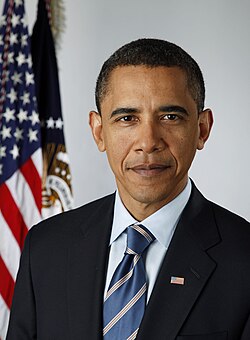
                  Barack Obama

 Portrait of Barack Obama 

When Barack Obama took the oath of office before a shimmering wave of humanity a year ago today with his approval rating at 70 per cent, he and the Democrats controlling Congress believed that history beckoned — and that they had the clout and popular support to shape it.

Yesterday the President and his party were scrambling to avoid losing Teddy Kennedy’s Massachusetts Senate seat — an unthinkable development even a month ago — and are bracing themselves for a bloodbath in congressional elections this November. It shows just what a debilitating first year they have suffered, and what a perilous 2010 beckons.

On that freezing but sparkling January morning 12 months ago, Mr Obama promised to usher in a new era of bipartisanship in Washington and to remake the American economy and the country’s social contract with a wealth of historic legislation that a Democratic-controlled Capitol Hill would send to his desk.

Today his approval rating has dropped to less than 50 per cent. Democrats are nervous and depressed. In November’s mid-term elections they will almost certainly lose their 60-seat, filibuster-proof majority in the Senate — if they have not already lost it by ceding the Massachusetts seat. Last night Mr Obama acknowledged the possibility of losing it.

In the House, it is likely that the party will lose between 20 and 30 seats, and could cede control of the lower chamber entirely. Such a notion appeared impossible a year ago.

Mr Obama remains personally popular, but his policies have unnerved many Americans who voted for him, in particular independents, whose support was critical to his election victory. In a poll this week, only 49 per cent of unaffiliated voters approved of Mr Obama’s performance: lower than any of his recent predecessors at this stage in their presidencies.

Voters are angry, restless and deeply disaffected with Washington. They are unconvinced that Mr Obama’s prescription of massive government intervention has succeeded in any area, except in exploding the federal budget deficit and leaving generations of Americans awash in national debt. On inauguration day, only 19 per cent of Americans thought that the country was on the right track. That rose to 50 per cent by April but has slipped to 37 today.

Last year’s financial collapse was not brewed on Mr Obama’s watch but voters hold the President and his party responsible for fixing it. The approval rating for Democrats has dropped to toxic levels.

Unemployment remains stubbornly stuck at 10 per cent, despite $2 trillion of federal stimulus and other forms of intervention. Americans are disgusted and outraged that the very banks who caused the crisis, and who were bailed out with billions of taxpayer dollars, are now paying huge bonuses again.

Republicans are running on an obstructionist agenda that has at its core a passionate opposition to Mr Obama’s ten-year $1 trillion health reform legislation, the heart of his domestic agenda. It is bearing fruit, as the closeness of the Massachusetts race has demonstrated. For months, voters have wanted Mr Obama to focus on job creation but he has invested enormous time and political capital in health insurance reform that a majority now say they do not want.

Republicans have succeeded in painting his domestic legislative agenda as reckless big government that will bankrupt America. Newt Gingrich, the former Republican Speaker of the House, summarised the fears of many voters: that Mr Obama might become “a failed, big-government president”.

“What I haven’t been able to do in the midst of this crisis is bring the country together in a way that we had done in the inauguration,” Mr Obama admitted recently. “That’s what’s been lost this year.”

A majority of Americans oppose Mr Obama’s troubled pledge to shut Guantánamo Bay and his decision to try the self-confessed mastermind of the September 11, 2001, attacks in a civilian court a few blocks from Ground Zero. They also fear that his efforts at reaching out to America’s enemies, such as Iran, leave the US looking supine.

The next few months will be critical for Mr Obama. If he succeeds in passing healthcare reform it will be a big victory. If he fails, it will be a disaster. By November his super-majority in Congress will be gone and his domestic agenda — along with his presidency — will be dangerously stalled.

Entry #1,657

Man breaks into house showers, cuts hair and cooks

Police: Easton man broke into city home, showered, cut hair and cooked chicken


Michael Buck

The Express-Times 

January 19, 2010, 12:25PM

An Easton man broke into a West Ward home on Sunday, cut his hair, took a shower, cooked fried chicken then refused to leave when the homeowner found him watching television, court records say.

According to court records:

Jose N. DeGracia, of the first block of North Fourth Street, broke into the home in the first block of South 15th Street by smashing the front door window with a large rock.

Grace Kraus, who lives at the home, told police she came back to find DeGracia sitting in her television room. She told police she did not know the man and he refused to leave.

Police said it appeared as though DeGracia had visited every room in the house. Kraus' family photos were turned face down and several photos were taken off the walls. Dressers and closets had been rummaged through. DeGracia had also allegedly taken a shower and cut his hair in the kitchen, where he was also preparing fried chicken.

DeGracia was arrested and charged with burglary, criminal trespass, theft and criminal mischief. He was sent to Northampton County Prison in lieu of $15,000 bail.

Entry #1,656

Baby, 18 months smoking sparks outrage

'Smoking Baby' Sparks Up Facebook Outrage

3:58pm UK

Tuesday January 19, 2010


David Williams

Sky News


A teenage mother has received a visit from the police after a photo of her baby son with a cigarette hanging from his mouth was posted online.


Ollie Davey and mother RebeccaPolice said they had "no immediate concerns" over the welfare of baby Ollie

Rebecca Davey, 18, was apparently reported by concerned friends who had seen the picture on Facebook.

It showed six-month-old Ollie posing with the unlit cigarette.

Essex police learned of the image on Saturday and traced the teenager's home address to Southend in Essex.

A spokesman said they had "no immediate concerns" for the boy's welfare after the visit, but confirmed the matter had been referred to social services.

The offending photo has since been removed from the site, but it was printed in The Sun.

Southend Borough Council said its officers would be visiting the child's family again within the day.

Sue Cook, head of specialist children's services, said: "The purpose of the visit is to ensure that any child within the household is being appropriately cared for."

Friends of Ms Davey were quick to offer their support after the photo appeared in the media.

One online friend, Harry Afc Digenous, posted: "F*** The Sun. Take them to court."

Another friend, Jade Clark, told the mother she had spotted the image in the paper, just above a posting from Davey herself, announcing Ollie has two teeth "bless him".

Fury as baby ‘smokes’ fag


LINK TO STORY:


http://news.sky.com/skynews/Home/UK-News/Mother-Visited-By-Police-After-A-Photo-Of-Her-Baby-Son-With-Cigarette-In-His-Mouth-Was-Posted-Online/Article/201001315530889?f=rss

Entry #1,655

Facebook has a major flaw

ajc.com


Georgians uncover Facebook flaw

Jordan Robertson

Associated Press

6:32 a.m. Tuesday, January 19, 2010


San Francisco — A Georgia mother and her two daughters logged onto Facebook from mobile phones last weekend and wound up in a startling place: strangers’ accounts with full access to troves of private information.

The glitch — the result of a routing problem at the family’s wireless carrier, AT&T — revealed a little-known security flaw with far-reaching implications for everyone on the Internet, not just Facebook users.

In each case, the Internet lost track of who was who, putting the women into the wrong accounts. It doesn’t appear the users could have done anything to stop it. The problem adds a dimension to researchers’ warnings that there are many ways online information — from mundane data to dark secrets — can go awry.

Several security experts said they had not heard of a case like this, in which the wrong person was shown a Web page whose user name and password had been entered by someone else. It’s not clear whether such episodes are rare or simply not reported. But experts said such flaws could occur on e-mail services, for instance, and that something similar could happen on a PC, not just a phone.

“The fact that it did happen is proof that it could potentially happen again and with something a lot more important than Facebook,” said Nathan Hamiel, founder of the Hexagon Security Group, a research organization.

Candace Sawyer, 26, says she immediately suspected something was wrong when she tried to visit her Facebook page this month.

After typing Facebook.com into her Nokia smart phone, she was taken into the site without being asked for her user name or password. She was in an account that didn’t look like hers. She had fewer friend requests than she remembered. Then she found a picture of the page’s owner.

“He’s white — I’m not,” she said with a laugh.

Sawyer logged off and asked her sister, Mari, 31, her partner in a dessert catering company, and their mother, Fran, 57, to see whether they had the same problem on their phones.

Mari landed inside another woman’s page.

Fran’s phone — which had never been used to access Facebook before — took her inside yet another stranger’s page, one belonging to a young woman from Indiana. They sent an e-mail to one of their own accounts to prove it.

They were dumbfounded.

“I thought it was the phone — ‘Maybe this phone is just weird and does magical, horrible things and I have to get rid of it,’ ” Candace Sawyer said.

The women, who live together in East Point, had recently upgraded to the same model of phone and all used the same carrier, AT&T.

 awyer contacted The Associated Press after reporting the problem to Facebook and AT&T.

The problem wasn’t in the phones. It was a flaw in the infrastructure connecting the phones to the Internet.

That illuminates a grave problem.

Generally Web sites and computers are compromised from within. A hacker can get Web pages or computers to run programming code that they shouldn’t. But in this case, it was a security gap between the phone and the Web site that exposed strangers’ Facebook pages to the Sawyers. Misconfigured equipment, poorly written network software or other technical errors could have caused AT&T to fumble the information flowing from the Sawyers’ phones to Facebook and back.

Fortunately, Hamiel said, the vulnerability would be of limited use to a hacker interested in pulling off widespread mayhem, because this hole would let him access only one account at a time. To do more damage the criminal would have to pull off the unlikely feat of gaining full control of the piece of equipment that routes Internet traffic to individual users.

AT&T spokesman Michael Coe said its wireless customers have landed in the wrong Facebook pages in “a limited number of instances” and that a network problem behind those episodes is being fixed.

The Sawyers experienced a different glitch. Coe said an investigation points to a “misdirected cookie.” A cookie is a file some Web sites place on computers to store identifying information — including the user name that Facebook members would enter to access their pages. Coe said technicians couldn’t figure out how the cookie had been routed to the wrong phone, leading it into the wrong Facebook account.

He also said AT&T could confirm only that the problem occurred on one of the Sawyers’ phones, possibly because they had logged off Facebook on the other two before reporting the incident.

Facebook declined to comment and referred questions to AT&T.

Some Web sites would be immune from this kind of mix-up, particularly those that use encryption. A Web browser would have trouble deciphering the encryption on a page that a computer user didn’t actually seek, said Chris Wysopal, co-founder of Veracode Inc., a security company.

Sensitive sites and those used for banking and e-commerce generally use encryption. But most other sites, including some Web-based e-mail services, don’t use it. One way of checking: The Web addresses of encrypted sites begin with “https” rather than “http.” Facebook uses encryption when user names and passwords are entered, to cloak the sign-on from snoops, but after the credentials are entered the encryption is dropped.

It’s unclear how many people were affected by the problem the Sawyers discovered, and whether it was limited to Facebook.

The reason all three women experienced the glitch is a function of the way cellular networks are designed. In some cases, all the mobile Internet traffic for a particular area is routed through the same piece of networking equipment. If that piece of equipment is misbehaving or set up incorrectly, strange things happen when computers down the line receive the data.

Usually that means a Web site simply won’t load, said Alberto Solino, director of security consulting services for Core Security Technologies. In the Sawyers’ case, “somehow they got the wrong user but they could keep using that account for a long period of time. That’s what’s strange,” he said.

The AP tried to contact two of the people whose Facebook pages were exposed to the Sawyers, but the calls and e-mails were not returned. It’s unclear whether they are also AT&T customers, though security experts said that’s likely the case.

Indeed, it was the case in a similar incident in November.

Stephen Simburg, 25, who works in marketing, was home for Thanksgiving in Vancouver, Wash., when he logged onto Facebook from his cellphone. He didn’t recognize the people who had written him messages.

“I thought I had gotten really popular all of a sudden, or something was wrong,” he said. Then he saw the picture of the account owner: A young woman.

He got her e-mail address from the site, logged off and wrote the woman a message. He asked whether he had met her at some point and she had borrowed his phone to check her Facebook account.

“No,” she wrote back, “but I was just telling my family that I ended up in your profile!”

Simburg and the woman figured out they were both using AT&T to access Facebook on their phones. (AT&T had no comment because the incident wasn’t reported to the company.)

“I felt like I had been let down by the phone company and by Facebook,” he said.

He says he has put the incident behind him. But one piece of it remains: He and the young woman are now Facebook friends.

Find this article at:

http://www.ajc.com/news/georgians-uncover-facebook-flaw-277927.html



Entry #1,654

Billboard prompt 911 calls

I-95 billboard 'man and bear' prompt 911 calls

Noelle Frampton

Connecticut Post

STAFF WRITER

02:13 a.m., Saturday, January 16, 2010

BRIDGEPORT -- A local car dealer's unconventional billboard advertising is attracting more than passing attention from motorists.

A life-sized mannequin perched with a teddy bear atop the billboard near Interstate 95's northbound exit 26 is also prompting occasional calls to the emergency "911" number from travelers who fear the figures are about to topple off.

But dispatchers at State Police Troop G barracks tell concerned callers that the "man" isn't real -- and that he and his companion bear have been up there for a while.

A marketing device designed to increase customer traffic for BMW of Bridgeport's overnight test drive offer, the mannequin is dressed in pajamas. The man and bear were lifted to the top of the billboard about two months ago, said Tim Coughlin, the North Avenue dealership's general sales manager.

No one expected the mannequin idea -- which dealership officials brainstormed roughly three years ago -- to generate 911 calls, he said.

"For whatever reason, it's working because people are looking at it," Coughlin said with a chuckle. "It has become distinctive and sort of like a signature."

Before the teddy bear motif, another BMW of Bridgeport billboard featured a dummy with extra long legs hanging down over the sign to signify the dealership's growth, he said.

According to Troop G, there have been at least three calls since the current billboard went up, and they've mostly come after dark.

This isn't the first time BMW of Bridgeport has heard comments on its advertising.

Most of the feedback has been positive, Coughlin said, but there was the time that a man came to the dealership and waited 10 minutes to speak to a manager.

"He says, `I want to know, why do you have that mannequin with the long legs?' " Coughlin recalled. "He said, `I don't get it. I don't think it's funny and I'm offended by it.' "

Still, the dealership has found that putting dummies atop billboards is smart advertising.

The dealer hopes the teddy bear and pajamas promote the message, "We'll take care of you," Coughlin said. Under the program, the dealership allows prospective buyers to take home a new BMW and "let it sleep in your garage for the night" before committing to buying the vehicle.

"It's done very well for us ... We do a lot of overnight test drives because of it," he said, adding that such prolonged "test drives" often result in sales.

And while the man ensconced on the billboard has been seated securely from the start, the teddy bear has been in peril.

The giant stuffed toy even disappeared for a time -- whether he was taken or simply fell off the billboard, no one knew -- and never was found.

The dealership considered offering a reward, Coughlin joked, but in the end, "We just replaced him."

Lt. J. Paul Vance, the State Police spokesman, could not be reached for comment Friday because of a statewide State Police awards ceremony.


A mannequin and giant teddy bear sit on top of a billboard, advertising BMW of Bridgeport, near exit 26 northbound on I-95, in Bridgeport, Conn. Jan. 15th, 2010. (Courtesy: Ned Gerard / Connecticut Post)

Entry #1,653

Driver shoots out window to survive

1/18/10

Driver shoots out window to survive accident

Eric Laughlin

The Press Tribune

A Roseville man used quick thinking to survive a Sunday morning accident that left his car submerged in an Industrial Avenue creek.

The unidentified 28-year-old man, an armed security guard employed by Thunder Valley Casino, was able to use his handgun to shoot a hole in one of the car's windows as the vehicle sank into Pleasant Grove Creek on Industrial Avenue in Roseville near the Santucci Justice Center.

The man was able to crawl through the broken window and to make it back up to the roadway, where he flagged down a passing motorist.

The driver told investigators that he struck the guardrail and went into the creek after his Blue Tooth phone device startled him while driving. There were no signs of drugs or alcohol, according to Roseville Police Lt. Michael Allison. The incident took place at approximately 9 a.m. Sunday.

Industrial Avenue had to be closed for a few hours while officials pulled the 2005 Ford Focus station wagon out of the creek.

Entry #1,652