LiLSpeedy's Blog

People that live in glass houses...

Republican Who Attacked Obama Girls Was Arrested as a Teenager for Misdemeanor Larceny

By: Sarah Jones more from Sarah Jones
Monday, December, 1st, 2014, 2:19 pm

 Elizabeth Lauten

Apparently “misdemeanor larceny” is the new “teenager showing class” in the Republican Party.

I didn’t realize just how true it was when I wrote that Ms. Lauten had a double standard for this President’s children. And normally I wouldn’t touch a story about a GOP staffer who got arrested as a teenager, but in this case it’s not only relevant because she clearly has a projection problem but serves as a shining example of GOP double standard and white privilege in action.

So. Elizabeth Lauten, who “resigned” this morning after making a fool of herself by airing her Obama Derangement Syndrome in public by aiming it as his teenage children, was arrested as a teenager in December 2000 for misdemeanor larceny, according to court records reported by The Smoking Gun.

Yes, a 17-year-old Lauten stole from Belk department store in her North Carolina hometown according to the Smoking Gun:


Lauten, pictured above, was arrested in December 2000 for misdemeanor larceny, according to court records. Lauten, then 17, was collared for stealing from a Belk department store in her North Carolina hometown.

Because Lauten was a first-time offender, her case was handled via the District Court’s deferred prosecution program, which resulted in the charge’s eventual dismissal after the future scold stayed out of trouble for a prescribed period.

Since Lauten was just another teenager caught shoplifting at the mall, it appears unlikely that she was publicly pilloried for her lack of class, nor were her parents criticized as poor role models.

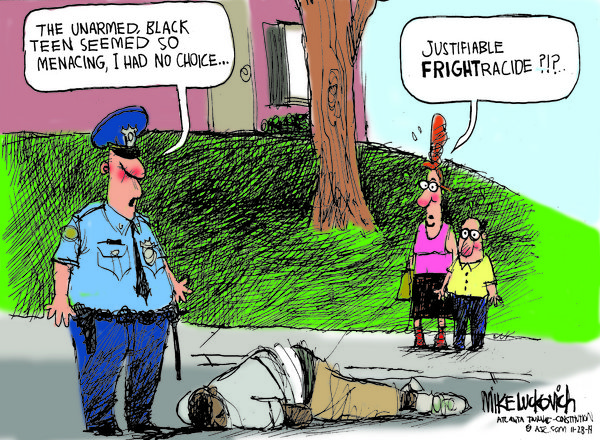
Some first offenders get shot at and killed after stealing something like, oh, say — cigars. This one rose to the ranks of privilege in the Republican Party from whence she felt it her right to scold two very well behaved young girls for acting like teenager girls who are not being arrested for larceny.

As The Smoking Gun notes, Ms. Lauten was probably not attacked in public for her lack of class and no one blamed her parents for her misdemeanor larceny charges. Remember, she scolded the Obama girls for what they wore as well. Obviously, had they stolen it from Belks, it would have been so much better:

“Dear Sasha and Malia, I get you’re both in those awful teen years, but you’re a part of the First Family, try showing a little class. At least respect the part you play. Then again your mother and father don’t respect their positions very much, or the nation for that matter, so I’m guessing you’re coming up a little short in the ‘good role model’ department. Nevertheless, stretch yourself. Rise to the occasion. Act like being in the White House matters to you. Dress like you deserve respect, not a spot at a bar. And certainly don’t make faces during televised public events.”

If this is true, this is a case of projection of Ms. Lauten’s own poor behavior onto young girls who were only slightly bored by their father’s prattling on about a turkey pardon and the ugly white hood of white privilege. The white privilege is evident in the fact that her arrest charges were dropped and she was allowed a second chance as if it were her due because she was a good girl; also known as a white girl from a good family in the South.

I believe in second chances, so good for her. But I don’t believe that skin color mitigates a person’s right to a second chance. And this is the issue. She publicly mocked the Obama girls over nothing, but expected her own apparently criminal actions as a teenager to be just part of growing up. If she knew she had this history, a smart person wouldn’t have opened herself up for closer scrutiny about the behavior of teenagers.

So what we have here is a woman who was arrested as a teenager for larceny, attacking the Obama girls over their eye rolls.

Let’s just let that marinate for a while.


Republican Who Attacked Obama Girls Was Arrested as a Teenager for Misdemeanor Larceny was written by Sarah Jones for PoliticusUSA.
© PoliticusUSA, Mon, Dec 1st, 2014 — All Rights Reserved
Entry #416

Useless distractions concerning Ferguson

What Does 'Black-On-Black Crime' Have to Do With Ferguson?

Posted: 11/30/2014 1:26 pm EST Updated: 11/30/2014 1:59 pm EST

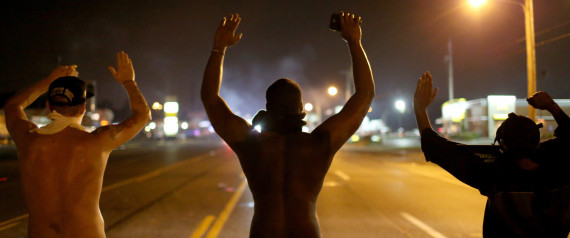
FERGUSON HANDS UP
Joe Raedle via Getty Images

The answer to the question posed in this post's title is nothing. Absolutely nothing. Not one thing. Nada. Zip. Zero.

The "Black-on-Black crime" moniker is racist rhetoric functioning under the guise of concern for the state of Black America. People of all races -- Blacks included -- seemingly love to discuss how not killing our own and being more respectable will alleviate the effects of racism.

It's dangerous, however, to tell Black people to dress better, work harder or be respectable because it diverts attention from the gaze of the oppressor to the behavior of the disenfranchised. It showcases how deep anti-blackness runs within our society. This highly misinformed line of thinking negates the complex historical implications surrounding a white cop killing an unarmed Black teenager.

Authority has a long history of not respecting Black people so why some folks think becoming more respectable will solve anything is confusing. Our respect means nothing to those who see no value in Black life. They don't care for or want our respect -- they want our compliance. They want our submission.

"Black-on-Black crime" highlights the fear surrounding Black masculinity, the lack of Black femininity, and perceived inherent Black criminality. And, when Black people are shamed for committing the same crimes at almost the same rates as whites, it illustrates how much the white supremacist gaze has been internalized.

The term, which originated in the 1980s, cites Black people as a problem as opposed to poverty, poor educational opportunities, proximity and other factors that lead to increased crime rates within all communities -- regardless of color.

Research conducted by David Wilson explains how the media picked up on a new wave of violence within Black communities -- which was undoubtedly fueled by job loss, debased identity and "rampant physical decay"-- and constructed the misperception that intraracial crime was a malady only plaguing Black America.

But racial exclusivity is apparent in the majority of violent crimes. Around 91 percent of Black victims are murdered by Black offenders while 83 percent of white victims are killed by another white person, based on the most recent FBI homicide statistics.

The "Black-on-Black" crime argument alludes that there's nothing normal about Black intraracial crime. "White-on-white" violence is simply called crime. Why is Black intraracial violence depicted as some rare Pokémon in crime discussions when it is only slightly more prevalent?

Flawed white perception is not assuaged is these talks -- Black behavior is, instead, attacked. This places Black folk in a "Catch 22." No matter how "respectable" we are or become, as long as our skin is Black we will never amount to white standards though we are expected to be a reflection of them.

Respectability will never be a solution because the issue isn't us; it's how white America views blackness.

Mike Brown's death, and the subsequent lack of justice, isn't about the myth of "Black-on-Black crime." It's about how Blacks are disproportionately, and often unjustly, targeted by law enforcement. It's about how systemic racism frames the way in which Black people, especially men, are viewed. It's about how Black corpses are criminalized and put on trial but their white killers often go unindicted.

The circumstances surrounding Mike Brown's death represent a much larger racially oppressive government and police structure that excuses white killers but refuses to humanize black victims due to the inherent guilt attributed to black people and blackness.

And when you tell Black people to be more respectable and not kill one another, you're identifying us as savage brutes who deserve to be gunned down due to this assumed lack of humanity.

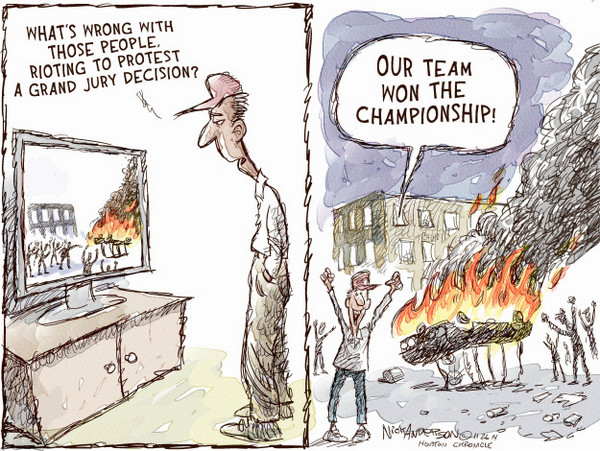
The protests in Ferguson do not show the supposed intrinsic animalistic nature of Black people. They showcase a community -- and reflect a nation of people -- tired of constantly being at the mercy of a justice system that sees no value in their livelihood.

Ferguson is illustrating what happens when people are fed up with being targeted. Ferguson is spearheading a movement. Stop detracting from that with baseless "Black-on-Black crime" discussions.

Follow Julia Craven on Twitter: www.twitter.com/CurlyCrayy


Amen to that. Using useless distractions only adds to the problems at hand.

Entry #415

Some just don't get it!

When Whites Just Don’t Get It, Part 5

NOV. 29, 2014

Protests over the grand jury’s decision on the shooting in Ferguson, Mo., have been held across the nation, including in Ann Arbor, Mich. Credit Tyler Stabile/The Ann Arbor News, via Associated Press

WE Americans are a nation divided.

We feud about the fires in Ferguson, Mo., and we can agree only that racial divisions remain raw. So let’s borrow a page from South Africa and impanel a Truth and Reconciliation Commission to examine race in America.

The model should be the 9/11 commission or the Warren Commission on President Kennedy’s assassination, and it should hold televised hearings and issue a report to help us understand ourselves. Perhaps it could be led by the likes of Presidents Bill Clinton and George W. Bush and Oprah Winfrey.

We as a nation need to grapple with race because the evidence is overwhelming that racial bias remains deeply embedded in American life. Two economists, Joseph Price and Justin Wolfers, found that white N.B.A. referees disproportionally call fouls on black players, while black refs call more fouls on white players. “These biases are sufficiently large that they affect the outcome of an appreciable number of games,” Price and Wolfers wrote.

If such racial bias exists among professional referees monitored by huge television audiences, imagine what unfolds when an employer privately weighs whom to hire, or a principal decides whether to expel a disruptive student, or a policeman considers whether to pull over a driver.

This “When Whites Just Don’t Get It” series is a call for soul-searching. It’s very easy for whites to miss problems that aren’t our own; that’s a function not of being white but of being human. Three-quarters of whites have only white friends, according to one study, so we are often clueless.

What we whites notice is blacks who have “made it” — including President Obama — so we focus on progress and are oblivious to the daily humiliations that African-Americans endure when treated as second-class citizens.

“In the jewelry store, they lock the case when I walk in,” a 23-year-old black man wrote in May 1992. “In the shoe store, they help the white man who walks in after me. In the shopping mall, they follow me.”

He described an incident when he was stopped by six police officers who detained him, with guns at the ready, and treated him for 30 minutes as a dangerous suspect.

That young man was future Senator Cory Booker, who had been a senior class president at Stanford University and was a newly selected Rhodes Scholar. Yet our law enforcement system reduced him to a stereotype — so young Booker sat trembling and praying that he wouldn’t be shot by the police.

My sense is that part of the problem is well-meaning Americans who disapprove of racism yet inadvertently help perpetuate it. We aren’t racists, yet we buttress a system that acts in racist ways. It’s “racism without racists,” in the words of Eduardo Bonillo-Silva, a Duke University sociologist.

This occurs partly because of deeply embedded stereotypes that trick us, even when we want to be fair. Researchers once showed people sketches of a white man with a knife confronting an unarmed black man in the subway. In one version of the experiment, 59 percent of research subjects later reported that it had been the black man who held the knife.

I don’t know what unfolded in Ferguson between Michael Brown, a black teenager, and Darren Wilson, a white police officer. But there is a pattern: a ProPublica investigation found that young black men are shot dead by police at 21 times the rate of young white men.

If you’re white, your interactions with police are more likely to have been professional and respectful, leaving you trustful. If you’re black, your encounters with cops may leave you dubious and distrustful. That’s why a Huffington Post/YouGov poll found that 64 percent of African-Americans believe that Officer Wilson should be punished, while only 22 percent of whites think so.

That’s the gulf that an American Truth and Reconciliation Commission might help bridge just a little. In 1922, a Chicago Commission on Race Relations (composed of six whites and six blacks) examined the Chicago race riots of 1919. More recently, President Clinton used an executive order to impanel an advisory board on race that focused on how to nurture “one America.”

A new commission could jump-start an overdue national conversation and also recommend evidence-based solutions to boost educational outcomes, improve family cohesion and connect people to jobs.

White Americans may protest that our racial problems are not like South Africa’s. No, but the United States incarcerates a higher proportion of blacks than apartheid South Africa did. In America, the black-white wealth gap today is greater than it was in South Africa in 1970 at the peak of apartheid.

Most troubling, America’s racial wealth gap, pay gap and college education gap have all widened in the last few decades.

There are no easy solutions. But let’s talk.

Entry #414

GOP 'Payback' - You got your wish

GOP 'Payback' to White Working Class That Voted Them in: Cut Earned Income Tax and Child Tax Credit

Posted: 11/28/2014 8:00 pm EST Updated: 11/28/2014 8:59 pm EST

Rep. Joe Barton and Rep. John Boehner announce something or other.

First, some data. In the recent midterm elections, a study by the Public Religion Research Institute found that white working-class voters -- defined as those lacking a college degree, and whose jobs paid an hourly wage -- voted for the Republican over the Democrat for Congress by a whopping margin of 61 percent to 26 percent.

Got that? Good. Also, the "vast majority" of recipients of the Earned Income Tax Credit -- and remember, that credit only goes to people who earn enough money that, without it, they'd be paying income taxes -- are white, according to data collected by the National Bureau of Economic Research. Finally, the 2009 Obama stimulus package expanded the Child Tax Credit to make more working class families eligible. We don't have exact data on the racial composition of those who benefited from the expansion, but given that about half of families in poverty are white, we can extrapolate that somewhere around half of beneficiaries are white.

Still with me? Okay. Now check this out, from a New York Times article about a deal in the works that centers around making corporate tax cuts permanent:

The emerging tax legislation would make permanent 10 provisions, including an expanded research and development tax credit, which businesses and the Obama administration have wanted to make permanent for years; a measure allowing small businesses to deduct virtually any investment; the deduction for state and local sales taxes; the American Opportunity Tax Credit for college costs; deductions for employer-provided mass transit; and four different breaks for corporate and charitable giving.

Smaller measures already passed by the Senate Finance Committee, from tax breaks for car-racing tracks to benefits for racehorse owners, would be extended for one year and retroactively renewed for the current tax year.

[snip] Left off were the two tax breaks valued most by liberal Democrats: a permanently expanded earned-income credit and a child tax credit for the working poor. Friday night, Republican negotiators announced they would exclude those measures as payback for the president's executive order on immigration, saying a surge of newly legalized workers would claim the credit, tax aides from both parties said.

It's worth noting that the deal would also mean the expiration, in 2017, of tax credits that support the development of wind power because, oh noes, the oil and gas industry thinks they are unfair. Doesn't the oil and gas industry receive billions in tax breaks? Er, well, hey, look over there!

The absurd hypocrisy of that aside, think for a second about how Republicans understand payback. President Obama does something Republicans don't like on immigration, and their idea of payback is to stick it to working-class Americans who have kids, most of whom -- when we are talking about whites -- just voted to make them the majority party in both the House and the Senate. At this point, the only thing standing in the way of the loss of those tax breaks for working Americans is President Obama. Oops.

I guess the lesson of the story is: be careful who you vote for. A better lesson of the story is: Republicans are boot-licking corporate sycophants who hate working families.

Follow Ian Reifowitz on Twitter: www.twitter.com/ianreifowitz


Entry #413

What the Michael Brown Case Tells Us...

What the Michael Brown Case Tells Us About Women, Fear, and Black Males

Posted: 09/02/2014 3:46 pm EDT Updated: 11/01/2014 5:59 am EDT

What happened to Michael Brown at the hands of a white police officer is a deep-seated fear of a never-ending nightmare for the entire Black community, especially for Black men. Due to an unfortunate stain on our history, Black men are so often rendered inferior in all totality, demonized by the myth of the brute, Black rapist, or the uneducated thug deserving of death. And while these Black men- whether they are North American or from across the globe- hold the tremendous burden of being feared and spurned by society, so do the women who love them.

Being the mother, daughter, wife, sister, or girlfriend of a Black man is a challenge of the best kind. They are funny, intelligent, and beautiful, like many men. The difference is that they hold an unusual kind of knowledge- one that is so valuable in our world, but also so truly disheartening: Black men know that at any moment, they can be framed, arrested, hurt, or killed.

This fear is wholly justified. With the hyperawareness of Black bodies in "white" spaces as well as centuries of singling out Black men as being the bullseye for hate and violent crime, Black men are socially and criminally targeted more often than other men.

Like many Black mothers, it can be assumed that Michael Brown's own mother, Lesley McSpadden, had her share of fear for her son as a young Black man. But she was also proud: defying (mis)represented statistics of uneducated Black men, Michael was starting technical school in the Fall. But the fear- the crushing anxiety and worry that her son may run into trouble- turned into reality.

As a young woman who was a relationship with a Sudanese-Ethiopian man for over 2 years, I can share in this fear. Every time my partner was on his way to see me, I feared him getting pulled over by the cops. Every time we went out in public, I feared and anticipated people treating him ill because he was Black. Every time he left home to drive a taxi to make extra cash for school, I hyperventilated until I would become dizzy at the mere fact that my young, Black boyfriend was working the nighttime bar hours in the white city of London, Ontario, picking up rowdy, aggressive white men.

Sometimes I would hear them in his taxi as my partner talked to me from his Bluetooth headset. "Don't you speak English, motherf----r?", "I'll beat the <snip> out of you, n-----r", "Go back to your country, we don't want you here."The anger, disbelief, and hopelessness you feel on the other end of the line that at any moment things could take a wrong turn is debilitating. The hopelessness and fear that my partner felt is unimaginable.

In our daily interactions with news and pop culture as well as anti-racist movements and protests, Black men become the representation of violence in America. However, Black women seem to fade into the background, as do the women who have raised them, cared for them, and loved them.

The violence against Michael Brown, a young Black man, is also violence against women.

While I do not in any ways try to dissuade from the very real and embedded issue of the racial divide between white and Black groups, as well as the very apparent belief that whites are entitled to open season on young Black men and ethnic male minorities, I simply wish to present a different side of the case, one that aims to remember that death and injustice affects all members involved.

What Lesley McSpadden lost was the chance to raise her son. That is violence. Ms. McSpadden faced the multiple oppressive forces of having to raise not only a young boy, but a Black son in a community where two-thirds of the population is Black, yet only 3 of Ferguson's 53 officers are.

Based on a Western social service system with little-to-no experience dealing with women of colour and their children, Ms. McSpadden, like thousands of women, were automatically denied the right to seek appropriate counselling and resources for herself and her child. This stems from a macro-issue of the lack of knowledge, training, funding, and education for social service workers on dealing with Black women's differing experiences of poverty, motherhood, and domestic issues, as well as their distinct histories, oppressions, and needs.

Many social service organizations are still approaching women of colour with a "one-size-fits- all" model of counselling, as they do when a rape victim is a non-white female. This model and its solutions are based on a standard, working-to-middle-class white woman. Social services and communities are ill-prepared to deal with the real challenge that mothers face when raising Black sons into a world that already sees them as targets.

Our fear for Black males is unbearable. Every time that partner, lover, child, or brother steps out of the house, there is a very real chance that something will go wrong. There is a chance that he will encounter supremists, or a group of young white men looking for a punching bag, or a racist police officer having a bad day. There is a greater fear knowing that should anything happen to this Black man, that justice may never be served, and he will be blamed for causing someone else to inflict his injuries, robbery, arrest, or death. It will be his fault. And no matter if you fight for a lifetime- no matter if the world was blessed to have him in it- society will always blame him. Ms. McSpadden has acknowledged this portrayal of her son, and when asked during a CBS interview if Michael showed anything to suggest that he had an aggressive temperament, she replied with an answer that is all too familiar: "No, he was just tall, big and black."

In the U.S. and right here in Canada, the women close to these Black men walk a fine line between what is imagined and what could be reality. We hold the compulsion to tell them "be careful!" one more time as they walk out the door. We resist the urge to call or text them every few hours to see if they are okay, and blow up their phones and Facebook inbox when they don't respond. We study every line in their face so that we'll never forget them. We go to bed with the dread that they are never safe.

Rarely will you hear a Black male tell you he is afraid. This has a lot to do with a history of machoism and hypermasculinity used in order to counteract the pain and the emasculation of Black men centuries ago at the hands of white men. You may hear Black men joke about the time they were walking home and got stopped for no good reason by a cop patrolling the area. They may joke about the time that an employee and her colleague followed them around the department store. But hardly will you hear them say how truly fearful it is to be a Black man in North America. If we, as their loved ones are horrified of our men being hunted, I cannot imagine the daily "responsibility"; the hope, that by being a Black male, you do not encounter a situation that puts you at risk.

I am aware that Black men kill other Black men at an alarming rate. I choose not to address this, because it seems to be one of the only justifications for people to use when a Black man is killed by a white man, as we've seen in the case of Michael Brown. What it does is try to diminish Black male credibility and white guilt by turning the issue into a "Black" one. The issue with Michael Brown is not a "Black" issue, and nor was it ever. It is a white issue. It is a power issue. It is a fear issue.

Victim-blaming and using the excuse that Black men kill each other more than white men is an insulting generalization that all Black men are violent, all Black men are dangerous, and that all Black men are deserving of punishment. This belief is also insulting to the women in their lives who know them and love them, and speaks once more to the lack of resources available to Black men and Black families, and a social system that makes "theories" on Black men based on these generalizations.

These generalizations turn young Black boys into Black men, causing conflict by assuming that a young boy understands the full responsibility of his actions, thus giving white folks the justification to the shoot a Black child if he behaves in a way that bruises their ego. "My son didn't deserve it. Nobody's child deserves to be treated like that - nobody's," said McSpadden, amidst tears. A mother lost her opportunity to raise her Black son in a world that saw his existence as a problem. A child lost his chance to prove them wrong.

Ms. McSpadden does not need to be blamed for not doing enough as a mother for her child. Michael Brown does not need to be crucified for behaving badly amidst millions of young boys doing the same. As his father, Michael Brown Sr. said, Michael was "just a normal 18-year-old, finding his way."

At the end of the day, no one knows what their children are doing when they are not in parental supervision. Parents forget that the teenage years are a time where identity is formed and contested, and a time of experimentation, whether it is with drugs, sex, or crime. However, it seems that if you are an 18-year-old Black boy, you're end justifies your means. In our society, there is a "moral" obligation that to be defeated, Black men must be killed. This includes Black children.

Some 18-year old children have the luxury of fighting back without the fear of getting shot or killed. These are not Black children. The issue is that there is the same crime happening amongst white and Black kids, only the punishment is different. Did Michael Brown supposedly assault an officer? Maybe. Have many other kids, in particular, white males assaulted officers? I'm positive. Do they get shot 6 times for it? Do we blame their mothers for their bad behaviour? That is a question that many refuse to answer because admitting the truth releases a world of racist contradictions that are well-kept behind victim-blaming, guilt, and denial.

What happened to Michael Brown could have been any woman's son, brother, grandchild, friend, lover, or husband. As long as the heavy-handed hate and belief that Black men are no more than savage animals deserving to be put down, the women of these men will always stand to lose them.

Losing Black men to violence, arrest, injury, or death also affects future generations; if we keep killing Black men, if we keep placing targets on their backs, how will young Black boys begin to see themselves other than disposable? How will young girls get to know, befriend, and care for them as they grow older if these boys aren't able to grow with them? How will Black mothers be able to instill in their Black sons that they are loved, when internal racism and self-hate are penetrating his mind at every angle? And how can mothers be mothers when society has decided to discipline their children with justifiable arrest and death? There can be no answers to these questions when a solution is so far from being created. For Ms. McSpadden, she was not given the chance to even try. For her son, Michael Brown, fear of the Black man got the best of a small-town officer playing Cops and Robbers, only for him to realize that he was dealing with a child.


 

Eternity E Martis Headshot

Eternity E Martis

Lifestyle writer, blogger, mixed-race feminist

HUFFPOST

Entry #410

Chronically unhappy people -- Do you fall into this category?

7 Habits of Chronically Unhappy People

Posted: 11/18/2014 11:00 am EST Updated: 11/18/2014 11:01 am EST

Unsplash by Volkan Olmez

I often teach about happiness and what has become exceedingly clear is this: There are seven qualities chronically unhappy people have mastered.

According to Psychology Today, University of California researcher Sonja Lyubomirsky states: "40 percent of our of our capacity for happiness is within our power to change."

If this is true and it is, there's hope for us all. There are billions of people on our planet and clearly some are truly happy. The rest of us bounce back and forth between happiness and unhappiness depending on the day.

Throughout the years, I've learned there are certain traits and habits chronically unhappy people seem to have mastered. But before diving in with you, let me preface this and say: we all have bad days, even weeks when we fall down in all seven areas.

The difference between a happy and unhappy life is how often and how long we stay there.

Here are the 7 qualities of chronically unhappy people.

1. Your default belief is that life is hard.

Happy people know life can be hard and tend to bounce through hard times with an attitude of curiosity versus victimhood. They take responsibility for how they got themselves into a mess, and focus on getting themselves out of it as soon as possible.

Perseverance towards problem versus complaining over circumstances is a symptom of a happy person. Unhappy people see themselves as victims of life and stay stuck in the "look what happened to me" attitude versus finding a way through and out the other side.

2. You believe most people can't be trusted.

I won't argue that healthy discernment is important, but most happy people are trusting of their fellow man. They believe in the good in people, versus assuming everyone is out to get them. Generally open and friendly towards people they meet, happy people foster a sense of community around themselves and meet new people with an open heart.

Unhappy people are distrustful of most people they meet and assume that strangers can't be trusted. Unfortunately this behavior slowly starts to close the door on any connection outside of an inner-circle and thwarts all chances of meeting new friends.

3. You concentrate on what's wrong in this world versus what's right.

There's plenty wrong with this world, no arguments here, yet unhappy people turn a blind eye to what's actually right in this world and instead focus on what's wrong. You can spot them a mile away, they'll be the ones complaining and responding to any positive attributes of our world with "yeah but".

Happy people are aware of global issues, but balance their concern with also seeing what's right. I like to call this keeping both eyes open. Unhappy people tend to close one eye towards anything good in this world in fear they might be distracted from what's wrong. Happy people keep it in perspective. They know our world has problems and they also keep an eye on what's right.

4. You compare yourself to others and harbor jealousy.

Unhappy people believe someone else's good fortune steals from their own. They believe there's not enough goodness to go around and constantly compare yours against theirs. This leads to jealousy and resentment.

Happy people know that your good luck and circumstance are merely signs of what they too can aspire to achieve. Happy people believe they carry a unique blueprint that can't be duplicated or stolen from -- by anyone on the planet. They believe in unlimited possibilities and don't get bogged down by thinking one person's good fortune limits their possible outcome in life.

5. You strive to control your life.

There's a difference between control and striving to achieve our goals. Happy people take steps daily to achieve their goals, but realize in the end, there's very little control over what life throws their way.

Unhappy people tend to micromanage in effort to control all outcomes and fall apart in dramatic display when life throws a wrench in their plan. Happy people can be just as focused, yet still have the ability to go with the flow and not melt down when life delivers a curve-ball.

The key here is to be goal-oriented and focused, but allow room for letting sh*t happen without falling apart when the best laid plans go awry- because they will. Going with the flow is what happy people have as plan B.

6 You consider your future with worry and fear.

There's only so much rent space between your ears. Unhappy people fill their thoughts with what could go wrong versus what might go right.

Happy people take on a healthy dose of delusion and allow themselves to daydream about what they'd like to have life unfold for them. Unhappy people fill that head space with constant worry and fear.

Happy people experience fear and worry, but make an important distinction between feeling it and living it. When fear or worry crosses a happy person's mind, they'll ask themselves if there's an action they can be taken to prevent their fear or worry from happening (there's responsibility again) and they take it. If not, they realize they're spinning in fear and they lay it down.

7. You fill your conversations with gossip and complaints.

Unhappy people like to live in the past. What's happened to them and life's hardships are their conversation of choice. When they run out of things to say, they'll turn to other people's lives and gossip.

Happy people live in the now and dream about the future. You can feel their positive vibe from across the room. They're excited about something they're working on, grateful for what they have and dreaming about the possibilities of life.

Obviously none of us are perfect. We're all going to swim in negative waters once in a while, but what matters is how long we stay there and how quickly we work to get ourselves out. Practicing positive habits daily is what sets happy people apart from unhappy people, not doing everything perfectly.

Walk, fall down, get back up again, repeat. It's in the getting back up again where all the difference resides.


Entry #403