


truesee's Blog

Forgetting Why We Remember Memorial Day

Forgetting Why We Remember

NY Times

Owen Freeman

DAVID W. BLIGHT

May 29, 2011


MOST Americans know that Memorial Day is about honoring the nation’s war dead. It is also a holiday devoted to department store sales, half-marathons, picnics, baseball and auto racing. But where did it begin, who created it, and why?

At the end of the Civil War, Americans faced a formidable challenge: how to memorialize 625,000 dead soldiers, Northern and Southern. As Walt Whitman mused, it was “the dead, the dead, the dead — our dead — or South or North, ours all” that preoccupied the country. After all, if the same number of Americans per capita had died in Vietnam as died in the Civil War, four million names would be on the Vietnam Veterans Memorial, instead of 58,000.

Officially, in the North, Memorial Day emerged in 1868 when the Grand Army of the Republic, the Union veterans’ organization, called on communities to conduct grave-decorating ceremonies. On May 30, funereal events attracted thousands of people at hundreds of cemeteries in countless towns, cities and mere crossroads. By the 1870s, one could not live in an American town, North or South, and be unaware of the spring ritual.

But the practice of decorating graves — which gave rise to an alternative name, Decoration Day — didn’t start with the 1868 events, nor was it an exclusively Northern practice. In 1866 the Ladies’ Memorial Association of Columbus, Ga., chose April 26, the anniversary of Gen. Joseph Johnston’s final surrender to Gen. William T. Sherman, to commemorate fallen Confederate soldiers. Later, both May 10, the anniversary of Gen. Stonewall Jackson’s death, and June 3, the birthday of Jefferson Davis, were designated Confederate Memorial Day in different states.

Memorial Days were initially occasions of sacred bereavement, and from the war’s end to the early 20th century they helped forge national reconciliation around soldierly sacrifice, regardless of cause. In North and South, orators and participants frequently called Memorial Day an “American All Saints Day,” likening it to the European Catholic tradition of whole towns marching to churchyards to honor dead loved ones.

But the ritual quickly became the tool of partisan memory as well, at least through the violent Reconstruction years. In the South, Memorial Day was a means of confronting the Confederacy’s defeat but without repudiating its cause. Some Southern orators stressed Christian notions of noble sacrifice. Others, however, used the ritual for Confederate vindication and renewed assertions of white supremacy. Blacks had a place in this Confederate narrative, but only as time-warped loyal slaves who were supposed to remain frozen in the past.

The Lost Cause tradition thrived in Confederate Memorial Day rhetoric; the Southern dead were honored as the true “patriots,” defenders of their homeland, sovereign rights, a natural racial order and a “cause” that had been overwhelmed by “numbers and resources” but never defeated on battlefields.

Yankee Memorial Day orations often righteously claimed the high ground of blood sacrifice to save the Union and destroy slavery. It was not uncommon for a speaker to honor the fallen of both sides, but still lay the war guilt on the “rebel dead.” Many a lonely widow or mother at these observances painfully endured expressions of joyous death on the altars of national survival.

Some events even stressed the Union dead as the source of a new egalitarian America, and a civic rather than a racial or ethnic definition of citizenship. In Wilmington, Del., in 1869, Memorial Day included a procession of Methodists, Baptists, Unitarians and Catholics; white Grand Army of the Republic posts in parade with a black post; and the “Mount Vernon Cornet Band (colored)” keeping step with the “Irish Nationalists with the harp and the sunburst flag of Erin.”

But for the earliest and most remarkable Memorial Day, we must return to where the war began. By the spring of 1865, after a long siege and prolonged bombardment, the beautiful port city of Charleston, S.C., lay in ruin and occupied by Union troops. Among the first soldiers to enter and march up Meeting Street singing liberation songs was the 21st United States Colored Infantry; their commander accepted the city’s official surrender.

Whites had largely abandoned the city, but thousands of blacks, mostly former slaves, had remained, and they conducted a series of commemorations to declare their sense of the meaning of the war.

The largest of these events, forgotten until I had some extraordinary luck in an archive at Harvard, took place on May 1, 1865. During the final year of the war, the Confederates had converted the city’s Washington Race Course and Jockey Club into an outdoor prison. Union captives were kept in horrible conditions in the interior of the track; at least 257 died of disease and were hastily buried in a mass grave behind the grandstand.

After the Confederate evacuation of Charleston black workmen went to the site, reburied the Union dead properly, and built a high fence around the cemetery. They whitewashed the fence and built an archway over an entrance on which they inscribed the words, “Martyrs of the Race Course.”

The symbolic power of this Low Country planter aristocracy’s bastion was not lost on the freedpeople, who then, in cooperation with white missionaries and teachers, staged a parade of 10,000 on the track. A New York Tribune correspondent witnessed the event, describing “a procession of friends and mourners as South Carolina and the United States never saw before.”

The procession was led by 3,000 black schoolchildren carrying armloads of roses and singing the Union marching song “John Brown’s Body.” Several hundred black women followed with baskets of flowers, wreaths and crosses. Then came black men marching in cadence, followed by contingents of Union infantrymen. Within the cemetery enclosure a black children’s choir sang “We’ll Rally Around the Flag,” the “Star-Spangled Banner” and spirituals before a series of black ministers read from the Bible.

After the dedication the crowd dispersed into the infield and did what many of us do on Memorial Day: enjoyed picnics, listened to speeches and watched soldiers drill. Among the full brigade of Union infantrymen participating were the famous 54th Massachusetts and the 34th and 104th United States Colored Troops, who performed a special double-columned march around the gravesite.

The war was over, and Memorial Day had been founded by African-Americans in a ritual of remembrance and consecration. The war, they had boldly announced, had been about the triumph of their emancipation over a slaveholders’ republic. They were themselves the true patriots.

Despite the size and some newspaper coverage of the event, its memory was suppressed by white Charlestonians in favor of their own version of the day. From 1876 on, after white Democrats took back control of South Carolina politics and the Lost Cause defined public memory and race relations, the day’s racecourse origin vanished.

Indeed, 51 years later, the president of the Ladies’ Memorial Association of Charleston received an inquiry from a United Daughters of the Confederacy official in New Orleans asking if it was true that blacks had engaged in such a burial rite in 1865; the story had apparently migrated westward in community memory. Mrs. S. C. Beckwith, leader of the association, responded tersely, “I regret that I was unable to gather any official information in answer to this.”

Beckwith may or may not have known about the 1865 event; her own “official” story had become quite different and had no place for the former slaves’ march on their masters’ racecourse. In the struggle over memory and meaning in any society, some stories just get lost while others attain mainstream recognition.

AS we mark the Civil War’s sesquicentennial, we might reflect on Frederick Douglass’s words in an 1878 Memorial Day speech in New York City, in which he unwittingly gave voice to the forgotten Charleston marchers.

He said the war was not a struggle of mere “sectional character,” but a “war of ideas, a battle of principles.” It was “a war between the old and the new, slavery and freedom, barbarism and civilization ... and in dead earnest for something beyond the battlefield.” With or against Douglass, we still debate the “something” that the Civil War dead represent.

The old racetrack is gone, but an oval roadway survives on the site in Hampton Park, named for Wade Hampton, former Confederate general and the governor of South Carolina after the end of Reconstruction. The old gravesite of the Martyrs of the Race Course is gone too; they were reinterred in the 1880s at a national cemetery in Beaufort, S.C.

But the event is no longer forgotten. Last year I had the great honor of helping a coalition of Charlestonians, including the mayor, Joseph P. Riley, dedicate a marker to this first Memorial Day by a reflecting pool in Hampton Park.

By their labor, their words, their songs and their solemn parade on their former owners’ racecourse, black Charlestonians created for themselves, and for us, the Independence Day of a Second American Revolution.

David W. Blight, a professor of history and the director of the Gilder Lehrman Center for the Study of Slavery, Resistance and Abolition at Yale, is the author of the forthcoming “American Oracle: The Civil War in the Civil Rights Era.”

Entry #4,731

Two arrested after friend has bad pot-brownie experience

Two arrested after friend has bad pot-brownie experience


9:31 AM, May. 26, 2011 
Press Citizen
 

Two Iowa City women were arrested for possession of marijuana Wednesday night after their friend ingested some and had a bad experience.

According to Iowa City Police criminal complaints, officers and medical personnel were called to 19 Pentire Circle at 9:53 p.m. for a report of a female who “ate brownies with cannabis.” The woman’s heart was racing, police said.

Iowa City Police Sgt. Denise Brotherton said the paperwork on the charges has not been turned in by the arresting officers, but based on the call for service, it appears there were at least 9 people at the residence, including the caller.

When officers arrived, medical personnel were assisting a woman who said she ate pot-laced brownies. Police said two other women – 19-year-old Tearra N. Thomas and 18-year-old Alexis C. Riley – said they also ate some of the brownies, but were feeling fine. Thomas allegedly told officers she bought the brownies in Illinois and knew they contained marijuana.

Officers seized the remainder of the two brownies and took Riley and Thomas into custody for possession of a controlled substance, a serious misdemeanor.

Brotherton said it’s uncertain if the woman who had the bad experience will be charged since it’s possible she didn’t know she was ingesting marijuana.

“The other two knew (the brownies) were there and had them in their possession,” Brotherton said.

Thomas declined to comment on the charge. Riley did not return a message seeking comment.


Alexis Christine Riley

Alexis Christine Riley

Tearra Nichole Thomas

Tearra Nichole Thomas

Entry #4,729

Don't need that gun? Trade it for gas

Don't need that gun? Trade it for gas


Dan Piller

Des Moines Register

11:20 PM, May. 28, 2011 


A former state senator and Waterloo service station owner is offering $5,000 worth of gas on June 11 for those who voluntarily turn in firearms.

Jim Lind, who owns and operates a Shell station on the south side of Waterloo, is sponsoring a "Gas for Guns" promotion from 10 a.m. to 2 p.m. at the Waterloo Fire Department station at Mulberry and East Third streets.

The Waterloo Police Department will be on hand to receive the guns, and Lind said "no questions will be asked."

Citizens who trade in a functioning handgun will receive a gift card worth $150. Those who trade in a functioning rifle or shotgun will get a gift card worth $100.

Lind, a Republican who represented Waterloo in the Iowa Senate from 1986 until his abrupt resignation in 1997 in a dispute over tax policy, said: "I'm not a gun control advocate. I believe in the right to bear arms. I just want to get bad guns off the street."

Lind said he got the idea after reading an article in a trade journal about a similar promotion in Baton Rouge, La., last October that yielded about 250 guns.

"They gave away about $25,000 worth of gas in Baton Rouge, but I don't have that kind of bank account," said Lind, who will donate $5,000 worth of gas gift cards at his station in return for weapons.

The event will take place for the duration of the listed times, or until the gift cards run out.

Waterloo police officers will conduct the gun exchange. All firearms, muzzleloaders, air guns, and ammunition will be accepted. However, only functioning handguns, rifles, and shotguns will be eligible for the gift card exchange.

Entry #4,728

John McCain says Sarah Palin could beat Obama if she entered 2012 race

May 29, 2011

John McCain: ‘Of course’ Palin can beat Obama

Published: 11:38 AM 05/29/2011 | Updated: 2:39 PM 05/29/2011

Ariz. Sen. John McCain, who ran for president with Sarah Palin as his running mate in 2008, says the former Alaska governor has what it takes to beat President Obama in the next election — that is, if she decides to run.

During an appearance on “Fox News Sunday,” McCain expressed optimism that Palin could win in 2012.

“Of course she can. She can. Now, whether she will or not, whether she’ll even run or not, I don’t know,” McCain said when asked about Palin’s presidential prospects.

McCain said Palin inspires “great passion, particularly among the Republican faithful,” but added that there’s a connection between her high unfavorability rating and the heavy media criticism of her.

“I’ve never seen anyone as mercilessly attacked and relentlessly attacked as I have seen Sarah Palin in the last couple of years,” McCain said.

Regardless of McCain’s kudos, it remains a mystery whether Palin will seek the presidency. Palin fueled speculation that she’ll run last week when she announced an East Coast bus tour. She dubbed the “One Nation” trip a chance to “educate and energize Americans about our nation’s founding principles, in order to promote the fundamental restoration of America.”


TUCSON, AZ - MARCH 26: U.S. Sen. John McCain (R-AZ) and former Alaska Gov. Sarah Palin (L) attend a campaign rally at Pima County Fairgrounds on March 26, 2010 in Tucson, Arizona. Palin traveled to Arizona to stump for McCain, who is facing a primary challenge in his bid for a fifth term in the Senate. Today's event marked the first time the pair had campaigned together since their failed 2008 presidential run. (Photo by Darren Hauck/Getty Images)


Read more: http://dailycaller.com/2011/05/29/john-mccain-of-course-palin-can-beat-obama/#ixzz1NmBZaQA8
Entry #4,725

Spanking businessman charged with sexual assault

Spanking businessman accused of sexual assault

 
DENA POTTER
The Associated Press
Published: 9:38 AM 05/20/2011 | Updated: 9:41 AM 05/20/2011


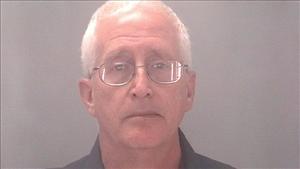
Henry Allen Fitzsimmons, 54, is facing multiple charges.
Henry Allen Fitzsimmons, 54, is facing multiple charges.   
(Virginia Beach Police Department)


VIRGINIA BEACH, Va. — Single mothers, former drug addicts and other struggling young women who came to wealthy businessman Henry Allen Fitzsimmons for a chance to climb out of their financial hole knew his help came with a catch. In exchange for an allowance, a place to live and promise of a college education, they agreed to be spanked if they broke his rules.

At least six of the women say his corporal punishment went too far, including one who says he sexually assaulted her, and the 54-year-old Virginia Beach restaurant owner faces felony charges.

“These women are victims. They’re single moms. They need their bills paid,” prosecutor Tom Murphy said at a court hearing Thursday. “It’s bizarre, there’s no doubt.”

Fitzsimmons’ attorney claims his slight, white-haired client is the victim, taken advantage of by women half his age who knew what they were getting into and filed charges only after a falling out.

“He’s not a danger,” Fitzsimmons’ attorney, Moody “Sonny” Stallings Jr., told The Associated Press of his jailed client. “Strange, but he’s not a danger to anybody.”

A judge on Thursday allowed a grand jury to decide whether to indict Fitzsimmons on two felony abduction charges and three felony object sexual penetration charges filed against him.

Six other assault and sexual battery charges were dropped because prosecutors acknowledged the women had agreed to the spankings.

For months, Fitzsimmons gave each of the women $200 weekly, promised to pay for their college tuition, treated them to lavish nights on the town and even bought one a car as part of his so-called Spencer Scholarship Plan.

They were spanked if they violated rules, such as failing to call Fitzsimmons or drinking too much alcohol.

Several websites, including one run by Fitzsimmons, tout the Spencer plan and the scholarship program, which provides full tuition, room and board in addition to an allowance for participants as long as they follow the plan. It is unclear how many women have participated in Fitzsimmons’ program.

The six who filed the criminal complaints had all been members, but Fitzsimmons’ attorney said there have been several others.

The Spencer Plan started in the 1930s as a form of “carefully regulated corporal punishment” between husband and wife.

Couples agreed to a list of things the wife needed to change, such as not spending money frivolously. If the rules were broken, the husband punished her by spanking and it was put behind them. It has expanded through the years.

One 21-year-old woman testified Thursday that the day she joined the program in November, Fitzsimmons spanked her and gave her $300.

He paid for her to live in an oceanfront suite and gave her a $200 weekly allowance. In return, she was required to walk 20 blocks each day, keep a log of her meals and spending and refrain from drugs. When she didn’t, she was spanked.

Fitzsimmons took it further, she said, when on three occasions he sexually assaulted her with a curtain rod, a hairbrush and a horse riding crop. When asked by attorneys why she allowed it to happen, she replied: “I’m not allowed to tell him no.”

The Associated Press does not identify those who say they were sexually assaulted.

Another 22-year-old woman said she thought the program was an amazing opportunity. She had only been spanked once before she went to him in January to discuss him paying for her 3-year-old child’s birthday party. She said he refused to let her leave until she let him spank her.

She and others said they feared Fitzsimmons, who walks with a limp. They say he made vague threats and convinced them they couldn’t make it without him.

“He terrorized my life,” one woman said. “He took me away from all my friends and family and convinced me nobody loved me but him.”

None of the women filed charges until Fitzsimmons in April accused one of them of stealing money and fired her from his restaurant, the oceanside Envy Bar and Grill, where many of them worked.

A week later, six women began filing charges. On Thursday, that former employee’s complaint was dropped, along with those of two other women whose only complaints were that they had been spanked.

“Who’s the victim here?” Stalling asked in court. “They were taking the money and all of a sudden when the mother gets fired they all run down to the police station and want to file charges.”

Fitzsimmons came to Virginia Beach last year from Minnesota, but much of his past is a mystery.

He has a master’s in business administration, but his much of his attention is spent counseling young women and helping those in need, friends said.

Terry Schantz and his girlfriend are helping run Fitzsimmons’ bar since he was arrested in April and denied bond.

He said Fitzsimmons was a generous and caring man who would buy groceries for those in need or find the homeless a place to live. He said he can’t imagine Fitzsimmons being violent.

Stallings admits the case is strange but says Fitzsimmons is no predator.

“They’re trying to say he preys on these women,” he said. “These aren’t 15-years-olds. These are all adults and they’re getting the money from this old guy.

Entry #4,723

Pro-Obama media always shocked by bad economic news

Pro-Obama media always shocked by bad economic news
 
Michael Barone
05/28/11 8:05 PM
Senior Political Analyst
 
Obama's first Council of Economics Advisers chairman, Christina Romer, whose scholarly work is widely respected, famously predicted that the February 2009 stimulus package would hold unemployment below 8 percent.-AP File
 
Obama's first Council of Economics Advisers chairman, Christina Romer, whose scholarly work is widely respected, famously predicted that the February 2009 stimulus package would hold unemployment below 8 percent.-
 
AP File
 
Unexpectedly!

As megablogger Glenn Reynolds, aka Instapundit, has noted with amusement, the word "unexpectedly" or variants thereon keep cropping up in mainstream media stories about the economy.

"New U.S. claims for unemployment benefits unexpectedly climbed," reported CNBC.com May 25.

"Personal consumption fell," Business Insider reported the same day, "when it was expected to rise."

"Durable goods declined 3.6 percent last month," Reuters reported May 25, "worse than economists' expectations."

"Previously owned home sales unexpectedly fall," headlined Bloomberg News May 19.

"U.S. home construction fell unexpectedly in April," wrote the Wall Street Journal May 18.

Those examples are all from the last two weeks. Reynolds has been linking to similar items since October 2009.

Mainstream media may finally be catching up. "The latest economic numbers have not been good," David Leonhardt wrote in the May 26 New York Times. "Another report showed that economic growth at the start of the year was no faster than the Commerce Department initially reported -- 'a real surprise,' said Ian Shepherdson of High Frequency Economics."

Which raises some questions. As Instapundit reader Gordon Stewart, quoted by Reynolds on May 17, put it, "How many times in a row can something happen unexpectedly before the experts start to, you know, expect it? At some point, shouldn't they be required to state the foundation for their expectations?"

One answer is that many in the mainstream media have been cheerleading for Barack Obama. They and he both naturally hope for a strong economic recovery. After all, Obama can't keep blaming the economic doldrums on George W. Bush forever.

I'm confident that any comparison of economic coverage in the Bush years and the coverage now would show far fewer variants of the word "unexpectedly" in stories suggesting economic doldrums.

It's obviously going to be hard to achieve the unacknowledged goal of many mainstream journalists -- the president's re-election -- if the economic slump continues. So they characterize economic setbacks as unexpected, with the implication that there's still every reason to believe that, in Herbert Hoover's phrase, prosperity is just around the corner.

A less cynical explanation is that many journalists really believe that the Obama administration's policies are likely to improve the economy. Certainly that has been the expectation as well as the hope of administration policymakers.

Obama's first Council of Economics Advisers chairman, Christina Romer, whose scholarly work is widely respected, famously predicted that the February 2009 stimulus package would hold unemployment below 8 percent. She undoubtedly believed that at the time; she is too smart to have made a prediction whose failure to come true would prove politically embarrassing.

But unemployment zoomed to 10 percent instead and is still at 9 percent. Political pundits sympathetic to the administration have been speculating whether the president can win re-election if it stays above the 8 percent mark it was never supposed to reach.

Administration economists are now making the point that it takes longer to recover from a recession caused by a financial crisis than from a recession that occurs in the more or less ordinary operation of the business cycle. There's some basis in history for this claim.

But it come a little late in the game. Obama and his policymakers told the country that we would recover from the deep recession by vastly increasing government spending and borrowing. We did that with the stimulus package, with the budget passed in 2009 back when congressional Democrats actually voted on budgets, and with the vast increases scheduled to come (despite the administration's gaming of the Congressional Budget Office scoring process) from Obamacare.

All of this has inspired something like a hiring strike among entrepreneurs and small-business owners. Employers aren't creating any more jobs than they were during the darkest days of the recession; unemployment has dropped slowly because they just aren't laying off as many employees as they did then.

In the meantime, many potential job seekers have left the labor market. If they re-enter and look for jobs, the unemployment rate will stay steady or ebb only slowly.

We tend to hire presidents who we think can foresee the future effect of their policies. No one does so perfectly. But if the best sympathetic observers can say about the results is that they are "unexpected," voters may decide someone else can do better.


Read more at the Washington Examiner: http://washingtonexaminer.com/politics/2011/05/pro-obama-media-always-shocked-bad-economic-news#ixzz1NjMwpVgM
Entry #4,721

Hospital worker may have exposed almost 700 patients to TB

Hospital worker may have exposed almost 700 patients to TB

Tuberculosis usually attacks the lungs

A hospital employee with tuberculosis may have exposed as many as 680 patients and 100 hospital workers at Emory University Hospital to the bacterial disease. (Centers for Disease Control and Prevention Public Health Image Library)


Marissa Cevallos
HealthKey 

3:37 p.m. EDT, May 27, 2011

Tuberculosis is not the killer in this country that it once was, but it’s nonetheless a dangerous, lethal disease, killing nearly 2 million people worldwide each year. And even in this country, if a healthcare worker were to expose hospitalized patients and other healthcare workers to the bacterial infection, much consternation  -- and possibly, alarm – might ensue.

That appears to be what happened at Emory University Hospital in Atlanta recently. CNN reports that an employee with tuberculosis may have unknowingly exposed about 680 patients and 100 employees to the disease.
So far, there’s some consternation but little alarm. No symptoms have been reported. Tuberculosis, which usually attacks the lungs, can be fatal if left untreated.

Caused by the bacterium Mycobacterium tuberculosis, TB travels in the air, like the common cold. Sneezing, coughing and talking can spread TB, according to the CDC, but direct contact such as handshakes, sharing drinks or kissing won’t.

Getting infected with TB doesn’t always lead to disease. A person with a healthy immune system can breathe in the bacteria but not develop any symptoms or be contagious — this is known as latent TB.

But if the immune system is weakened and can’t control the bacterial growth, a latent case can flare into an active one — usually attacking the lungs but sometimes also the brain, kidneys or spine.

Here are the signs of the disease in the lungs, from Medline Plus:

-A bad cough that lasts 3 weeks or longer

-Weight loss

-Coughing up blood or mucus

-Weakness or fatigue

-Fever and chills

-Night sweats

Drug treatments exist for both active and latent TB. 

Meanwhile, in the U.S., TB headlines have been somewhat positive. In March, the CDC released all-time low numbers of TB cases in this country, just more than 11,000 during the last year, though the agency had hoped for a larger decline over previous years.

And last month, new research found that the standard nine-month treatment for latent TB – using daily doses of the antibiotic isoniazid – can be shortened to three months with a weekly duo of antibiotics.

Entry #4,718