Top 10 quotes of 2010
Entry #3,630



The time is now 9:52 pm
You last visited
June 10, 2026, 10:04 am
All times shown are
Eastern Time (GMT-5:00)

Waste in U.S. Afghan aid seen at billions of dollars

Dec 20, 2010
6:12 pm
WASHINGTON (Reuters) – Waste and fraud in U.S. efforts to rebuild Afghanistan while fighting al Qaeda and the Taliban may have cost taxpayers billions of dollars, a special investigator said on Monday.
Arnold Fields, special inspector general for Afghanistan reconstruction, said the cost of U.S. assistance funding diverted or squandered since 2002 could reach "well into the millions, if not billions, of dollars."
"There are no controls in place sufficient enough to ensure taxpayers' money is used for the (intended) purpose," said Fields, whose independent office was created in 2008 to energize oversight of what U.S. auditors have described as a giant, poorly coordinated aid effort that has sunk some $56 billion into Afghanistan since 2002.
Of that sum, some $29 billion has gone to building up Afghanistan's nascent security forces, many of whose members cannot read and are just learning to shoot.
Another $16 billion has gone to trying to develop this poor country, where life expectancy is just 45 years and only 28 percent of people are literate, and to strengthening governance, said Fields, a retired Marine Corps major general.
Experts believe it will take years to build an effective government that can provide basic services in Afghanistan, where corruption and the lack a functional justice system have driven many villagers into the arms of the Taliban.
Efforts to bolster Afghanistan's weak central government and in many cases its dysfunctional local leadership took center stage last week when a White House review of the nine-year-old war reported some military success but cautioned there was more to be done on improving governance and curbing corruption.
President Barack Obama is under pressure to show results in Afghanistan in the first half of 2011 so he can start bringing U.S. troops home in July.
U.S. and NATO partners hope Afghan forces will be able to take control by the end of 2014 as the West looks to curtail its involvement after nine years that at the present level of effort costs U.S. taxpayers at least $113 billion a year.
More than 700 foreign troops have been killed in 2010, the most violent year since the Taliban was toppled in 2001. Afghan casualties are far higher.
U.S. reconstruction activities are a major component in an even bigger outside assistance effort involving dozens of donor countries and hundreds of aid groups large and small.
Field's office, known as SIGAR, described in a report issued this fall a 'confusing labyrinth' of agencies and contractors in that aid effort.
(Reporting by Missy Ryan; editing by Philip Barbara)
Gum that Costs $500

Anrica Deb By: Rigoberto Hernandez | December 20, 2010 – 6:02 am
It was there when Heather Raich arrived on Thurday morning to open up her restaurant, Charanga. Stuck to her window was a notice staying that she needed to clean the gum off the sidewalk in front of her restaurant in the next seven days, or pay a $500 fine.
Charanga is on Mission Street, one of the most heavily trafficked thoroughfares in the neighborhood. The corridor that it resides on – those eight blocks between the 16th and the 24th Street BART stops, could be described as arguably more gum than sidewalk.
“Merry Christmas,” says Raich, dispiritedly. “I’m used to the graffiti citations, but this was a first. I think they’re trying to make up some kind of budget shortfall. At $500 a pop, depending on how many storefronts they hit – that’s some money.”
Not so, says Christine Falvey, a spokeswoman with the Department of Public Works.
Merchants on heavily trafficked streets, like Mission and 24th Streets, have been receiving either brochures or letters about their sidewalk responsibilities, long before the warnings were posted, Falvey says.”The City is responsible for the streets, and the businesses are responsible for the sidewalks. That’s how it works in San Francisco.”
According to some numbers crunched by our former science reporter, Anrica Deb, there is over a ton of gum speckling the sidewalks of the Mission district. Her conclusion: better economic and environmental sense to leave it there than use the water, electricity, and money necessary to get it off. It would take one person working full-time for three years straight to get every last piece of gum off – and that’s only if the people of the Mission spontaneous stopped spitting fresh wads onto the sidewalk.
The employees at La Oxaquena and Mission Street Liquor and Groceries said they received letters about cleaning up the gum in front of the businesses. Harry from La Oxaquena said that they scrapped the gum off and wash it off with a pressure washer. This set him back $300 dollars.
Coincidentally, $300 is exactly how much it is going to cost Ismael Karagh, the owner of Farah Smoking Shop, to hire a company to clean his three storefronts.
“This is good for the companies that clean,” Karagh said.
Karagh said he tried to clean the sidewalk and showed a reporter a collection of chemicals he used while trying to clean up the sidewalk. None of them worked, he said.
Business owners were provided a number where they can call someone from the city to help business owners clean their sidewalk.
Karagh instead suggested that the city instead adopt a program in which business owners paid a monthly fee and the city cleans the sidewalks.
“If I pay to clean it up, when they inspect again its going to be back,” he said.
Either way, those who dispose of their gum on the sidewalk are leaving business owners in a sticky situation.
As for those gum chewers, who cause the issue to begin with, Harry of La Oxaquena asks, “What can you do?”
LA Times
NEWS ANALYSIS
Obama has strong first-half finish
President Obama ends his first two years with image-altering successes; the next two may prove more frustrating.
Paul West, Christi Parsons and Lisa Mascaro, Washington Bureau
December 20, 2010
Reporting from Washington
President Obama is ending the first half of his term the same way he began it — with a storm of activity of impressive, even historic, dimensions. But he may look back on these two often frustrating years as the easy ones.
In the last week, Obama signed into law a deal he forged with Republicans — an $858-billion package of tax cuts and jobless aid — and saw Congress redeem one of his campaign pledges, allowing gays and lesbians to serve openly in the U.S. armed forces. Before this week is out, the Senate could deliver another major victory — ratification of a new arms reduction treaty with Russia.
For all the achievement, it still may not be enough. Obama has two years left to persuade Americans that his approach of compromise and consensus-building is assertive enough to revive the economy and the flagging fortunes of the Democrats.
Arrayed before him will soon be a far more conservative Congress and a continuing slow-motion economic recovery that will likely hang over his head for the next two years.
Still, the year-end victories have gone a long way toward reshaping the image of a president who seemed isolated and out of touch only a month ago after an enormous midterm election defeat.
Obama now looks like a dealmaker who can reach across party lines to get things done and, perhaps, make progress that Americans found lacking when they went to the polls.
The soon-to-depart Democratic-controlled Congress, under prodding from Obama, will likely go down as among the most productive since President Lyndon B. Johnson's Great Society almost half a century ago.
Obama is "a progressive leader who, in fact, understands that politics is all about the art of the possible," Vice President Joe Biden said Sunday on NBC. Both parties, Biden said, had "heard the message" of the election: that voters "want us to reasonably compromise to move the business of the nation forward."
By working closely with Republican leaders over the last few weeks, Obama appears engaged and involved in a way he didn't before. Along the way, he's helped himself with portions of his base and given independent swing voters a reason to take a fresh look.
White House officials were "elated and emotional" after Congress agreed to lift the "don't ask, don't tell" policy for gays in the military, a senior aide said. But otherwise, the internal response to the wins of the last few days has been cautious.
There haven't been Champagne toasts like the one that followed the passage of the healthcare overhaul this year. There wasn't a victorious news release like the one the night the tax-cut package passed, and the president's bill-signing ceremony was a businesslike affair, concluding quickly so the attendees could get back to work.
To be sure, White House officials count the weekend events as important accomplishments. But they also believe this is no time for them to run anything that looks like a partisan victory lap.
Obama's aides realize that, like the Hawaiian vacation he was forced to curtail, recent victories could turn out to be fleeting, as disposable as Christmas wrapping after the presents are opened.
Many parts of the country have yet to pull out of the worst economic downturn since the Great Depression. Unless the recovery gathers steam, the public's mood will remain dark and Obama's reelection will stay in doubt.
"The economy isn't only the No. 1 issue, it's issue one through 10," said Dan Pfeiffer, the White House communications director. "It dwarfs everything else. We have made a ton of progress, but there is much more work to do. The tax-cut package signed into law this week is an important step in that direction."
Meantime, in snow-covered Washington, an incoming, more conservative Congress is itching to undermine the president's achievements and prevent a second term.
Republicans want to starve federal agencies of money needed to implement Obama's agenda and have already succeeded in blocking a plan that would have funded the government into next fall.
Between now and March, a major budget battle will play out, with Republicans determined to cut tens of billions in spending and Obama determined to resist. A silver lining for the president in a divided Congress is that the new Republican House can be counted on to stop any more of the far-reaching legislation that has been less than popular with voters.
Already, there is renewed emphasis, at least rhetorically, on the need for bipartisanship.
Senate Republican leader Mitch McConnell of Kentucky said on CNN that "we demonstrated on the tax package there is some business we can do. And if the president's willing to come and adopt positions that, frankly, I and my members hold anyway, why would we say no?"
Communicating with the country — once thought to be Obama's great strength — will be key to his ability to navigate this new reality.
Too often, during the first half of his term, the president allowed Republicans to frame the debate. Even loyal Democratic voters came to adopt the derogatory "Obamacare" label that conservatives successfully stuck to his healthcare legislation.
Now, freed from the need to let Democrats in Congress take the lead, Obama is "in a much better position to stop deferring and start pushing," and that could allow him to communicate more aggressively and effectively, said Dan Schnur, director of the Jesse M. Unruh Institute of Politics at USC.
Opinion surveys show that voters across the political spectrum give the tax deal high marks, which will let Obama do something else he was unable to do before: associate himself with a highly popular initiative.
The lame-duck Congress, for all its remarkable activity, was hardly an unalloyed success for the president. Repeal of "don't ask, don't tell" reassured dispirited Obama backers, including younger voters and gays of all ages, that change was, in fact, possible in Washington. That victory could placate at least a portion of Obama's liberal base, still fuming over his willingness to grant tax cuts to billionaires.
However, the hopes of millions of Latino voters were set back again when the Senate killed a measure over the weekend that would have offered a path to U.S. citizenship to many young people who are in the country illegally.
Candidate Obama had pledged to fix the nation's broken immigration system, but he's probably farther away from delivering on that promise than he was at the start of his term. Instead, he will enter the third year of his presidency without delivering for the nation's fastest-growing minority.
At the same time, his policy of ramped-up border enforcement brewed anxiety among Latinos and other immigrant communities while failing to achieve its political goal of attracting enough Republican support for a change in policy.
At midterm, Obama still faces many of the doubts that have emerged since he took office, including whether he has what it takes to get things done in Washington and make voters believe he understands their problems and is making progress on fixing them.
Obama and his aides contend that's what he's been doing. But the president acknowledged after the midterm election that he had lost track of the way he connected with Americans during the 2008 campaign and that the swirl of activity in the capital had left voters feeling "as if government was getting much more intrusive into people's lives than they were accustomed to."
But if the tax deal succeeds in boosting the nation's tepid economic growth rate next year, as some forecasters predict, the public's pessimistic mood could brighten and lift Obama's reelection prospects along with it, said veteran Democratic strategist Bill Carrick.
"That is the most important political dynamic going into 2012," he said, "that people think the economy is turning around."
East End store owners fighting back
Another robbery suspect dies as shop owners turn to deadly force to protect what's theirs
PAIGE HEWITT
HOUSTON CHRONICLE
Dec. 19, 2010, 11:38PM
Twice in the past five days, business owners or their relatives have fatally shot robbers on the premises of their shops. Law enforcement officials are stepping up patrols and educational efforts, and owners of neighboring businesses are traumatized and angry.
"There's a lot of reason to be scared," said Guillermo Memo Villarreal, who owns a record shop midway between the scenes of the two recent robbery-shootings on Canal. "In one minute, they can destroy you."
On Saturday morning, police said, a man identified by police as the owner of Shew Food Market, in the 7500 block of Canal, shot a robber who was fleeing, along with an accomplice, after taking a bag containing a substantial sum of money.
Two men later showed up at Ben Taub General Hospital, where one of them, identified by police as Elton Guidry, died. His alleged accomplice, Corey Taylor, 31, was jailed without bail on a charge of robbery with bodily injury.
Just two days earlier, an afternoon robbery at Castillo Jewelry Store — just three miles away, in the 4500 block of Canal — ended in a bloodbath.
Robbers shot the owner, 52-year-old Ramon Castillo, in the abdomen, shoulder and legs, leaving him in critical condition Sunday. Castillo shot and killed the three armed robbers, who had tied up his wife of 30 years.
On Saturday, Villarreal said he worried about the family who owns the store, whom he described as "some of the hardest-working, nicest people" he had ever known.
Neighbors said the grocery store had been owned by a Chinese family for 60 years. A family member declined to comment Sunday.
According to investigators, the owner of Shew Food Market was returning to the store about 11 a.m. with a bag containing a large amount of cash. A vehicle pulled up and a man got out of the car and struck the owner in the head, causing him to fall to the ground. The robber took the bag and ran to the vehicle where another person was waiting. Police said the owner got to his feet and, fearing the man was armed, fired at the vehicle as it drove away.
'We are working people'
Police described the crime as gang-related. Records show Taylor, of the 10400 block of Fairland, has an extensive criminal history in Harris County, including convictions since 1998 for various drug offenses, evading arrest, criminal trespassing and driving without a driver's license.
Villarreal, whose record store has operated on Canal for 42 years, is an active member of civic clubs in the East End — a close-knit, predominantly Hispanic community where outdoor church and family activities were as obvious as burglar bars on a sunny Sunday afternoon.
It's unfair, Villarreal said, that violence forces a life change upon hard-working, taxpaying business owners who sometimes feel deadly force is their only option to protect themselves and their livelihood.
"We are working people. For some 'crazy' to come to try to destroy our lives after we've been working here so many years …," Villarreal said before starting to weep. "We are open seven days a week. We don't have a day off. We have our community. We have our churches. We have our schools. We help each other. It's not right what these people do."
'Fighters and survivors'
His sentiments were echoed by Harris County Precinct 6 Constable Victor Trevino, who knows the families involved in both recent robberies.
In the wake of the crimes, Trevino's office has stepped up marked and unmarked patrols, as well as communication with business owners in the area.
His office has not noticed a spike in inquiries from the business community after these latest high-profile crimes, Trevino said, but Precinct 6 deputies and Houston police officers have been working with them more closely since robbers shot and killed a store owner and clerk last year.
Officers offer free escorts to the bank, for example, and seminars teach prevention and protection, including how to properly use deadly force.
"These business people are fighters and survivors," Trevino said. "They will fight, do whatever it takes. If it means using deadly force for some of them, it wasn't their choice.
"The one who made the choice are those suspects who robbed them. I think the ones who should be worried are the crooks. You've got to do what you've got to do, to stay alive. This time, the business people got the upper hand."
LINK TO STORY
http://www.chron.com/disp/story.mpl/metropolitan/7347027.html
Scam Could Cost Couple Everything

LINK TO VIDEO
The most important rule to remember is if a sweepstakes wants you to pay anything up front, it's bogus.
6:47 p.m. CST, December 16, 2010
Don't Ask, Don't Tell Repeal Passes Senate 65-31
First Posted: 12-18-10 11:49 AM | Updated: 12-18-10 09:05 PM
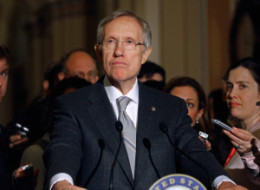
WASHINGTON -- The Senate voted 65-31 on Saturday to end Don't Ask, Don't Tell, defeating a 17-year policy of banning gay and lesbian service members from serving openly in the military. Six Republicans initially crossed the aisle to vote against the policy: Susan Collins (R-Maine), Lisa Murkowski (R-Alaska), Mark Kirk (R-Ill.), Scott Brown (R-Mass.), Olympia Snowe (R-Maine) and George Voinovich (R-Ohio).
The Senate vote is a vindication of Obama's decision to push for congressional repeal as opposed to unilateral executive action, though activists note he could have done both. The Senate will make a final vote on ending the policy at 3 p.m.
In the first procedural vote on Saturday morning, 63 senators voted in favor of the bill and 33 against. In the final passage, Sens. John Ensign (R-Nev.) and Richard Burr (R-N.C.) switched their vote to "aye," despite initially voting against moving forward with the bill.
"The important thing today is that 63 senators were on the right side of history," Joe Solmonese, president of the Human Rights Campaign, told HuffPost after the first vote, adding he sees the bill as a "stepping stone to further advances for the gay and lesbian community."
Gay-rights activists owe a small debt to their Latino brethren, as the DREAM Act, which the House and Senate have been considering at the same time, showed the way forward for repeal of Don't Ask, Don't Tell. Roughly a week before a crucial cloture vote failed, said one top aide, Democratic leadership staff saw that the same legislative tactic could be used to bring a standalone version of the repeal bill to the Senate floor as was currently being used to bring DREAM up. For needlessly complex reasons, a bill that comes to the Senate as a "message from the House" faces fewer obstacles to a floor vote than one that originates in the Senate.
Senate Majority Leader Harry Reid (D-Nev.) proposed to House Speaker Nancy Pelosi (D-Calif.) that the House consider moving first. Majority Leader Steny Hoyer (D-Md.) had the same idea.
"Senator Lieberman and Senator Collins determined that they would introduce a bill," Hoyer told HuffPost earlier this week. "I called and talked to a number of people. I then called Senator Lieberman and said 'Joe, my intent will be to talk to Congressman Murphy' -- who's the sponsor of the amendment that was adopted in the defense bill -- 'and put this in as a free standing bill, because we can probably send it over to you more quickly than you can send to us.' And he agreed and we introduced exactly the same bill that they have in the Senate."
The bill passed in the House 250-175 on Dec. 16.
During debate before the cloture vote, Republicans ran through the usual list of arguments against repealing DADT, claiming it would hurt unit cohesion and that troops had not been given an adequate chance to voice their opinions on the bill. A survey on ending DADT was sent to 400,000 service members, at least 100,000 of whom responded. Of those who responded, 70 percent said they would "work together to get the job done" if there was a gay service member in their unit -- and 69 percent said they know or suspect there is a gay service member serving with them already.
Sen. James Inhofe (R-Okla.) said the reason survey results were mostly positive because troops already thought the repeal was "a done deal" because politicians had said they planned to repeal it. Repealing DADT would harm recruitment and retention, he said. "I was shocked at how well this has worked for a long period of time," Inhofe said. "We have a saying in Oklahoma, 'if it ain't broke, don't fix it.' Well, this isn't broke, it's working very well."
Republican senators said their opposition was not related to homophobia or lack of appreciation for those who have served or are serving in the military. "This has nothing to do with the gays and lesbians who have given valuable service to our military," said Sen. Saxby Chambliss (R-Ga.). "That's a given."
Still, they rejected the idea that the military could adjust seamlessly to a more open policy. "Some people will say this is about civil rights and its time has come. The Marine Corps doesn't have that view," Graham said. "This is about effectiveness on the battle field, not about civil rights."
In the end, though, support for a repeal won out. A number of Democrats made impassioned appeals for the bill in the debate. "I can't think of something more egregious to our fabric, to our military," said Kirsten Gillibrand (D-N.Y). "If you care about national security, if you care about military readiness, you will vote against this corrosive policy."
Now, though, Republicans are threatening that the vote will threaten another effort: ratification of the START Treaty, which supporters say would strengthen national security.
"Some Republicans are saying they're not going to vote for the START Treaty now because we had a vote on the DREAM Act and Don't Ask, Don't Tell," said Senate Majority Leader Harry Reid (D-Nev.) after the vote.
President Barack Obama applauded the Senate for moving toward repeal. "By ending 'Don't Ask, Don't Tell,' no longer will our nation be denied the service of thousands of patriotic Americans forced to leave the military, despite years of exemplary performance, because they happen to be gay," he said in a statement. "And no longer will many thousands more be asked to live a lie in order to serve the country they love."
Ryan Grim contributed reporting.
Sat Dec. 18, 2010
Lawyer convicted in marijuana-growing operation
Sam Wood
Inquirer Staff Writer
DAVID SWANSON / Staff Photographer Richard K. Creamer and James Alberts spent $100,000 to convert this Northern Liberties warehouse into a high-tech growing operation, Alberts said.
A Philadelphia lawyer is facing a mandatory 10-year prison sentence after being convicted of operating a sizable and sophisticated marijuana-growing operation in North Philadelphia.
Richard K. Creamer, 38, practiced real estate and corporate law in Northern Liberties. In October 2007, Creamer and James Alberts, a South Philadelphia contractor, bought a warehouse on the 2300 block of North American Street, said Assistant U.S. Attorney Joseph T. Labrum III.
Creamer and Alberts, 37, had worked together before, buying distressed properties and selling them for profit. But when Creamer learned that Alberts was grossing thousands of extra dollars a month with a marijuana operation at Third and Tasker Streets, the Temple University law grad wanted in.
Alberts was initially apprehensive, but relented, Labrum said.
"It was his chance to do his best-ever grow and make even more money," Labrum said. "He couldn't have done it without Creamer's contribution."
According to Alberts, who testified at Creamer's trial in federal court, they spent $100,000 to renovate the structure to create a high-tech marijuana farm on the second floor, Labrum said.
From March through June 2009, gardeners harvested 20 pounds of high-grade cannabis a month, Labrum said.
Creamer's share ranged from four to five pounds, which the gardeners would put in his office across the hall or deliver to his house, Labrum said. Creamer then handed off the weed to his brother, a New York City disc jockey, to sell, Labrum said.
Creamer and Alberts began to dream big. On July 2, 2009, the partners flew to the West Coast and signed an agreement to buy a 40-acre tract in Northern California they intended to use as an outdoor cannabis farm.
Two weeks later, DEA agents raided the Philadelphia warehouse and arrested Alberts and eight others. The agents found more than 1,600 marijuana plants growing under 1,000-watt sodium lights in three cultivation rooms.
Creamer canceled the Northern California deal, Labrum said, claiming he had just learned his business partner was involved in criminal activity.
Creamer was convicted Thursday of conspiracy to manufacture 1,000 or more marijuana plants and maintaining a place for manufacture of controlled substances. Sentencing is scheduled for May 23.
Labrum said Alberts also pleaded guilty to similar charges and was awaiting sentencing.
Attorneys for Creamer and Alberts could not be reached for comment.
Read more: http://www.philly.com/inquirer/local/20101218_Lawyer_convicted_in_marijuana-growing_operation.html#ixzz18UdssXAW
Watch sports videos you won't find anywhere else
What worked for Clinton probably won't for Obama
Ken Bode
IndyStar
Watching Bill Clinton in the White House pressroom this week called back memories of the former president, 16 years ago, standing in the same place. Like Obama today, Clinton had taken a shellacking from the midterm voters, losing both houses of Congress. In the pressroom he insisted, almost mournfully, "The president is relevant. The Constitution gives me relevance . . . And the fact that I'm willing to work with the Republicans."
Clinton's endorsement of the Obama tax compromise and his counseling visit to the Oval Office gave rise to speculation that Obama will seek to emulate the Clinton strategy -- ignore his base, tack to the center and seek compromises with the GOP. If so, we might look at some of the differences between now and then.
On the first day of Clinton's presidency, he discovered the federal deficit was $360 billion, up $60 billion from what George H.W. Bush admitted during the 1992 campaign. A pittance perhaps in today's world, but it had a clarifying effect on the Clinton agenda, raising deficit reduction to a prime spot.
Clinton found that his three major campaign promises -- a middle- class tax cut, health-care reform and ending welfare as we know it--were a difficult brew under the circumstances. So he dropped the tax cut, postponed welfare reform and put Hillary in charge of reforming the health-care system. "If I don't get health care done," Clinton said, "I'll wish I didn't run for president."
Minority Leader Bob Dole promised there would be no Republican votes whatever for anything that raised taxes. Facing that, the Clinton health-care plan emerged as a botched initiative that drew fire from nearly every special interest it affected. The massive 2,409-page bill never even came to a vote in Congress. Still, it was the defining issue in the Republican seizure of power in the midterms.
Obama came to office facing a much different landscape: two wars, a collapsing financial industry, an auto sector facing extinction and a federal deficit that dwarfed that of 1993. Facing an even more determined GOP opposition, Obama pressed forward and by any measure his legislative accomplishments dwarf those of Clinton's first two years. Still, on Election Day, unemployment stood at 9.8 percent, there was an atmosphere of hostile partisan gridlock in Washington and Obama was hammered in the midterms.
So, can Obama recover by following the Clinton playbook? Remember, Clinton wandered in the wilderness for nearly six months wondering what to do. House Speaker Newt Gingrich was the ascendant leader in national politics, and Clinton's 1995 State of the Union was a surrender document.
Then Clinton hit on his recovery strategy of "triangulation," getting halfway between Republican and Democratic positions, picking the issues and extolling the virtues of compromise. That appears to be what Obama sought to do on the Bush tax cuts, though many Democrats think he went far more than halfway.
The difference in the times, however, is that Clinton had real issues to work with. Welfare reform was guaranteed to get Republican support, though Clinton had to use his veto twice before the GOP gave him a bill could sign. Trade liberalization, NAFTA, originally was a Republican idea and triangulating worked there as well. Control over the sale of assault weapons and regulation of tobacco gave Clinton popular issues by which to define differences.
Out of Clinton's season of doubt came a pragmatism that paid off. Accepting his party's nomination in 1996, Clinton could trumpet 10 million new jobs, 1.8 million moved from welfare to work and a budget deficit down 60 percent and headed toward zero.
If Obama chooses to follow the pragmatic, centrist path of his predecessor, it is hard to see where he finds the kind of issues that Clinton employed, hard to see where he gets similar accomplishments. Education reform and renewable energy are possibilities. But determined obstructionism still defines the GOP agenda -- repeal Obamacare, roll back financial regulation, deny Obama a second term. If that's the game, the president will more likely spend the next two years fighting a rear guard action.
Bode is the former national political correspondent for NBC News and a former political analyst for CNN.
Owner kills 3 robbers in jewelry store shootout
PEGGY O'HARE
HOUSTON CHRONICLE
Dec. 17, 2010, 4:07AM
Johnny Hanson Chronicle
Houston police officers on Thursday investigate after the shooting at Castillo's Jewelry on Canal in the East End.
Raw video: Robbery leaves 3 dead
But Ramon Castillo had a surprise for the gunman and two cohorts, who had announced they were robbing the business.
Castillo pulled a pistol from his waistband and shot the gunman dead. Then he grabbed a shotgun from his office and engaged in a shootout with the other two armed robbers.
When it was over, all three robbers were dead — and Castillo, though shot at least three times, was still standing, having successfully defended what was rightfully his.
It was the third time his shop, Castillo's Jewelry at 4502 Canal at Super Street, had been robbed since it opened 22 years ago, East End residents said.
Castillo, 52, apparently did not immediately realize he had been shot, officers said. He walked outside the store and looked around for more gunmen, then went back inside the business, realized he was wounded and untied his 48-year-old wife, who was unharmed, said Houston Police Department homicide investigator M.F. "Fil" Waters.
He remained in surgery at Ben Taub General Hospital late Thursday, where he was listed in critical but stable condition, with gunshot wounds to his left shoulder, left abdomen and legs, Houston police said. He is expected to survive.
Investigators said so many shots were fired inside the jewelry shop in a two- or three-minute span that they could not estimate the number of rounds. "We've got bullet fragments all over the place, casings all over the place, shotgun slugs all over the place, so it's really hard to determine at this point how many rounds were actually fired - but quite a few," Waters said.
"It is a pretty incredible story. The man was clearly defending his business, clearly defending his wife," Waters said. "It's amazing with all the bullets flying around in there that she wasn't hit."
'It's about time'
East End residents smiled proudly when they learned how Castillo had taken charge and protected his wife of 28 years. It is the first time he has turned the tables on his attackers, they said.
"It's about time he did something," said Theresa Arellano, 49, a lifelong East End resident.
Neighbors described the Castillos as a hard-working couple who labor seven days a week and take care of customers who live in the neighborhood, selling jewelry at affordable prices and allowing people to pay small amounts y toward purchases in layaway.
They said Castillo protects his store like a fortress, using an electronic door to buzz customers in and out. Customers are locked inside the store until they leave. Numerous video cameras are inside. "He's done everything he can do to secure his business," Waters said.
The dead robbers' names were not released, but police said they are not believed to be from the neighborhood.
"Somebody would have to be stupid to come rob the place because of the way it's set up," said a 30-year-old East End resident who would not give his name. "Everybody in the neighborhood knows how it is - everybody knows once you get in, he has to let you out. When you walk in, he buzzes you in, and when you walk out, he has to buzz you out."
The crime unfolded at 2:08 p.m. Thursday when two men posing as customers came into the store and asked the Castillos to show them some rings. As the husband and wife helped the two men, a third man walked into the store, pulled a pistol and announced he was robbing the business.
The two men who had posed as customers also then pulled pistols on the Castillos, police said. The Castillos were ordered to the back of the store at gunpoint, where Eva Castillo was tied up.
Castillo then pulled a pistol from his waistband, "obviously fearing for the safety of his wife and himself," said HPD spokesman Kese Smith. Castillo killed the robber who had tried to tie him up, then grabbed his shotgun from his office and killed the other two men.
Police are looking for a possible fourth suspect who may have dropped off the third robber at the jewelry shop.
That man never got out of his car. He is described as Hispanic, 20 to 25, with a short buzz haircut and a thin face. He was dressed as a construction worker. He drove away in a "boxy" brown or gold-colored vehicle that may have been an early 1990s model Nissan Sentra or Toyota.
The Castillos' shop was last robbed in 1993, according to a cursory check of HPD records, Waters said.
The Castillos also run a second business on the weekend at a flea market on Telephone Road, East End residents said.
Eva Castillo remained at the hospital with her husband Thursday night. The couple's son, who stayed at the jewelry shop talking to police, declined to speak with the media.
