

truesee's Blog

Judge blocks Gulf offshore drilling moratorium

Judge blocks Gulf offshore drilling moratorium; White House will appeal

Published: Tuesday, June 22, 2010, 1:53 PM   

Updated: Tuesday, June 22, 2010, 1:58 PM

The Associated Press

The Associated Press

A federal judge on Tuesday blocked a six-month moratorium on new deepwater drilling projects imposed after the massive Gulf oil spill.

Rusty Costanza / The Times-PicayuneCapt. Richard Garner stands on the deck of the Carol Chouest, a 280-foot-long, state-of-the-art supply vessel tied up Thursday at Port Fourchon with two identical sister vessels, the Hannah Chouest, center, and the C-Fighter. The Chouest companies have joined the Hornbeck suit challenging the federal moratorium on deepwater oil drilling. 

The White House promised an immediate appeal. President Barack Obama's administration had halted approval of any new permits for deepwater drilling and suspended drilling of 33 exploratory wells in the Gulf.

Press Secretary Robert Gibbs said Obama believes strongly that drilling at such depths does not make any sense and puts the safety of workers "at a danger that the president does not believe we can afford."

Several companies that ferry people and supplies and provide other services to offshore drilling rigs asked U.S. District Judge Martin Feldman in New Orleans to overturn the moratorium, arguing it was arbitrarily imposed.

Feldman agreed, saying in his ruling the Interior Department assumed that because one rig failed, all companies and rigs doing deepwater drilling pose an imminent danger.

"The Deepwater Horizon oil spill is an unprecedented, sad, ugly and inhuman disaster," he wrote. "What seems clear is that the federal government has been pressed by what happened on the Deepwater Horizon into an otherwise sweeping confirmation that all Gulf deepwater drilling activities put us all in a universal threat of irreparable harm."

The moratorium was imposed after the April 20 explosion on the Deepwater Horizon drilling rig that killed 11 workers and blew out the well 5,000 feet underwater that has spewed millions of gallons of oil into the Gulf.

The Interior Department said it needed time to study the risks of deepwater drilling. But the lawsuit filed by Hornbeck Offshore Services of Covington, La., claimed there was no proof the other operations posed a threat.

Company CEO Todd Hornbeck said after the ruling that he is looking forward to getting back to work.

"It's the right thing for not only the industry but the country," he said.

The moratorium was declared May 6 and originally was to last only through the month. Obama announced May 27 that he was extending it for six months.

In Louisiana, Gov. Bobby Jindal and corporate leaders said the moratorium would force drilling rigs to leave the Gulf of Mexico for lucrative business in foreign waters.

They said the loss of business would cost the area thousands of lucrative jobs, most paying more than $50,000 a year. The state's other major economic sector, tourism, is a largely low-wage industry.

Tim Kerner, the mayor of Lafitte, La., cheered Feldman's ruling.

"I love it. I think it's great for the jobs here and the people who depend on them," said Kerner, whose constituents make their living, primarily, from commercial fishing or oil.

But in its response to the lawsuit, the Interior Department said the moratorium is necessary as attempts to stop the leak and clean the Gulf continue and new safety standards are developed.

"A second deepwater blowout could overwhelm the efforts to respond to the current disaster," the Interior Department said.

The government also challenged contentions the moratorium would lead to long-term economic harm. Although 33 deepwater drilling sites were affected, there are still 3,600 oil and natural gas production platforms in the Gulf.

Catherine Wannamaker, a lawyer for environmental groups that intervened in the case and supported the moratorium, called the ruling "a step in the wrong direction."

"We think it overlooks the ongoing harm in the Gulf, the devastation it has had on people's lives," she said. "The harm at issue with the Deepwater Horizon spill is bigger than just the Louisiana economy. It affects all of the Gulf."

Entry #2,530

The Spill, The Scandal and the President

The Spill, The Scandal and the President

The inside story of how Obama failed to crack down on the corruption of the Bush years – and let the world's most dangerous oil company get away with murder


President Obama in Port Fourchon, Louisiana, May 28, 2010.

McNamee/GettyBy 


Tim Dickinson

Jun 08, 2010 4:30 PM EDT


This article originally appeared in RS 1107 from June 24, 2010. 


On May 27th, more than a month into the worst environmental disaster in U.S. history, Barack Obama strode to the podium in the East Room of the White House. For weeks, the administration had been insisting that BP alone was to blame for the catastrophic oil spill in the Gulf – and the ongoing failure to stop the massive leak. "They have the technical expertise to plug the hole," White House spokesman Robert Gibbs had said only six days earlier. "It is their responsibility." The president, Gibbs added, lacked the authority to play anything more than a supervisory role – a curious line of argument from an administration that has reserved the right to assassinate American citizens abroad and has nationalized much of the auto industry. "If BP is not accomplishing the task, can you just federalize it?" a reporter asked. "No," Gibbs replied.


Now, however, the president was suddenly standing up to take command of the cleanup effort. "In case you were wondering who's responsible," Obama told the nation, "I take responsibility." Sounding chastened, he acknowledged that his administration had failed to adequately reform the Minerals Management Service, the scandal-ridden federal agency that for years had essentially allowed the oil industry to self-regulate. "There wasn't sufficient urgency," the president said. "Absolutely I take responsibility for that." He also admitted that he had been too credulous of the oil giants: "I was wrong in my belief that the oil companies had their act together when it came to worst-case scenarios." He unveiled a presidential commission to investigate the disaster, discussed the resignation of the head of MMS, and extended a moratorium on new deepwater drilling. "The buck," he reiterated the next day on the sullied Louisiana coastline, "stops with me."


What didn't stop was the gusher. Hours before the president's press conference, an ominous plume of oil six miles wide and 22 miles long was discovered snaking its way toward Mobile Bay from BP's wellhead next to the wreckage of its Deepwater Horizon rig. Admiral Thad Allen, the U.S. commander overseeing the cleanup, framed the spill explicitly as an invasion: "The enemy is coming ashore," he said. Louisiana beaches were assaulted by blobs of oil that began to seep beneath the sand; acres of marshland at the "Bird's Foot," where the Mississippi meets the Gulf, were befouled by -brown crude – a death sentence for wetlands that serve as the cradle for much of the region's vital marine life. By the time Obama spoke, it was increasingly evident that this was not merely an ecological disaster. It was the most devastating assault on American soil since 9/11.


Like the attacks by Al Qaeda, the disaster in the Gulf was preceded by ample warnings – yet the administration had ignored them. Instead of cracking down on MMS, as he had vowed to do even before taking office, Obama left in place many of the top officials who oversaw the agency's culture of corruption. He permitted it to rubber-stamp dangerous drilling operations by BP – a firm with the worst safety record of any oil company – with virtually no environmental safeguards, using industry-friendly regulations drafted during the Bush years. He calibrated his response to the Gulf spill based on flawed and misleading estimates from BP – and then deployed his top aides to lowball the flow rate at a laughable 5,000 barrels a day, long after the best science made clear this catastrophe would eclipse the Exxon Valdez.


Hours after BP’s rig sank on April 22nd, a white board in NOAA's "war room" in Seattle displays the administration's initial, worst-case estimate of the spill — 64,000 to 110,000 barrels a day.


Even after the president's press conference, Rolling Stone has learned, the administration knew the spill could be far worse than its "best estimate" acknowledged. That same day, the president's Flow Rate Technical Group – a team of scientists charged with establishing the gusher's output – announced a new estimate of 12,000 to 25,000 barrels, based on calculations from video of the plume. In fact, according to interviews with team members and scientists familiar with its work, that figure represents the plume group's minimum estimate. The upper range was not included in their report because scientists analyzing the flow were unable to reach a consensus on how bad it could be. "The upper bound from the plume group, if it had come out, is very high," says Timothy Crone, a marine geophysicist at Columbia University who has consulted with the government's team. "That's why they had resistance internally. We're talking 100,000 barrels a day."


The median figure for Crone's independent calculations is 55,000 barrels a day – the equivalent of an Exxon Valdez every five days. "That's what the plume team's numbers show too," Crone says. A source privy to internal discussions at one of the world's top oil companies confirms that the industry privately agrees with such estimates. "The industry definitely believes the higher-end values," the source says. "That's accurate – if not more than that." The reason, he adds, is that BP appears to have unleashed one of the 10 most productive wells in the Gulf. "BP screwed up a really big, big find," the source says. "And if they can't cap this, it's not going to blow itself out anytime soon."


Even worse, the "moratorium" on drilling announced by the president does little to prevent future disasters. The ban halts exploratory drilling at only 33 deepwater operations, shutting down less than one percent of the total wells in the Gulf. Interior Secretary Ken Salazar, the Cabinet-level official appointed by Obama to rein in the oil industry, boasts that "the moratorium is not a moratorium that will affect production" – which continues at 5,106 wells in the Gulf, including 591 in deep water.


Most troubling of all, the government has allowed BP to continue deep-sea production at its Atlantis rig – one of the world's largest oil platforms. Capable of drawing 200,000 barrels a day from the seafloor, Atlantis is located only 150 miles off the coast of Louisiana, in waters nearly 2,000 feet deeper than BP drilled at Deepwater Horizon. According to congressional documents, the platform lacks required engineering certification for as much as 90 percent of its subsea components – a flaw that internal BP documents reveal could lead to "catastrophic" errors. In a May 19th letter to Salazar, 26 congressmen called for the rig to be shut down immediately. "We are very concerned," they wrote, "that the tragedy at Deepwater Horizon could foreshadow an accident at BP Atlantis."


 The administration's response to the looming threat? According to an e-mail to a congressional aide from a staff member at MMS, the agency has had "zero contact" with Atlantis about its safety risks since the Deepwater rig went down.

LINK TO  ADDITIONAL STORIES 

http://www.rollingstone.com/politics/news/17390/111965#

Entry #2,529

The President Wants You In His Office Now!!

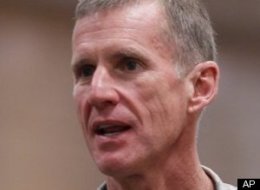
Stanley McChrystal, Top U.S. General In Afghanistan, Summoned To Washington After 'Rolling Stone' Interview

First Posted: 06-22-10 07:18 AM   |   Updated: 06-22-10 09:55 AM 
 

Mcchrystal Rolling Stone

General Stanley McChrystal has been called to Washington after comments made in Rolling Stone

WASHINGTON (AP)— The top U.S. commander in Afghanistan has been summoned to Washington to explain derogatory comments about President Barack Obama and his colleagues, administration officials said Tuesday.

Gen. Stanley McChrystal, who publicly apologized Tuesday for using "poor judgment" in an interview in Rolling Stone magazine, has been ordered to attend the monthly White House meeting on Afghanistan and Pakistan in person Wednesday rather than over a secure video teleconference, according to officials who spoke on condition of anonymity because they were not authorized to speak publicly. He'll be expected to explain his comments to Obama and top Pentagon officials, these officials said.

Obama has the authority to fire McChrystal. His predecessor, Gen. David McKiernan, was sacked on grounds that the military needed "new thinking and new approaches" in Afghanistan.

Chairman of the Joint Chiefs of Staff Adm. Mike Mullen has told McChrystal of his "deep disappointment" over the article, a spokesman said.

The article in this week's Rolling Stone depicts McChrystal as a lone wolf on the outs with many important figures in the Obama administration and unable to persuade even some of his own soldiers that his strategy can win the war.

The interview describes McChrystal, 55, as "disappointed" in his first Oval Office meeting with Obama. The article says that although McChrystal voted for Obama, the two failed to connect from the start. Obama appointed McChrystal to lead the Afghan effort in May 2009. Last fall, though, Obama called McChrystal on the carpet for speaking too bluntly about his desire for more troops.

"I found that time painful," McChrystal said in the article, on newsstands Friday. "I was selling an unsellable position."

Obama agreed to dispatch an additional 30,000 U.S. troops to Afghanistan only after months of study that many in the military found frustrating. And the White House's troop commitment was coupled with a pledge to begin bringing them home in July 2011, in what counterinsurgency strategists advising McChrystal regarded as an arbitrary deadline.

In Kabul on Tuesday, McChrystal issued a statement saying: "I have enormous respect and admiration for President Obama and his national security team, and for the civilian leaders and troops fighting this war and I remain committed to ensuring its successful outcome."

Mullen talked with McChrystal about the article Monday night, Capt. John Kirby, Mullen's spokesman said. In a 10-minute conversation, the chairman "expressed his deep disappointment in the piece and the comments" in it, Kirby said.

The Rolling Stone profile, titled "The Runaway General," emerged from several weeks of interviews and travel with McChrystal's tight circle of aides this spring.

In the interview, McChrystal he said he felt betrayed by the man the White House chose to be his diplomatic partner, Ambassador Karl Eikenberry. If Eikenberry had the same doubts, McChrystal said he never expressed them until a leaked internal document threw a wild card into the debate over whether to add more troops last November. In the document, Eikenberry said Afghan President Hamid Karzai was not a reliable partner for the counterinsurgency strategy McChrystal was hired to execute.

McChrystal accused the ambassador of giving himself cover.

"Here's one that covers his flank for the history books," McChrystal told the magazine. "Now, if we fail, they can say 'I told you so.'"

Caitlin Hayden, spokeswoman for the U.S. embassy in Kabul, said Eikenberry and McChrystal "are fully committed to the president's strategy and to working together as one civilian-military team."

McChrystal has a history of drawing criticism, despite his military achievements.

In June 2006 President George W. Bush congratulated McChrystal for his role in the operation that killed Abu Musab al-Zarqawi, the leader of al-Qaida in Iraq. As head of the special operations command, McChrystal's forces included the Army's clandestine counterterrorism unit, Delta Force.

He drew criticism for his role in the military's handling of the friendly fire shooting of Army Ranger Pat Tillman – a former NFL star – in Afghanistan. An investigation at the time found that McChrystal was "accountable for the inaccurate and misleading assertions" contained in papers recommending that Tillman get a Silver Star award.

McChrystal acknowledged he had suspected several days before approving the Silver Star citation that Tillman might have died by fratricide, rather than enemy fire. He sent a memo to military leaders warning them of that, even as they were approving Tillman's Silver Star. Still, he told investigators he believed Tillman deserved the award.

This week's development comes as criminal investigators are said to be examining allegations that Afghan security firms have been extorting as much as $4 million a week from contractors paid with U.S. tax dollars and then funneling the spoils to warlords and the Taliban, according to a U.S. military document. The payments are intended to ensure safe passage through dangerous areas they control.

The payments reportedly end up in insurgent hands through a $2.1 billion Pentagon contract to transport food, water, fuel and ammunition to American troops stationed at bases across Afghanistan.

__

Associated Press Writer Pauline Jelinek contributed to this report.

LINK TO VIDEO

http://landing.newsinc.com/shared/video.html?freewheel=69016&sitesection=ndnsubss&VID=86400

Entry #2,528

Sarah Palin to Rahm Emanuel: "U Lie"

Sarah Palin to Rahm Emanuel: "U Lie"

CBS NEWS

06/21/2010 11:59:29 AM PDT


Sarah Palin didn't appreciate Rahm Emanuel's characterization of the Republican Party over the weekend and criticized the White House Chief of Staff on Twitter.

Palin tweeted, "RahmEmanuel=as shallow/narrowminded/political/irresponsible as they come,to falsely claim Barton's BP comment is 'GOP philosophy," adding, "Rahm, u lie."

Palin's comments came shortly after Emanuel said on ABC's This Week that Rep. Joe Barton's (R-Texas) apology to BP CEO Tony Hayward during his congressional hearing exposed a common Republican sentiment that the real victim in the Gulf oil spill is BP.

"That's not a political gaffe, those are prepared remarks," Emanuel told ABC. "That is a philosophy. That is an approach to what they see. They see the aggrieved party here as BP, not the fishermen."

He added, "In case you forgot what Republican governance is like, Joe Barton reminded you."

During the congressional hearing last Thursday, Barton made headlines when he called a White House meeting with BP officials and the $20 billion escrow fund set up for victims of the oil spill a "shakedown" and apologized to both Heyward and BP.

Barton rescinded the statement later that day after facing pressure from both Democrats and Republicans and the threat of losing his position on the Energy and Commerce Committee.

Palin wasn't the only one upset by Emanuel's comments. On CNN's State of the Union, Sen. Lisa Murkowski (R-Alaska) called the chief of staff wrong and criticized the Democratic National Committee for running ads tying Barton's comments to the Republican Party. She called Barton's remarks inappropriate and said they should be overlooked for more important issues.

"Let's focus on providing what the people of the Gulf need, not pointing fingers back and forth and saying 'oh what you said is wrong,'" Murkowski said.

Entry #2,525

Board To Reinstate Corporal Punishment?

Board To Discuss Reinstating Corporal Punishment

Staff Writer


10:55 PM CDT, June 21, 2010


Board To Discuss Reinstating Corporal Punishment

FAST FACTS:


  • Dozens of teachers assistants show up at Memphis City School to protest layoffs
  • Board member got a second on his resolution to reinstate corporal punishment
  • The issue will be discussed at next work session


(Memphis 6/21/2010) Kenneth Whalum got quite a surprise at Monday night's Memphis City School Board meeting. Sharon Web seconded his resolution to reinstate corporal punishment.

That means the issue will be discussed during the July 12th work session, though many board members don't support spankings.

Though Whalum won attempts to open a dialogue on corporal punishment most of the meeting's focus was on the hundreds of teachers assistant jobs, slashed in May.

Armed with protest signs, dozens of fired teachers assistants fired back at the Memphis City School board and Superintendent Dr. Kriner Cash for cutting their jobs.

"Our kids are paying the price for your political maneuvering," explained fired assistant Phyllis Blakely.

MCS fired Blakely and 300 other part time teachers assistants to slash $47 million from the budget.

A move that pushed board member Kenneth Whalum to draft a resolution urging the superintendent to rehire the jobs cut last month.

"According to teachers, they are the lifeblood to succeed in the classroom especially with the removal of corporal punishment," explained Whalum.

Though 300 of nearly 780 TA jobs were cut, Dr. Cash says there's been a big misunderstanding about the impact the cuts will have on classes.

That's because there will still be assistants in the classroom. All teachers assistants will now be full time. District officials say they'll use federal money to fund the full time assistant positions for grades K-3.
Entry #2,524

Tea party recalls could backfire

Tea party recalls could backfire


Maggie Haberman and Alex Isenstadt


June 20, 2010 06:26 PM EDT


Tea party forces are seizing on a new strategy in their attempt to purge Senate incumbents from office: the recall.

While it’s not entirely clear whether their approach will meet constitutional muster, that hasn’t stopped determined groups of grass-roots activists from trying in nearly a half-dozen states.

The most prominent attempt to recall a sitting senator is currently unfolding in New Jersey, where Democratic Sen. Robert Menendez awaits a state high court ruling on whether a recall effort against him can go forward.

The New Jersey lawsuit — which questions whether tea party forces can legally gather signatures to petition for a ballot recall of a federal official — is emerging as the beachhead for a movement that some activists envision sweeping the country, the next step in the evolution of tea parties as a political force.

New Jersey Democrats have denounced the effort but are nevertheless nervous enough over it — and the press coverage it’s received — to launch a Web page designed to slam it. Party leaders have gone so far as saying it’s racially motivated against a Hispanic official, a claim tea party activists vehemently deny.

Other states where nascent recall efforts have been launched against Democrats include Louisiana, where Sen. Mary Landrieu has been targeted, and North Dakota, where Sen. Kent Conrad is the target. Tea party leaders said their allies in Colorado and Michigan are also closely monitoring the RecallNJ effort for clues on how to proceed.

If the suit succeeds — a decision is expected in the coming weeks — it will almost certainly raise the alarm among incumbent senators, even those who aren’t on the ballot this year.

Still, there are several considerable obstacles to recall efforts: There’s currently no explicit provision providing for the recall of a federal official, and case law in some states has gone against such efforts before.

And if it loses the legal fight, some critics argue, the tea party movement could find itself dismissed as a transitory political force, a high-impact media phenomenon that doesn’t have many legs beyond the peculiar 2010 cycle.

“There’s two trains of thought,” said RoseAnn Salanitri, a 60-year-old, stay-at-home mom who said she came to the idea of pushing for the Menendez recall after doing months of research on the law. “It can be [a loss] if we were inclined to roll over and play dead if they don’t agree with our position.”

But “we’re prepared to take it to the U.S. Supreme Court if need be. Sure, [that would] stall the petition drive in New Jersey, but should it go to the U.S. Supreme Court, it literally opens the door to the entire country to do this. This is not Vegas — what happens in Jersey won’t stay in Jersey.”

Not everyone agrees.

“A recall effort of a U.S. senator is a massive waste of time; it’s a legal impossibility,” said Dan Gerstein, a strategist who’s worked for Connecticut Sen. Joe Lieberman — another frequent target of recall activism, albeit from the left.

“Courts have ruled, it’s a settled matter, and the only thing the tea partiers will do by pursuing it is show how naive and ineffectual they are,” Gerstein added.

A longtime Democratic strategist who’s worked with senators across the country agreed, saying, “Every couple of years, there’s a recall movement that someone tries to push. It never really goes anywhere.”


Democratic strategist Chris Lehane, who watched the recall of Gov. Gray Davis in California up close, said, “The tea party is going to get to the jumping-the-shark phase here.”

If Salanitri and her allies clear the legal hurdle, they have another challenge: As Lehane noted, can they get the 1.3 million valid signatures to get on the state ballot and then succeed where others have failed at becoming a true national movement?

The Davis recall in California, which led to the election of GOP Gov. Arnold Schwarzenegger in 2003, was viewed as an earth-shattering expression of voter discontent, but despite the best efforts of its backers, it never stretched beyond the boundaries of the Golden State.

The Davis recall, however, took place under different circumstances — he was a state official, not a federal one, and the law was clear. In the RecallNJ case, Salanitri argues, New Jersey’s broad recall laws ought to apply at the federal level.

One source close to Menendez said the Davis comparison isn’t apt, since California had been facing rolling blackouts, among other problems — all tangible crises that stoked voter outrage.

“There is nothing as outrageous as what California was going through,” said this source of New Jersey’s current political environment.

Another Menendez source said, “We were all a little surprised by it. It kind of came out of nowhere. There was really no basis for it.”

The source said Menendez is using the recall as an opportunity to begin laying the groundwork for his 2012 reelection and views it as an opportunity to start setting contrasts.

“There’s the opportunity to define yourself,” the source said.

Ruben LeBlanc, who’s spearheading the MoveOnMary.org effort that has Landrieu in its sights, said he and Salanitri are part of a coalition, including activists in North Dakota and Colorado, that make up a movement known as Right2Recall.

“I think this is very different” from past recall efforts, said LeBlanc, claiming he’s heard from activists in 39 other states looking at the possibility of testing their state laws to see if they can be used against federal officials. He said interested groups hold conference calls every week.

LeBlanc also said the Louisiana attorney general’s office has told his group it is watching to see the outcome in New Jersey before deciding whether its anti-Landrieu effort can go ahead.

LeBlanc, a registered Republican, bristled at his effort’s being characterized as tea party driven, arguing that he’s had Democrats ask to join his effort.


And while he acknowledged a loss in New Jersey would be a blow, he said the effort “wouldn’t be over, not by a long shot.”

Menendez spokesman Afshin Mohamadi said, “On one hand, you have a tea party organization that wants to protect the foreign corporation responsible for wrecking the Gulf Coast, wants to limit the Civil Rights Act’s ban on discrimination and has called President [Barack] Obama a communist linked to ‘radical blacks.’

“On the other hand, you have a strong leader in the efforts to hold Big Oil, Big Banks and Big Insurance accountable. That’s an easy choice for mainstream New Jersey families.”

While they’re projecting bravado, the fact that the case has reached the state’s high court has moved New Jersey Democrats to become more aggressive in their pushback, as they try to characterize the efforts as put together by right-wingers going after Menendez on racial grounds because of his Hispanic last name.

Salanitri insisted there was no racial motivation.

“It is so beyond ridiculous,” she said. “We could only pick one. ... Simply, [Menendez] is a younger man, and he’s in better health, and we thought he had a longer career ahead of him.”

Less clear is exactly how the New Jersey court battle — a hugely expensive effort — is being funded. Salanitri said the group now has a 527 committee in place for a legal fund and that lawyer Andrew Schlafly — son of conservative activist Phyllis Schlafly — is handling the case for free so far.

She acknowledged that not every tea party group was on board with the lawsuit, saying some had argued there should be a focus on defeating incumbents up for reelection this year.

“You can’t really paint every tea party with the same brush,” she said.

Salanitri and LeBlanc both emphasized that their Everyman roots were driving them.

“We’re ‘average’ all the way,” Salanitri said cheerily, while LeBlanc, who was in construction but is now unemployed, said, “I’m just a concerned citizen who’s had enough.”

Her husband is a car salesman. Her kids are grown, and she spent years as a Bible teacher who fought against Darwinian theories, writing a book called “GUTs All Tied Up With Strings,” about creationist theories.

Salanitri, a registered Republican who considers herself an “independent,” said she never voted before she was 40 years old and got active only as she got upset about the state of the country.

She and LeBlanc both voiced a wish to “take back our country,” without a clear message of what they would like to do with that control — something Lehane said is going to be to the tea party’s detriment.

“Ultimately, you have to provide people a governing philosophy that has some common sense in it — that is optimistic— and provides some ideas that represent hope — if you truly want to vector the anger into a real sustainable movement,” he said.

“Otherwise, it burns hot but burns fast — and the New Jersey tea party recall effort will signify to many that the tea party folks ... don’t have any real ideas that go at the underlying challenges facing the country.”


Entry #2,523

I'm Going To Plead Guilty A Hundred Times Over

Faisal Shahzad, Times Square Car Bomb Suspect, Pleads Guilty To 'Mass Destruction' Charge

AP

TOM HAYS

First Posted: 06-21-10 05:37 PM   |   Updated: 06-21-10 10:10 PM


Faisal Shahzad


NEW YORK -- Calling himself a Muslim soldier, a defiant Pakistan-born U.S. citizen pleaded guilty Monday to carrying out the failed Times Square car bombing and left a sinister warning that unless the U.S. leaves Muslim lands alone, "we will be attacking U.S."

Wearing a white skull cap, prison smocks and a dark beard, Faisal Shahzad entered the plea in U.S. District Court in Manhattan just days after a federal grand jury indicted him on 10 terrorism and weapons counts, some of which carried mandatory life prison sentences. He pleaded guilty to them all.

U.S. District Judge Miriam Goldman Cedarbaum challenged Shahzad repeatedly with questions such as whether he had worried about killing children in Times Square.

"One has to understand where I'm coming from," Shahzad calmly replied. "I consider myself ... a Muslim soldier."

The 30-year-old described his effort to set off a bomb in an SUV he parked in Times Square on May 1, saying he chose the warm Saturday night because it would be crowded with people he could injure or kill. He said he conspired with the Pakistan Taliban, which provided more than $15,000 to fund his operation.

He explained that he packed his vehicle with three separate bomb components, hoping to set off a fertilizer-fueled bomb packed in a gun cabinet, a set of propane tanks and gas canisters rigged with fireworks to explode into a fireball. He also revealed he was carrying a folding assault rifle for "self-defense."

Shahzad said he lit a fuse and waited 2 1/2 to five minutes for the bomb to erupt. 

"I was waiting to hear a sound but I didn't hear a sound. ... So I walked to Grand Central and went home," he said.

Shahzad dismissed the judge's question about the children by saying the U.S. didn't care when children were killed in Muslim countries.

"It's a war. I am part of the answer to the U.S. terrorizing the Muslim nations and the Muslim people," he said. "On behalf of that, I'm revenging the attack. Living in the United States, Americans only care about their people, but they don't care about the people elsewhere in the world when they die."

Cedarbaum also asked Shahzad if he understood that the people in Times Square might not have anything to do with what happened overseas.

"The people select the government. We consider them all the same," Shahzad said during the hour-long hearing.

Shahzad made the plea and an accompanying statement as Cedarbaum began asking him a lengthy series of questions to ensure he understood his rights.

She asked him if he understood some charges carried mandatory life sentences and that he might spend the rest of his life in prison. He said he did.

At one point, she asked him if he was sure he wanted to plead guilty.

He said he wanted "to plead guilty and 100 times more" to let the U.S. know that if it did not get out of Iraq and Afghanistan, halt drone attacks and stop meddling in Muslim lands, "we will be attacking U.S."

Sentencing was scheduled for Oct. 5.

The Bridgeport, Conn., resident was arrested trying to leave the country May 3, two days after the bomb failed to ignite near a Broadway theater.

Authorities said Shahzad immediately cooperated, delaying his initial court appearance for two weeks as he spilled details of a plot meant to sow terror in the world-famous Times Square on a warm Saturday night when it was packed with thousands of potential victims.

The bomb apparently sputtered, emitting smoke that attracted the attention of an alert street vendor, who notified police, setting in motion a rapid evacuation of blocks of a city still healing from the shock of the Sept. 11, 2001, terrorist attack on the World Trade Center.

According to the indictment issued last week, Shahzad received a total of $12,000 prior to the attack from the Pakistani Taliban through cash drop-offs in Massachusetts and Long Island.

Attorney General Eric Holder said after the plea: "Faisal Shahzad plotted and launched an attack that could have led to serious loss of life, and today the American criminal justice system ensured that he will pay the price for his actions."

FBI New York Acting Assistant Director-in-Charge George Venizelos called the plea "right on the mark" and praised the work of "ordinary citizens who alerted law enforcement of suspicious activity."

Shahzad was accused in the indictment of receiving explosives training in Waziristan, Pakistan, during a five-week trip to that country. He returned to the United States in February.

The indictment said he received $5,000 in cash on Feb. 25 from a co-conspirator in Pakistan and $7,000 more on April 10, allegedly sent at the co-conspirator's direction. Shahzad said in court Monday that the Pakistan Taliban gave him more than $4,000 when he left training camp.

Shahzad, born in Pakistan, moved to the United States when he was 18.

Pakistan has arrested at least 11 people since the attempted attack. An intelligence official has alleged two of them played a role in the plot. No one has been charged.

Three men in Massachusetts and Maine suspected of supplying money to Shahzad have been detained on immigration charges; one was recently transferred to New York.

Federal authorities have said they believe money was channeled through an underground money transfer network known as "hawala," but they have said they doubt anyone in the U.S. who provided money knew what it was for.

Entry #2,522

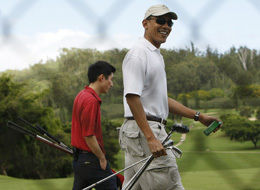
Republicans say the president should spend more time on Gulf not golfing

White House Defends Obama's Golfing: Does Us All Some Good

First Posted: 06-21-10 01:43 PM   |   Updated: 06-21-10 02:35 PM


Obama Golf


The Obama administration on Monday brushed off Republican criticism that the president should be spending less time on the golf course and more time focusing on the Gulf, saying it did the country more good than harm for Obama to get some "alone time"

"All of those issues that the president is dealing with, I think a little time to himself on Father's Day weekend probably does us all good as American citizens that our president is taken that time," said spokesman Bill Burton, who was filling in for White House Press Secretary Robert Gibbs at the daily briefing. "I don't think that there is a person in this country that doesn't think the president ought to have a little time to clear his mind."

Over the weekend, the Republican National Committee hammered the president for playing 18 holes with several friends on Saturday. The golf-centered critique has been levied during previous outings -- owing primarily to the semblance of hypocrisy (George W. Bush was often ridiculed by Democrats for his golf and ranch outings). But the voices grew louder once the Obama White House rebuked BP CEO Tony Hayward for attending a yacht race two days earlier.

On Monday, Burton seemed to moderate that Hayward criticism (perhaps aware of the optics of Obama's golf outing). The BP CEO was welcome to bring his boat to the Gulf, he said, provided there was a skimmer on it.

"For starters, I welcome his yacht to the gulf," said Burton when asked about the comparison between Hayward yachting and Obama golfing.

Entry #2,521

Ninety Percent of Stroke Risk Due to 10 Risk Factors

Executive Health June 18, 2010, 09:00 EST

Ninety Percent of Stroke Risk Due to 10 Risk Factors

Eighty percent of stroke risk due to five lifestyle factors, international study finds

Ed Edelson
HealthDay Reporter


Lifestyle

Click here to find out more!

HealthDay/ScoutNews LLC

FRIDAY, June 18 (HealthDay News) -- A large international study has found that 10 risk factors account for 90 percent of all the risk of stroke, with high blood pressure playing the most potent role. 

Of that list, five risk factors usually related to lifestyle -- high blood pressure, smoking, abdominal obesity, diet and physical activity -- are responsible for a full 80 percent of all stroke risk, according to the researchers. 

The findings come the INTERSTROKE study, a standardized case-control study of 3,000 people who had had strokes and an equal number of healthy individuals with no history of stroke from 22 countries. It was published online June 18 in The Lancet

The study -- slated to be presented Friday at the World Congress on Cardiology in Beijing -- reports that the 10 factors significantly associated with stroke risk are high blood pressure, smoking, physical activity, waist-to-hip ratio (abdominal obesity), diet, blood lipid (fat) levels, diabetes, alcohol intake, stress and depression, and heart disorders.

Across the board, high blood pressure was the most important factor, accounting for one-third of all stroke risk. 

"It's important that most of the risk factors associated with stroke are modifiable," said Dr. Martin J. O'Donnell, an associate professor of medicine at McMaster University in Canada, who helped lead the study. "If they are controlled, it could have a considerable impact on the incidence of stroke." 

Controlling blood pressure is important, he said, because it plays a major role in both forms of stroke: ischemic, the most common form (caused by blockage of a brain blood vessel), and hemorrhagic or bleeding stroke, in which a blood vessel in the brain bursts. 

In contrast, levels of blood lipids such as cholesterol were important in the risk of ischemic stroke, but not hemorrhagic stroke. 

"The most important thing about hypertension is its controllability," O'Donnell said. "Blood pressure is easily measured, and there are lots of treatments." 

Lifestyle measures to control blood pressure include reduction of salt intake and increasing physical activity, he said. 

He added that the other risk factors -- smoking, abdominal obesity, diet and physical activity -- in the top five contributors to stroke risk were modifiable as well. 

High intake of fish and fruits, for example, were associated with a lower risk of stroke, according to the study. 

The researchers pointed out several potential limitations of the study, including the sample size, which they said "might be inadequate to provide reliable information" about the importance of each risk factor in different regions and ethnic groups. 

Many of the same risk factors have cropped up in other studies, but this is the first stroke risk study to include both low- and middle-income participants in developing countries and to include a brain scan of all participating stroke survivors, according to the researchers. 

The countries joining in the study were Argentina, Australia, Brazil, Canada, Chile, China, Colombia, Croatia, Denmark, Ecuador, Germany, India, Iran, Malaysia, Mozambique, Nigeria, Peru, Philippines, Poland, South Africa, Sudan and Uganda. 

The INTERSTROKE study confirms that high blood pressure "is the leading cause of stroke in developing countries" as well as developed nations, Dr. Jack V. Tu, of the University of Toronto, wrote in an accompanying editorial. He added that it highlighted the need for health authorities in those countries to develop strategies to reduce high blood pressure, salt intake and other risk factors. 

A second phase of the INTERSTROKE study is underway, with researchers looking at the importance of risk factors in different regions, ethnic groups and types of ischemic stroke. They'll also study the association between genetics and stroke risk. The researchers plan to enroll 20,000 participants. 

Dr. Larry B. Goldstein, director of the Duke Stroke Center, noted that the study underscored what's already known about stroke risk. 

"The bottom line is that the risk factors for low- and middle-income countries seem to be pretty similar to those of Western countries," Goldstein said. "The findings reiterate the importance of attention to lifestyle factors in stroke risk -- diet, smoking, physical activity."

Entry #2,520

Road Sign Says Democrats - Party of the Parasites

Missouri man's incendiary sign on U.S. 71 draws fire

DONALD BRADLEY

The Kansas City Star

Some people have been offended by the message David Jungerman of Raytown had painted on a tractor-trailer.
DON BRADLEY/The Kansas City Star
Some people have been offended by the message David Jungerman of Raytown had painted on a tractor-trailer.
   

David Jungerman farms 6,800 acres of river bottom land in western Missouri. 

He’s not the kind of guy who posts on Twitter or has a Facebook profile. 

So when the 72-year-old Raytown man wanted to speak out politically, he used what he had handy: a 45-foot-long, semi-truck box trailer. 

Are you a Producer or Parasite


Democrats - Party of the Parasites


He planted the trailer with its professionally painted message in his Bates County cornfield along heavily traveled U.S. 71 about an hour south of Kansas City. He wanted lots of people to see it. 

They did. Including at least one with a good case of outrage, matches and a can of gas. 

On May 12, Jungerman’s trailer was torched. The Rich Hill volunteer fire department responded. A week later, it was set afire again. The firefighters put it out again. 

Then flames erupted in an empty farm house that Jungerman owns. 

“They don’t like free speech,” said Jungerman. He put out a $5,000 reward for information leading to an arrest. 

The sign is harder to read now because some of the letters are charred; the trailer tires burnt to nothing. 

“Things are getting a little out of hand out there,” said Chief Deputy Justin Moreland of the Bates County Sheriff’s Office. 

Local Democrats don’t want to be linked to the arsons. Jungerman has every right to speak his mind, said Kay Caskey, a Bates County Democrat and wife of longtime state Sen. Harold Caskey. 

“Obviously our country is in disarray now because of economics, jobs and foreclosures,” she said. “We are hurting as a country. But there are too many people who want to tear it down instead of build it up. Yes, there is anger out there, and we are a long way from Washington. 

“This man has a right to do what he did, but around here some people might wonder at what point do you cross the line?” 

Jungerman said he didn’t mean to direct his sign at local Democrats. Many of those are old-fashioned Harry Truman Democrats, he said. 

“They’re more conservative than many Republicans,” he said. “I should have put an ad in the paper to explain that. No, I meant the national Democrat parasite base that is sucking this country dry. The ones that just take from the government and not give anything back.” 

Jungerman says he’s not even a die-hard Republican. He voted for Claire McCaskill when she won a U.S. Senate seat in 2006. 

He put the sign out to make a point, but also to stir up some fun. 

“You should have heard the truckers talking on the CB radio,” he said with a chuckle. “One would like the sign and another would tell him to pull over up ahead so he could whup him.” 

Jungerman grew up on a farm, but got tired of the tail of a Jersey milk cow hitting him in the face so he told his father he was going to town to get a job. 

“I’ve worked 80 to 90 hours a week ever since,” he said. 

He’s a staunch believer in personal responsibility. In 1990, he and his daughter confronted four teens they caught fishing in a pond on their Raytown land. The boys called them names and threatened them, Jungerman said, and one spit on Jungerman’s daughter. 

Jungerman pulled a snub-nosed .38-caliber and held them until police arrived. 

The police, however, arrested him, took his Rolex watch and threw him in jail. The next day when he made bail, police did not return the watch. They said they didn’t remember him having one. 

He pleaded guilty to a misdemeanor gun charge. 

Five years later, against advice, he sued the city of Raytown for the value of the watch. He represented himself in a three-day trial that he won. But the judge overturned the verdict and the jury’s award of $9,175. 

Jungerman appealed, won again and got his money. 

Today, he owns a baby furniture company called Baby-Tenda Corp. at 123 S. Belmont in Kansas City’s Northeast area. He manages to get down to his farmland two or three times a week.

His problem now is that corn is looking good. Soon, it will obscure his trailer sign from highway traffic. 

“Well, I would have pulled it out of there by now if they hadn’t burned the tires off.”


Posted on Sat, Jun. 19, 2010 10:15 P

Read more: http://www.kansascity.com/2010/06/19/2029960/missouri-mans-incendiary-sign.html#ixzz0rUiuTJmd

Entry #2,519

Will Smith's friend a big target for armed robber

Sat, Jun. 19, 2010

Will Smith's friend a big target for armed robber

DAVID GAMBACORTA
Philadelphia Daily News 


No one - not even the dumbest criminal in the world - would try to rob a 6-foot-7, 280-pound man, right? 

Wrong. 

Police said a knuckleheaded crook made that very mistake when he tried to hold up Charles "Charlie Mack" Alston, a human skyscraper and friend to Hollywood stars, at a West Philly gas station early yesterday. 

It took Alston all of a few seconds to overpower the robber, who was armed - but about eight inches shorter and 80 pounds lighter. 

"I guess he felt like he had the upper hand because he had a gun," shrugged Alston, 44, a movie producer, hip-hop-recording manager and longtime pal of Will Smith. 

"He was wrong." 

Alston said his encounter with the gun-toting thug went something like this: 

Shortly after midnight, he pulled into the Sunoco A-Plus minimarket at 38th Street and Girard Avenue in his BMW convertible to get gas. 

He chatted on the phone with his daughter, who was celebrating her 21st birthday, and bought a T-shirt from a street vendor nearby. 

When he got back into his BMW, he said, "This dude runs up and puts a gun in my stomach. 

"I'm looking at him, and he's feeling in my pocket, going, 'Where's the money at? Where's the money at?' " 

Alston, a Philly native, said he motioned to a pocket on his right leg that contained about $3,000 in cash. 

"I already got two thoughts in my mind: That this dude is not going to let me leave if he gets the money. He's going to shoot me," he said. "And, I'm not going to let him leave." 

Alston said he pulled out the cash and immediately grabbed onto the man's gun, then forced the crook to the ground. 

The robber screamed for help, Alston said, and then bit Alston on the right hand and scratched his face. 

Police said the crook took off after Alston got control of his gun, but not before grabbing about $2,700 of Alston's money. 

Alston, who lost two brothers to gun violence and whose annual summer "Party 4 Peace Celebrity Weekend" will again draw celebrities and star athletes to the city July 23-25, said he feels bad for his assailant. 

"We never know what the circumstance is," Mack said. "He could be a bad seed, or trying to feed his seed. To me, it's sad."

null

STEVEN M. FALK / Staff photographer Community activist Charles "Charlie Mack" Alston talks about the man who attacked him.

Entry #2,518

Michael Jackson a billion-dollar man

Michael Jackson a billion-dollar man

Reuters 

Michael Jackson
AP – FILE - In this May 6, 2009 image released courtesy of Michael Jackson, pop star Michael Jackson is shown …
 

Sun Jun 20, 10:44 pm ET

NEW YORK (Billboard) – Michael Jackson's estate has generated at least $1 billion in revenues since the singer died a year ago, thanks in part to a lucrative new record deal with Sony Music and the most successful concert film of all time, according to Billboard estimates.

Through interviews with industry experts and some number-crunching, Billboard examines the various music-based revenue streams flowing into the estate.

MUSIC SALES -- VALUE: $429 MILLION

Since his death, Jackson has sold about 9 million albums in the United States, while the Jackson 5 and the Jacksons have sold about 800,000 units, according to Nielsen SoundScan. Outside the States, Jackson's album sales for the past year stand at around 24 million units. Based on a blended worldwide retail sales price of $11.62 ($12.30 per unit less mechanical royalties), Billboard estimates that Jackson's album catalog generated about $383 million in sales.

On the digital side, Jackson's songs have generated 12.9 million track downloads in the United States in the past 12 months, according to SoundScan. Based on those figures, Billboard estimates that the total number of worldwide downloads is about 26.5 million units, with a value of $34 million (net of mechanical royalties).

Jackson's ringtone sales totaled 1.5 million last year in the States, with the bulk coming after his death. Digital ringtones sales worldwide are about twice that stateside, which brings Jackson's global ringtone tally to 3 million. At $2 per unit, ringtone revenue was about $5 million last year (net of mechanical royalties).

Monies generated from subscription services and digital performance royalties typically amount to about one-third that of mobile revenue, so Jackson's catalog probably generated about $2 million from those streams.

U.S. digital performance royalties represent about 13% of the revenue generated by single track downloads. Applying that rate to global track sales, Jackson's recording catalog generated another $4.5 million from global digital performances.

FILM/TV -- VALUE: $392 MILLION

Sony Pictures bought Jackson's rehearsal footage from AEG for $60 million. In retrospect, the price was something of a bargain. "Michael Jackson: This Is It" was released October 28, 2009, and earned $72 million at the U.S. box office, according to BoxOfficeMojo.com, making it the highest-grossing concert film in history.

Overseas, the film earned $188 million at the box office; of that, $56 million was tallied in Japan alone. After AEG recouped the company's investment of more than $35 million in the canceled shows at London's O2 and the film, the bulk of the theatrical take -- court documents indicate it could be as high as 90% -- went to Jackson's estate.

On the home video front, the "This Is It" DVD has earned $43 million in U.S. sales, with 2.7 million units sold since its January 26 release, according to The-Numbers.com, a division of Nash Information Services. Nash estimates the film made another $25 million in rental revenue.

In Japan -- where the film was also sold as part of a special "This Is It" bundle for the PlayStation 3 -- DVD sales topped $18 million on its first day of release; 351,000 Blu-ray copies have been sold, according to rankings service Oricon, adding about $7 million to the total.

In terms of TV, the industry standard is that exclusive rights for ad-supported TV costs 12% of the domestic box office for a four-year window; this rule of thumb is in flux, however, as the length of exclusive windows extend and the number of outlets involved in the deals increase. In November 2009, Viacom purchased the exclusive U.S. TV rights to air "This Is It" on its MTV and BET family of networks -- including VH1 and Palladia, as well as MTV and BET -- for six years. Given the additional years in the contract and the film's box-office tally, the deal could be worth upwards of $15 million. (By contrast, FX is reported to have paid between $25 million and $30 million for just the U.S. commercial TV rights to "Avatar.")

With its family-friendly rating, "This Is It" can be shown in all distribution media outside of traditional theaters, including airplanes, cruise ships and hotel chains. Licensing fees for nontheatrical performances vary based on the movie and its potential reach and how long it will air after it debuts in theaters, but it's generally forecast to be about 7% of total revenue for a film. For "This Is It," that puts the number at $24 million.

MUSIC PUBLISHING -- VALUE: $130 MILLION

Jackson's music publishing company, Mijac, is administered by Warner/Chappell. Based on a reported value for Mijac of at least $75 million in 2005, Billboard estimates Mijac currently has a value of around $150 million. At that value, it generates about $25 million per year in revenue. In the last 12 months, according to sources, that number could have doubled to as much as $50 million.

Jackson also owns half of Sony/ATV, formed in 1995 when Sony paid Jackson $90 million for 50% of ATV Music Publishing. Barry Massarsky of Massarsky Consulting says that Sony/ATV is comparable to BMG Music Publishing two years ago when Universal Music Group acquired it for $2 billion. Massarsky estimates Sony/ATV is worth about 80% of BMG at the time of acquisition, or $1.6 billion. Jackson's share is half that, or $800 million. Based on a multiple of eight to 10 times net publisher's share, Jackson's share of the company's revenue is $80 million per year.

LICENSING/TOURING -- VALUE: $35 MILLION

Despite being canceled, the 50-show This Is It tour at London's O2 paid big dividends. Revenue from tickets retained by fans as souvenirs and not refunded brought in an estimated $6.5 million, and Bravado's This Is It concert merchandise brought in $5 million, both less AEG's share.

An AEG-produced Jackson memorabilia exhibit is showing in Japan and has brought in another estimated $3.5 million to the estate. Plans call for the exhibit to head to China.

Last August, Bravado followed its AEG/This Is It merch deal with a new pact with the Jackson estate that included a $10 million advance, sources say.

Based on conversations with insiders, Billboard estimates licensing royalties and retail sales accounted for another $10 million in revenue to the Jackson estate. Actual retail sales were far greater.

This week, gaming company Ubisoft announced it will release a dance-oriented Jackson videogame in time for the holiday season. Licensing fees weren't disclosed.

Finally, sources say there wasn't any advance on royalties and no guarantees paid for the estate's two-pronged deal with Cirque du Soleil for a tour and a Las Vegas residency, a deal structure in line with past Cirque tributes to the Beatles and Elvis Presley. After startup costs are shared by the estate and Cirque, revenue will come from box-office receipts and other ancillaries associated with the projects.

The financial tragedy here is what might have been. Billboard reported before Jackson's death that the O2 shows would gross up to $100 million and merch possibly another $15 million. Beyond that, AEG had a 36-month global touring plan in place with Jackson had the run successfully been completed.

RECORDING CONTRACT -- VALUE: $31 MILLION

In March, Sony Music Entertainment reached a deal with Jackson's estate to release 10 albums of the singer's music through 2017. The albums' content will vary -- a collection of previously unreleased tracks is expected in November and a reissue of 1979's "Off the Wall" is expected next year. All told, the estate is guaranteed between $200 million and $250 million for the deal. Some of that amount was likely paid in an advance. No albums have yet been released, however. If just one of the contract's eight years is recognized, that would add $31 million to the money the estate received in the last 12 months.

At the time of the deal, John Branca, who serves as special administrator for the estate alongside John McClain, said that Elvis is the model for Jackson's legacy. "To this day, there's interest in Elvis," he said. "And I think there will be enduring interest in Michael. It's our job to continue to expose Michael to new generations."

Entry #2,517

Kobe vs. Jordan, give me a break

June 20, 2010

Historical perspective needed in NBA's 'best ever' debate

DREW SHARP
FREE PRESS COLUMN

The need for instant historical judgment belittles the definition of true NBA immortality. Why the rush in determining where Kobe Bryant ranks among the all-time greats? I don't believe he announced his retirement upon winning his fifth NBA championship. 

But such limited perspective is inevitable in a sport cursed with the attention span the size of a flea. If it didn't happen in the last 5 minutes, it won't register as an actual occurrence.

It's from such narrowness that a ridiculous Michael Jordan or Kobe debate gained traction.

Stop the nonsense right now. Kobe's a great player. He might already rank among the top 10 of all-time. But it's not only crazy suggesting that he and Jordan belong in the same historical sentence, it's sacrilege.

This doesn't happen in baseball or football. But the next guy in basketball must be the best because there's a stubbornness to consider that several aspects of the NBA game could have been better 20, 30 or even 40 years ago.

Baseball embraces its heritage. There's probably only a handful around today who could say they saw Babe Ruth or Lou Gehrig during his peak in the 1920s and '30s, but even the younger baseball historians appreciate what they never saw. Just recite the numbers 714 and 2,130, and they genuflect in reverence.

Jim Brown remains the greatest running back who ever breathed to those whose most vivid personal recollection of him is that of the B movie star. But they trust their elders' stories of Brown as that unstoppable combination of pizzazz and punishment back when 1,000 yards rushing really meant something.

But if you didn't see it in the NBA, it somehow can't qualify when compared with a modern standard.

You're too young to remember and thus appreciate Bill Russell's dominance (11 NBA championships) in the 1960s? Read an NBA history book. Watch a video retrospective of those great Boston teams. You think the NBA athleticism today is unmatched, then try explaining why we've still never seen a 7-footer as physically punishing in the paint yet artistically graceful off the dribble as Wilt Chamberlain more than 40 years ago?

Kobe was a dog offensively in the Lakers' Game 7 victory over Boston in the NBA Finals on Thursday night. He contributed rebounds and played well defensively, but there were too many occasions in that ultimate championship moment where you wondered if Kobe was even on the floor.

That never happened with Jordan, or Russell, or Magic, or Bird.

Entry #2,516