BYE BYE BIPARTISANSHIP: Rahm Lays Out Two Governing Visions
Entry #2,515



The time is now 1:48 am
You last visited
June 9, 2026, 10:10 pm
All times shown are
Eastern Time (GMT-5:00)

LINK TO HISTORY OF FATHER'S DAY
http://www.fathersdaycelebration.com/fathers-day-history.html
 It's not just Republicans keeping Reid's tax extenders legislation from advancing
Jay Heflin
The Hill
06/19/10 12:15 PM ET
Senate Majority Leader Harry Reid (D-Nev.) has blamed back-to-back defeats in advancing the so-called tax extenders bill — which extends unemployment insurance — on GOP opposition.
“The Republicans would not allow people who are out of work unemployment compensation. It’s hard for me to comprehend,” Reid said after the bill’s second failure.
But some members of the majority leader’s own party have been steadfast in opposing the legislation, too. And their message couldn’t be clearer on what it will take to win their support for the measure: Pay for it.
Sens. Joseph Lieberman (I-Conn.) and Ben Nelson (D-Neb.) have yet to support the extender bill, but their votes are crucial for passage. Both have said their backing of the package is contingent on it being fully paid for.
“Senator Lieberman understands that millions of Americans are faced with difficult economic times but he believes that it will only further jeopardize our economic future and prospects for job creation if Congress continues to pass unfunded spending bills that add to the deficit and deepen the national debt,” Marshall Wittmann, the senator’s communication director, said. “He believes that just as American families must pay their bills, this legislation should be better financed with either unused stimulus money or by additional revenues.”
Lieberman and Nelson on Wednesday opposed a procedural vote on the $140 billion extender bill that would have added approximately $80 billion to the deficit. The measure failed on a 45-52 vote, with 10 Democrats joining them in opposing the bill.
On Thursday, Lieberman and Nelson were the only members of the majority that opposed a slimmed down version of the bill that would have cost $118 billion and added approximately $60 billion to the deficit. The bill failed on a 56-40 vote.
Like Lieberman, Nelson will continue to oppose the bill until it no longer adds to the deficit.
A spokesman noted the senator has “repeatedly said” the bill should be paid for.
Senate Democratic staffers were expected to work through the weekend and come up with an extender package that can win 60 votes, sources told The Hill.
Bringing a fully paid-for bill forward would go a long way toward winning over not just Lieberman and Nelson, but potentially “gettable” Republicans like Maine Sens. Olympia Snowe and Susan Collins.
Both lawmakers have repeatedly said a bill that adds to the deficit troubles them. A spokesperson for Collins, Kevin Kelley, said the senator’s position on the issue would not change.
“She is hopeful the Senate will continue negotiations and work quickly to come up with a compromise plan that she can support that provides assistance to those who are struggling and who have lost their jobs through no fault of their own, but that does not add tens of billions of dollars to our already bloated deficit,” Kelley said.
Collins, Snowe and Nelson supported the extender substitute offered by Sen. John Thune (R-S.D.) that was defeated, 41 to 57, on Thursday.
Thune’s bill accomplished many of the priorities Democrats have sought by resuscitating business and individual tax breaks that expired last year and extending social spending programs. It was also fully offset, in large part by using unspent stimulus funds, freezing government salaries and allowing companies to delay funding for their pensions.
“The defeat of my amendment was a missed opportunity for Congress to prove they are serious about tackling our dangerous spending habits and $13 trillion national debt,” Thune said in prepared remarks on the heels of his proposal’s defeat.
“The alternative amendment I proposed was a common sense step toward restoring fiscal sanity to our nation's runaway spending and ballooning deficit,” he added.
Senate Democrats on Friday celebrated a partial victory on extenders when they agreed to pull from the bill a fully funded, six-month extension of the so-called “doc fix,” a term that describes a delay in Medicare payment cuts to physicians. The measure was brought to the floor under unanimous consent and was not objected to by a single Republican.
Senate Minority Leader Mitch McConnell (R-Ky.) said the proposal’s passage was a win for bipartisanship.
“I think we’ve come up with a proposal that achieves a goal that both sides wanted to achieve, which was to get a doctor fix for at least a six-month period of time and also it is paid for,” McConnell said. “And I think that’s something both sides can feel good about.”
Senate Finance Chairman Max Baucus (D-Mont.) called the development a “good omen.”
“I hope we can take this cooperation and work out the rest of the so-called extenders,” he said.
Barack Obama takes shot at Bobby Jindal on issue of National Guard activation
Saturday, June 19, 2010, 4:00 PM

Times-Picayune Staff
Largely overlooked in President Barack Obama's Oval Office speech on the Gulf of Mexico oil spill last week was some implied criticism of Gov Bobby Jindal.
Susan Poag,The Times-Picayune archiveGov. Bobby Jindal was photographed June 9 in Grand Isle during a news conference with Major General Bennett C. Landreneau, head of the Louisiana National Guard.
Obama noted that he has authorized the deployment of more than 17,000National Guard members along the coast, with the costs to be paid forby BP. "These servicemen and women are ready to help stop the oil fromcoming ashore, clean beaches, train response workers, or even help withprocessing claims - and I urge the governors in the affected states toactivate these troops as soon as possible," Obama said.
Jindal hasn'tcalled up anywhere close to Louisiana's allotment of 6,000 Guardmembers, though his spokeswoman insists he's called up the numbersrequested and needed to aid the clean-up efforts.
June 18, 2010
Peddling Relief, Firms Put Debtors
in Deeper Hole

Steve Hebert for The New York Times
PORT IN A DEBT STORM Linda Robertson, right, hugs her aunt Helen Day. Ms. Robertson moved in with her in Kansas City, Mo., after she and her son could no longer afford his apartment. Ms. Robertson paid nearly $4,000 into a debt settlement account, but filed for bankruptcy after a credit card company sued her.
PETER S. GOODMAN
PALM BEACH, Fla. — For the companies that promise relief to Americans confronting swelling credit card balances, these are days of lucrative opportunity.
So lucrative, that an industry trade association, the United States Organizations for Bankruptcy Alternatives, recently convened here, in the oceanfront confines of the Four Seasons Resort, to forge deals and plot strategy.
At a well-lubricated evening reception, a steel drum band played Bob Marley songs as hostesses in skimpy dresses draped leis around the necks of arriving entrepreneurs, some with deep tans.
The debt settlement industry can afford some extravagance. The long recession has delivered an abundance of customers — debt-saturated Americans, suffering lost jobs and income, sliding toward bankruptcy. The settlement companies typically harvest fees reaching 15 to 20 percent of the credit card balances carried by their customers, and they tend to collect upfront, regardless of whether a customer’s debt is actually reduced.
State attorneys general from New York to California and consumer watchdogs like the Better Business Bureau say the industry’s proceeds come at the direct expense of financially troubled Americans who are being fleeced of their last dollars with dubious promises.
Consumers rarely emerge from debt settlement programs with their credit card balances eliminated, these critics say, and many wind up worse off, with severely damaged credit, ceaseless threats from collection agents and lawsuits from creditors.
In the Kansas City area, Linda Robertson, 58, rues the day she bought the pitch from a debt settlement company advertising on the radio, promising to spare her from bankruptcy and eliminate her debts. She wound up sending nearly $4,000 into a special account established under the company’s guidance before a credit card company sued her, prompting her to drop out of the program.
By then, her account had only $1,470 remaining: The debt settlement company had collected the rest in fees. She is now filing for bankruptcy.
“They take advantage of vulnerable people,” she said. “When you’re desperate and you’re trying to get out of debt, they take advantage of you.” Debt settlement has swollen to some 2,000 firms, from a niche of perhaps a dozen companies a decade ago, according to trade associations and the Federal Trade Commission, which is completing new rules aimed at curbing abuses within the industry.
Last year, within the industry’s two leading trade associations — the United States Organizations for Bankruptcy Alternatives and the Association of Settlement Companies — some 250 companies collectively had more than 425,000 customers, who had enrolled roughly $11.7 billion in credit card balances in their programs.
As the industry has grown, so have allegations of unfair practices. Since 2004, at least 21 states have brought at least 128 enforcement actions against debt relief companies, according to the National Association of Attorneys General. Consumer complaints received by states more than doubled between 2007 and 2009, according to comments filed with the Federal Trade Commission.
“The industry’s not legitimate,” said Norman Googel, assistant attorney general in West Virginia, which has prosecuted debt settlement companies. “They’re targeting a group of people who are already drowning in debt. We’re talking about middle-class and lower middle-class people who had incomes, but they were using credit cards to survive.”
The industry counters that a few rogue operators have unfairly tarnished the reputations of well-intentioned debt settlement companies that provide a crucial service: liberating Americans from impossible credit card burdens.
With the unemployment rate near double digits and 6.7 million people out of work for six months or longer, many have relied on credit cards. By the middle of last year, 6.5 percent of all accounts were at least 30 days past due, up from less than 4 percent in 2005, according to Moody’s Economy.com.
Yet a 2005 alteration spurred by the financial industry made it harder for Americans to discharge credit card debts through bankruptcy, generating demand for alternatives like debt settlement.
The Arrangement
The industry casts itself as a victim of a smear campaign orchestrated by the giant banks that dominate the credit card trade and aim to hang on to the spoils: interest rates of 20 percent or more and exorbitant late fees.
“We’re the little guys in this,” said John Ansbach, the chief lobbyist for the United States Organizations for Bankruptcy Alternatives, better known as Usoba (pronounced you-SO-buh). “We exist to advocate for consumers. Two and a half billion dollars of unsecured debt has been settled by this industry, so how can you take the position that it has no value?”
But consumer watchdogs and state authorities argue that debt settlement companies generally fail to deliver.
In the typical arrangement, the companies direct consumers to set up special accounts and stock them with monthly deposits while skipping their credit card payments. Once balances reach sufficient size, negotiators strike lump-sum settlements with credit card companies that can cut debts in half. The programs generally last two to three years.
“What they don’t tell their customers is when you stop sending the money, creditors get angry,” said Andrew G. Pizor, a staff lawyer at the National Consumer Law Center. “Collection agents call. Sometimes they sue. People think they’re settling their problems and getting some relief, and lo and behold they get slammed with a lawsuit.”
In the case of two debt settlement companies sued last year by New York State, the attorney general alleged that no more than 1 percent of customers gained the services promised by marketers. A Colorado investigation came to a similar conclusion.
The industry’s own figures show that clients typically fail to secure relief. In a survey of its members, the Association of Settlement Companies found that three years after enrolling, only 34 percent of customers had either completed programs or were still saving for settlements.
“The industry is designed almost as a Ponzi scheme,” said Scott Johnson, chief executive of US Debt Resolve, a debt settlement company based in Dallas, which he portrays as a rare island of integrity in a sea of shady competitors. “Consumers come into these programs and pay thousands of dollars and then nothing happens. What they constantly have to have is more consumers coming into the program to come up with the money for more marketing.”
The Pitch
Linda Robertson knew nothing about the industry she was about to encounter when she picked up the phone at her Missouri home in February 2009 in response to a radio ad.
What she knew was that she could no longer manage even the monthly payments on her roughly $23,000 in credit card debt.
So much had come apart so quickly.
Before the recession, Ms. Robertson had been living in Phoenix, earning as much as $8,000 a month as a real estate appraiser. In 2005, she paid $185,000 for a three-bedroom house with a swimming pool and a yard dotted with hibiscus.
When the real estate business collapsed, she gave up her house to foreclosure and moved in with her son. She got a job as a waitress, earning enough to hang on to her car. She tapped credit cards to pay for gasoline and groceries.
By late 2007, she and her son could no longer afford his apartment. She moved home to Kansas City, where an aunt offered a room. She took a job on the night shift at a factory that makes plastic lids for packaged potato chips, earning $11.15 an hour.
Still, her credit card balances swelled.
The radio ad offered the services of a company based in Dallas with a soothing name: Financial Freedom of America. It cast itself as an antidote to the breakdown of middle-class life.
“We negotiate the past while you navigate the future,” read a caption on its Web site, next to a photo of a young woman nose-kissing an adorable boy. “The American Dream. It was never about bailouts or foreclosures. It was always about American values like hard work, ingenuity and looking out for your neighbor.”
When Ms. Robertson called, a customer service representative laid out a plan. Every month, Ms. Robertson would send $427.93 into a new account. Three years later, she would be debt-free. The representative told her the company would take $100 a month as an administrative fee, she recalled. His tone was take-charge.
“You talk about a rush-through,” Ms. Robertson said. “I didn’t even get to read the contract. It was all done. I had to sign it on the computer while he was on the phone. Then he called me back in 10 minutes to say it was done. He made me feel like this was the answer to my problems and I wasn’t going to have to face bankruptcy.”
Ms. Robertson made nine payments, according to Financial Freedom. Late last year, a sheriff’s deputy arrived at her door with court papers: One of her creditors, Capital One, had filed suit to collect roughly $5,000.
Panicked, she called Financial Freedom to seek guidance. “They said, ‘Oh, we don’t have any control over that, and you don’t have enough money in your account for us to settle with them,’ ” she recalled.
Her account held only $1,470, the representative explained, though she had by then deposited more than $3,700. Financial Freedom had taken the rest for its administrative fees, the company confirmed.
Financial Freedom later negotiated for her to make $100 monthly payments toward satisfying her debt to the creditor, but Ms. Robertson rejected that arrangement, no longer trusting the company. She demanded her money back.
She also filed a report with the Better Business Bureau in Dallas, adding to a stack of more than 100 consumer complaints lodged against the company. The bureau gives the company a failing grade of F.
Ms. Robertson received $1,470 back through the closure of her account, and then $1,120 — half the fees that Financial Freedom collected. Her pending bankruptcy has cost her $1,500 in legal fees.
“I trusted them,” she said. “They sounded like they were going to help me out. It’s a rip-off.”
Financial Freedom’s chief executive, Corey Butcher, rejected that characterization.
“We talked to her multiple times and verified the full details,” he said, adding that his company puts every client through a verification process to validate that they understand the risks — from lawsuits to garnished wages.
Intense and brooding, Mr. Butcher speaks of a personal mission to extricate consumers from credit card debt. But roughly half his customers fail to complete the program, he complained, with most of the cancellations coming within the first six months. He pinned the low completion rate on the same lack of discipline that has fostered many American ailments, from obesity to the foreclosure crisis.
“It comes from a lack of commitment,” Mr. Butcher said. “It’s like going and hiring a personal trainer at a health club. Some people act like they have lost the weight already, when actually they have to go to the gym three days a week, use the treadmill, cut back on their eating. They have to stick with it. At some point, the client has to take responsibility for their circumstance.”
Consumer watchdogs point to another reason customers wind up confused and upset: bogus marketing promises.
In April, the United States Government Accountability Office released a report drawing on undercover agents who posed as prospective customers at 20 debt settlement companies. According to the report, 17 of the 20 firms advised clients to stop paying their credit card bills. Some companies marketed their programs as if they had the imprimatur of the federal government, with one advertising itself as a “national debt relief stimulus plan.” Several claimed that 85 to 100 percent of their customers completed their programs.
“The vast majority of companies provided fraudulent and deceptive information,” said Gregory D. Kutz, managing director of forensic audits and special investigations at the G.A.O. in testimony before the Senate Commerce Committee during an April hearing.
At the same hearing, Senator Claire McCaskill, a Missouri Democrat, pressed Mr. Ansbach, the Usoba lobbyist, to explain why his organization refused to disclose its membership.
“The leadership in our trade group candidly was concerned that publishing a list of members ended up being a subpoena list,” Mr. Ansbach said.
“Probably a genuine concern,” Senator McCaskill replied.
The Coming Crackdown
On multiple fronts, state and federal authorities are now taking aim at the industry.
The Federal Trade Commission has proposed banning upfront fees, bringing vociferous lobbying from industry groups. The commission is expected to issue new rules this summer. Senator McCaskill has joined with fellow Democrat Charles E. Schumer of New York to sponsor a bill that would cap fees charged by debt settlement companies at 5 percent of the savings recouped by their customers. Legislation in several states, including New York, California and Illinois, would also cap fees. A new consumer protection agency created as part of the financial regulatory reform bill in Congress could further constrain the industry.
The prospect of regulation hung palpably over the trade show at this Atlantic-side resort, tempering the orchid-adorned buffet tables and poolside tails with a note of foreboding.
“The current debt settlement business model is going to die,” declared Jeffrey S. Tenenbaum, a lawyer in the Washington firm Venable, addressing a packed ballroom. “The only question is who the executioner is going to be.”
That warning did not dislodge the spirit of expansion. Exhibitors paid as much as $4,500 for display space to showcase their wares — software to manage accounts, marketing expertise, call centers — to attendees who came for two days of strategy sessions and networking.
Cody Krebs, a senior account executive from Southern California, manned a booth for LowerMyBills.com, whose Internet ads link customers to debt settlement companies. Like many who have entered the industry, he previously sold subprime mortgages. When that business collapsed, he found refuge selling new products to the same set of customers — people with poor credit.
“It’s been tremendous,” he said. “Business has tripled in the last year and a half.”
The threat of regulations makes securing new customers imperative now, before new rules can take effect, said Matthew G. Hearn, whose firm, Mstars of Minneapolis, trains debt settlement sales staffs. “Do what you have to do to get the deals on the board,” he said, pacing excitedly in front of a podium.
And if some debt settlement companies have gained an unsavory reputation, he added, make that a marketing opportunity.
“We aren’t like them,” Mr. Hearn said. “You need to constantly pitch that. ‘We aren’t bad actors. It’s the ones out there that are.’ ”

Atlanta expected to pay $20,000 to woman arrested for asking a police officer ‘why'
The Atlanta Journal-Constitution
4:33 p.m. Friday, June 18, 2010
The Atlanta City Council is expected to agree pay $20,000 to settle a lawsuit a by a 62-year-old woman who was jailed for asking a police officer “why” she and friends had to move from a sidewalk where they were talking about an upcoming funeral.
A council committee has already accepted the city attorney's recommendation to settle the case, but the settlement must be approved by the entire city council. Minnie Carey spent almost 10 hours in jail on a charge of disorderly conduct brought by an officer who already had a troubled history with the Atlanta Police Department.
“It’s resolved,” said Carey's attorney, Robert Ortman.
APD was named in the suit, and a spokesman for the department said Friday that an internal investigation found officer Brandy Dolson "acted within the parameters of department policies and procedures," which complied with national standards. "Those [national] guidelines are based on a set of proven standards that take into account the difficult situations police officers face every day, and the split-second decisions they must make to protect citizens and reduce their own personal risk,” APD public affairs director Carlos Campos said in an e-mail.
This is one of two settlements the council is expected to address on Monday that involve incidents with Atlanta police officers.
If the other proposed settlement is approved, taxpayers will give 22 cab drivers $425,000 to settle a federal lawsuit. The suit says officers confiscated permits and insurance stickers and then immediately cited or arrested the drivers for not having those stickers on their cars. The drivers were targeted because their checks to APD's Division of Taxicabs and Vehicles for Hire were returned; some of those checks were written as long as two years before they were deposited.
Carey’s suit was filed Feb. 17, claiming Dolson violated her civil rights and falsely imprisoned her. The suit also said the city had not given Dolson training that might have led him to respond differently in his encounter with Carey and her friends on a sidewalk outside a convenience store.
“People don’t usually complain unless there’s something really wrong,” Carey said. “If you have people complaining about the same person, it’s time the city take a look into their background.”
Dolson has been suspended without pay for most of this year, but not for the Carey case. APD said it was other, unrelated infractions that led to the disciplinary action.
Dolson could not be reached for comment Friday but he has previously declined to talk about the matter.
The suit said APD had received more than 10 complaints against Dolson but had “failed to adequately investigate the claims and deter him from further misconduct.”
But in the proposed settlement, the city and APD do not admit any wrongdoing.
Before bring the suit, Carey had filed a complaint with the Citizen Review Board, a panel charged with investigating reports of police misconduct. The board found in favor of Carey last February but interim police Chief George Turner rejected that decision.
Around 4 p.m. on March 26, 2009, Carey and her friends were on the sidewalk in front of the Boulevard Lotto convenience store, just a few blocks from downtown Atlanta. They had been talking a few minutes about funeral plans for a woman they all knew when Dolson and his partner pulled up. Dolson told the women to “move it.”
Three women started walking away but Carey didn’t, asking “why” instead.
Dolson’s answer to Carey was “because I said so,” according to records.
“I’m a citizen and I’m a taxpayer and I have a right to be here. I’m merely trying to find out about a sister’s funeral,” Carey responded.
That's when Carey was handcuffed, put in the back of the patrol car and eventually taken to jail on a city ordinance violation charge.
She was released on her own recognizance around 12:30 a.m. the next day, and the disorderly conduct charge was dismissed several weeks later, at the third court hearing, because Dolson failed to appear.
“This arrest was in violation of her rights under … the U.S. Constitution,” the suit said.
The suit also said Carey was subjected to unjustified and excessive force and that she and her friends were targeted because of their race; the police officers also are black.
“He was a lousy police officer. What else can I say?” Carey said in an interview with The Atlanta Journal-Constitution.
LINK TO ORIGINAL STORY
http://www.ajc.com/news/atlanta/woman-61-arrested-for-309285.html

|
Police: Census worker abused |
|
Suspect ‘tired of’ visitors stopping by
CHRIS GRAHAM
A Chapel Hill man was arrested after allegedly holding a U.S. Census worker against his will
|
|
James T. Brewer, 61, 3026 Highway 270, was arrested and charged with aggravated assault and false imprisonment.
Travis Ryder, 20, told deputies Brewer became aggressive toward him when he went to Brewer’s home June 9 to collect Census information. The victim alleged Brewer was aggressive toward him and took the identification badge from his neck, tore up his census documents and took the keys from his truck, according to an incident report.
The report states Brewer then took Ryder to an outbuilding on his property, melted a Coca-Cola can with a blow torch and asked the census worker if he knew what physical injury the blow torch would do to his hand.
Ryder told authorities throughout the ordeal Brewer acted as if he had a weapon in his pocket and told him that no more census workers should come to his home or “they might not leave.”
Brewer later told authorities he was only trying to scare the worker, saying four others had already been to his home and “he was tired of it.”
He was released from Marshall County Jail after posting $8,500 bond.
Census workers have increasingly been the target of violence.
Since late April, there have been 252 incidents nationwide in which Census workers were threatened or harmed — 86 of which involved weapons such as guns, axes and crossbows — according to The Washington Post.
Ron Lindsey, branch manager for the Columbia census office, said a few of his 800 workers have come across minor incidents since starting their canvas of the area in April.
None of the incidents have been as serious as Friday’s alleged event, Lindsey said.
“Most of it is people not wanting to deal with the public,” he said.
Lindsey said residents do not need to be concerned about workers giving out their private information.
He said Ryder was ready to go back to work the next day.
“He’s a trooper,” Lindsey said.
Jun 16, 2010 - 16:31:43 EDT.

LINK TO PHOTO
http://columbiadailyherald.com/articles/2010/06/16/top_stories/02census.txt
Foreclosure crisis hits minorities harder
African-Americans and Latinos are losing their homes to foreclosure at a higher rate than whites.
Tami Luhby
Senior writer
June 18, 2010: 2:27 PM ET
NEW YORK --CNN Money -- The mortgage meltdown is hitting the African-American and Latino communities harder than whites, a new study has found.
Of borrowers who took out mortgages between 2005 and 2008, some 8% of both African-American and Latino borrowers have lost their homes to foreclosure, compared to 4.5% of non-Hispanic whites, according to a study by the Center for Responsible Lending, released Friday.
The racial and ethnic disparities continued even after controlling for income differences. The center's research shows that African-American and Latino borrowers were about 30% more likely to get higher-rate subprime loans than white borrowers with similiar risk characteristics.
Of the total pool of homeowners, 17% of Latinos have lost their homes to foreclosure or are at imminent risk of losing their homes, while 11% of African-Americans are in that position. By comparison, 7% of non-Hispanic whites have lost their homes or are about to.
The reason for the disparity is that African-Americans and Latinos were marketed riskier, higher-cost loans that became unaffordable during the mortgage and economic crisis, said Keith Ernst, the center's director of research.
"These are more expensive mortgages," he said. "They are more likely to fail."
African-American and Latino communities are likely to lose $373 billion in declining property values between 2009 and 2012.
The report also found that an estimated 2.5 million foreclosures were completed between 2007 and the end of 2009. This is roughly one in every 20 mortgages outstanding at the time of the crisis.
More than eight in 10 of these foreclosures were on owner-occupied homes with mortgage originated between 2005 and 2008.
An estimated 5.7 additional foreclosures are imminent.
"This crisis still has a long way to go," Ernst said.
PROVIDENCE, R.I. (CBS)
 An 8-year-old student was told his home-made hat decorated with armed plastic Army figures violated the school's gun policy.
WPRI-TV
Watch a video report from WPRI here
http://www.wwlp.com/dpps/news/strange/school-bans-army-men-hat-ob10-jgr_3431614
Antiabortion message for specialty plate
Woman worked on effort for 7 years
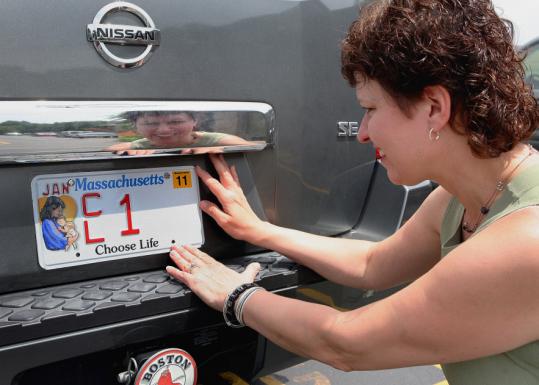
Massachusetts, a state known for its liberal political climate, is about to offer motorists specialty license plates that express opposition to abortion rights.
The new “Choose Life’’ plate, which features an illustration of a woman cradling an infant, becomes one of 18 Massachusetts tags that provide publicity and funding for causes, including breast cancer research, youth hockey, and environmental preservation. They cost drivers $90 every two years.
After the state recoups the cost of producing the “Choose Life’’ plates, the proceeds will go to organizations that encourage women with unwanted pregnancies to consider options other than abortion, such as adoption.
Massachusetts is only the second New England state, after Connecticut, to offer the “Choose Life’’ plates.
First offered by Florida a decade ago and now available in about two dozen states, the plates are coming to Massachusetts because of an often lonely campaign begun in 2003 by Merry Nordeen, 47, a secretary at St. Joseph Parish in Wakefield.
“I prayed really hard for this — I prayed for seven years, and God didn’t disappoint me,’’ she said in a phone interview.
Her goals, she said, are to raise money for groups that counsel women with unplanned pregnancies to consider adoption, or provide financial support to help the woman raise her child if money is tight, as well as to “give people a way to spread the message about life and . . . to get that message to the people who need to see it.’’
Some abortion-rights groups have criticized the plates. But legislative approval is not required in Massachusetts to create specialty tags. Any registered charitable organization can submit a design to the Registry of Motor Vehicles, post a $100,000 bond to protect the state from financial loss, and obtain applications and fees from at least 1,500 drivers who want the new plates. The state returns the bond if more than 3,000 of the specialty plates sell within two years.
“The statute governing the issuance of special plates is very clear,’’ Adam Hurtubise, a spokesman for the Department of Transportation, said in a statement yesterday. “The group seeking this special plate met all the statutory requirements for a special plate.’’
The $90 two-year fee includes $40 for the specialty plates, plus a $50 two-year registration fee. The state will retain $12 of the $40 fee to cover the cost of printing the plates. The remaining $28 balance will go to Choose Life Inc., a Massachusetts nonprofit that says it will direct the money to organizations that counsel women with unplanned pregnancies and that do not “counsel in or refer for abortion.’’ When a plate is renewed, the full $40 fee will go to Choose Life Inc.
Andrea Miller, executive director of NARAL Pro-Choice Massachusetts, said she fears the plates “will funnel money to organizations that provide false, misleading, medically inaccurate, and in fact disproven information to women who have unintended pregnancies and who are seeking guidance about what their options are.’’
But she said NARAL had no plans to create a plate promoting abortion rights or to mount a legal challenge.
Nordeen credited a group at St. William’s Church in Tewksbury and other volunteers, including many people from Catholic parishes, with helping her sign up about 1,700 customers. An anonymous donor provided the $100,000 bond, she said.
Brigitte Amiri, a senior staff attorney for the American Civil Liberties Union’s Reproductive Freedom Project, said legal challenges to the “Choose Life’’ plates generally fall into two general categories: those where proponents have challenged a state’s denial of their application and cases where a state has approved a “Choose Life’’ plate but not provided an equal opportunity for a pro-abortion rights plate.
Courts have disagreed over whether the message on the plates represents government speech or private speech, and whether the government has the responsibility to offer the same opportunity to both sides.
“The courts are all over the map,’’ Amiri said. “I would say that the predominant view is that the license plates are a combination of private speech and government speech, and as a result, the government can’t unfairly pick and choose among which messages it wants on its plates.’’
In South Carolina, the state chapter of Planned Parenthood sued when the Legislature passed a law establishing the “Choose Life’’ plates without also approving a similar plate supporting abortion rights. A federal appeals court found that the government had engaged in viewpoint discrimination. South Carolina lawmakers then used an administrative process for specialty plates to approve the “Choose Life’’ plates a second time, said Amiri.
In Illinois, “Choose Life’’ proponents lost their battle when a federal appeals court upheld the Legislature’s refusal to allow plates that discussed abortion. The court said the government could prohibit categories of content, as long as it did not promote one viewpoint over the other.
But in Tennessee, where the Legislature approved a “Choose Life’’ plate but not a plate with the opposing view, a US appellate court found that the message on the plate was permissible because it was government speech, and the Legislature had a right to author its own message — particularly since purchasing the plates was voluntary.
In Massachusetts a lawsuit does not appear imminent.
“There is a procedure for any organization that wants to get plates like this to follow, and it is open to everyone,’’ said Christopher Ott, a spokesman for the ACLU of Massachusetts.