truesee's Blog

Too much homework and tv leaves one hr a day for children

Wednesday, Jun 16 2010


Too much homework and television leaves just one hour a day for 'children to be children'


Daily Mail Reporter
Last updated at 3:12 PM on 15th June 2010 


Too much homework and television are stopping children from being children, a poll of parents suggests today.

They believe that children's lives are too structured and pressurised with little time to play.

Homework, extra lessons, after-school clubs and television are all preventing youngsters from enjoying playtime, according to the poll of 2,000 parents

Young boy doing homework at the kitchen table. Too much homework and TV are stopping children from being children, a poll of parents suggests

More than half (51 per cent) of those questioned said children are under more pressure today than ever before, while one in 10 (11 per cent) believe their own youngsters' lives are too structured.

And one in five (20 per cent) say they do not believe their children have enough free time just to be children.

Two thirds (66 per cent) of parents said homework, extra lessons and after-school activities are preventing children from having time to play each day, while almost three in 10 (37 per cent) blamed television.

Almost one in four (23 per cent) cited longer travel to and from school, and clubs and activities as the reason for short playtimes.

The poll, commissioned by The British Toy and Hobby Association (BTHA) and Play England found that parents say their child spends, on average, 69.77 minutes a day playing.

But they would like their children to spend an extra 72.67 minutes at play 

Nearly half (43 per cent) wished they could spend more time playing with their children.

Dr Amanda Gummer, a psychologist who advises the BTHA, said: 'Play helps a child to develop a whole range of skills from learning how to take turns and share to increasing fitness, creativity and even self-esteem. Through fun and play a child learns about the world around them. 

'This research shows that children today are not getting enough time to play and their parents want to change this.'

The BTHA and Play England are asking parents to make a pledge to allocate more of their children's time to playing. The aim is to get the UK collectively to pledge two million extra play minutes over the next three months.

The poll questioned 2,000 parents with children aged under 13 between June 4-8.

Entry #2,485

Republican Accuses Obama of Racism President Favors The Black Person

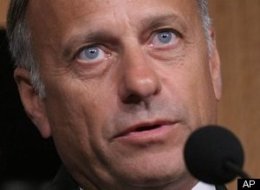
Steve King Accuses Obama Of Racism: President 'Favors The Black Person'

First Posted: 06-15-10 12:43 PM   |   Updated: 06-15-10 01:12 PM


Steve King Obama Blacks

Steve King: Obama 'Favors The Black Person' Get Politics Alerts


(AP) - A Republican congressman suggested that President Barack Obama favors blacks over whites, prompting a GOP candidate to cancel a fundraiser headlined by the Iowa lawmaker.

Rep. Steve King, known for sometimes incendiary remarks about immigration, Abu Ghraib and other issues, criticized Obama and Attorney General Eric Holder, who also is black, in an interview Monday on G. Gordon Liddy's nationally syndicated radio talk show.

"I'm offended by Eric Holder and the president also, their posture," King said. "It looks like Eric Holder said that white people in America are cowards when it comes to race."

King continued: "The president has demonstrated that he has a default mechanism in him that breaks down the side of race on the side that favors the black person in the case of professor Gates and officer Crowley."

He was alluding to last year's incident in which Obama commented on a white police officer's arrest of a black professor from Harvard University.

As news of King's remarks spread, Colorado Republican Cory Gardner canceled a planned $100 per-plate fundraiser where King was to speak.

King, a four-term lawmaker, made similar remarks about Obama in a speech last month.
"When he had an Irish cop and a black professor, who'd he side with?" King said. "He jumped to a conclusion without having heard the facts. And he ended up having to have a beer summit. The president of the United States has got to articulate a mission. And instead, he's playing race-bait games to undermine the law enforcement in the state of Arizona and across the country."

King, a former construction company owner, drew earlier criticism for comments about the Iraq war. He said the news media exaggerated the story of abuses at Iraq's Abu Ghraib prison.

And after compiling what he called an accurate civilian violent death rate for Iraq, he said living there was safer than in some U.S. cities, including New Orleans and Detroit.
Christopher Reed, an Iowa conservative activist, defended King.

"He is one of those few politicians who really says what he thinks," Reed said. "One man's controversial is another man's truth."

Entry #2,483

Clinton finally ahead of Obama in popularity

washingtonpost.com

 
Washington Sketch: Clinton finally ahead of Obama in popularity

Dana Milbank
Tuesday, June 15, 2010;


It's about two years too late, but Hillary Clinton has finally pulled ahead of Barack Obama.

By any measure -- favorability ratings or job approval -- Americans by a sizable margin have warmer views of the secretary of state than they do of the president. This is of little use to Clinton beyond bragging rights, but among Hillary '08 fans there is some satisfaction that the woman Obama once cut down as "likable enough" is now more liked than he is. Depending on the measure and the poll, she leads him by roughly 10 to 25 percentage points.

To understand why, look no further than their calendars for Monday. The president was in Alabama and Mississippi, trying again to change the public perception that his administration has been weak in its response to the oil spill. The secretary of state was in Washington receiving plaudits for being a "passionate leader" and for taking a "resolute and genuine" stand against human trafficking and slavery.

In the ceremonial Ben Franklin Room of the State Department, the passionate and resolute Clinton vowed her commitment "to abolishing this horrible crime" against human dignity. "Traffickers must be brought to justice," she said.

For a public figure, few issues are as politically safe; the slavery and exploitation lobby, after all, was unlikely to issue a rebuttal. Clinton finished her day Monday with a speech on the need for help in sub-Saharan Africa; no criticism from the keep-Africa-poor movement was heard.

Contrast that with Obama, who had only grim tidings for Gulf Coast residents about the BP oil spill. He spoke to them of a "fear that it could have a long-term impact on a way of life that has been passed on for generations."

Give Obama points for honesty, but that's not going to boost his poll numbers

Previous secretaries of state Colin Powell and Condoleezza Rice were both more popular than their boss, President George W. Bush. But such a trend is not universal: Warren Christopher didn't have ratings as high as his boss, President Bill Clinton.

Hillary Clinton helped her situation by sticking to relatively low-profile issues. While the White House drove the divisive policies such as Afghanistan, she has busied herself in quieter corners of the world, enhancing the perception that she's above the political fray.

Now the former first lady and Democratic senator from New York is asserting herself in a few domestic areas. Releasing the 10th annual Trafficking in Persons report Monday, she noted that, "for the first time ever, we are also reporting on the United States of America," an effort "to ensure that our policies live up to our ideals." (The State Department gave the United States its top grade.)

Before that, Clinton offered some commentary on the domestic economy, declaring: "You've got countries who are explicitly saying to me in private, 'Well, look, you know, we always look to you because you had this great economy. And now, look, you're in the ditch, and you've dragged other people into the ditch.' "

That statement was enough to send the likes of Bill O'Reilly, the conservative Fox News commentator, to outline a potential Clinton primary challenge to Obama in 2012. There's no sign of such a challenge, but there's no disputing that Obama has fallen below Clinton.

This month's Daily Kos/Research 2000 poll found that 51 percent view Obama favorably, down from 77 percent at the time of his inauguration last year. Clinton, who had a favorability rating in the 40s during her first-lady days in 1996, has stayed in the 60s since she started the job at the State Department. The infrequently asked "job approval" question has produced an even larger Clinton edge.

Of course, Obama bested Clinton in the only poll that mattered, in 2008. But these days, Clinton is entitled to enjoy a measure of revenge. As Obama endured more complaints and sniping in the Gulf Coast on Monday, Clinton was being applauded in Foggy Bottom. Her staff started the applause as soon as she entered from the back, and an audience of human-rights types filmed her with their smartphones. The session had been billed as a "news conference," but no questions were allowed; this was more of an adoration conference.

Undersecretary Maria Otero gushed about "our top diplomat, my boss, our passionate leader and a skilled policymaker" without whom "this issue would not be to where it has gotten." An anti-trafficking activist invoked Clinton's trademark slogan: "It takes a village to raise a child. It takes a whole community to fight slavery."

Clinton was in her policy-expert element. She spoke of something known as "the paradigm of the three 'P's" and proposed a fourth "P" as well. She also reminded the crowd of her early work on trafficking 10 years ago, "in a prior life some time back."

Few could have imagined back in that prior life that the controversial and polarizing first lady would someday win the favor of two-thirds of her countrymen.

Polling director Jon Cohen contributed to this column. 

Entry #2,479

Woman leaves cell phone in car she broke into

Bad call: Suspect left behind cell phone in car she broke into, Collier deputies say

  • Posted June 12, 2010 at 1:22 p.m.,
  • updated June 12, 2010 at 1:26 p.m.


Naples Daily News

A suspect's own cell phone placed her at the scene of the crime, according to the Collier County Sheriff's Office.

Amanda Minerva Gallegos, 18, and Jessie Cervantez, 22, broke into several unlocked cars between May 27 and May 28, deputies reported. 

Authorities allege the pair stole a stereo, bank paperwork, a wallet, a drill and tools. 

Yet while nabbing a couple of cell phone chargers from one of the cars, Gallegos left behind her cell phone, the 20-page arrest report said. 

“Yall be-careful!” said a text sent to Gallegos' phone around 2 a.m. May 28. 

A few minutes later another text said: “and if you find a badass camera and a badass metro phone yall better give it to me.”

The replies were simple: “K.”

Photos on the phone matched Gallegos and Cervantez's driver's license pictures as well as video taken at a 7-Eleven convenience store where hundreds of dollars was charged on one of the stolen bank cards.

A store clerk also identified the couple as having presented several stolen checks to be cashed.

Over two days, Cervantez cashed nine stolen checks totaling about $2,500.

Gallegos, of the 100 block of Melody Lane in East Naples, and Cervantez, of the 5200 block of Maple Lane in East Naples, were both charged with three counts of burglary, two counts of petty theft and criminal mischief.

Cervantez had additional charges, nine counts of cashing bad checks and grand theft.


LINK TO PHOTOS


http://www.naplesnews.com/news/2010/jun/12/bad-call-suspect-leaves-behind-cell-phone-car-she-/

Entry #2,477

Has Hollywood's love for Obama ridden off into the sunset?

THE HILLBlogger face-off: Has Hollywood's love for Obama ridden off into the sunset?

John Nolte and Deborah White 
The Hill
06/12/10 02:44 PM ET

The Hill invites two established bloggers from either side of the political spectrum to sound off on a designated topic in original commentary each Saturday. This week, two bloggers based in Southern California take on the intersection of Hollywood and politics:


Hollywood still carefully protecting Obama

John Nolte

When Hollywood turns against someone, you won’t have to ask if they have. You’ll know.

When Leftist Hollywood turns against someone, like they did President George W. Bush, neither our country nor the safety of our men and women in uniform means anything -- for this industry will eagerly waste hundreds of millions of dollars on a dozen-plus lousy films specifically designed to undermine our will to win a righteous war. When Hollywood turns on someone, they not only relentlessly mock, demean and denigrate that individual; they mock, demean, and denigrate their family.

Yes, the children.

Incompetence, broken promises, partisan divisiveness, the Gulf dying before our eyes, deficit forecasts with so many zeroes Einstein couldn’t grasp them, and dirty backroom deals haven’t cooled Hollywood on President Obama one bit. The same industry that stands by a Roman Polanski certainly isn’t going to jump off the USS ObamaWorship over a little thing like double-digit unemployment. If nothing else, Tinseltowners are loyal and their rules are simple: child rape’s fine, just don’t let us catch you with a Rush Limbaugh bumper sticker.

Yes, recently we’ve heard some in the entertainment industry appear to criticize the President. Most notably “Daily Show” host Jon Stewart, who ridiculed His Own Personal One over that oh-so presidential ”ass to kick” comment, and director Spike Lee, who suggested Obama drop the cool, calm professorial act and “go off” over the oil spill. But don’t be fooled. This is simply the president’s own personal Palace Guards doing their duty and guarding the palace.

You have to keep in mind that with a very few notable exceptions, the whole of the entertainment industry is a left-wing propaganda machine manned by those who understand that politics is downstream from the culture, and who fully grasp that their primary mandate is to protect President Obama at all costs. All Threats Must Be Eliminated. The only reason Obama’s been taking a little pop culture heat lately is due to that fact that right now the biggest threat to Obama is Obama and his own incompetence and disconnect.

If anything, Hollywood is worried about and for Obama. Worried about the upcoming mid-terms, his re-election chances, his sliding poll numbers, and his gilded ship sailing off course and landing in Carter-ita-ville instead of Mt. Rushmore. Spike Lee, Jon Stewart and their ilk are certainly a little panicked over how they see things going for their guy. But these recent criticisms from the president’s entertainment community pals should be interpreted as nothing any more serious than dear and close friends staging a helpful tough-love intervention. Hollywood can’t even muster a little criticism for Obama’s mishandling of the Gulf oil spill.

The only exception I would grant to my otherwise cynical observations (but that doesn’t make them wrong) is George Clooney’s recent editorial criticism of the Obama’s administration’s lack of engagement in the Sudan. As misguided as Clooney is in all things (including his decision to make “Leatherheads”), his concern for the Sudan is sincere. But one sentence in an 800-word piece is far from a mutiny.

Rest assure that the president can sleep well in the comfortable knowledge that as soon as any kind of existential threat looms on the horizon -- like, say, a feisty, self-made female governor from some far off state -- the entertainment industry will immediately snap back into line and set their powerful, elite broadcast capabilities on DESTROY.


Hollywood liberals won't blindly follow Obama

Deborah White

Hollywood liberals have been conspicuously silent in 2010 about their slavish devotion to all things Obama, especially since the Gulf of Mexico became polluted, and wildlife picturesquely killed, with oil from offshore drilling approved and supposedly monitored by the Obama administration.

But that doesn't mean that Obama has lost the support of Hollywood liberals. Yet.

A handful of Hollywood celebrities have begun to speak out, albeit cautiously and often with caveats.

Even before BP's oil spill debacle, actor Matt Damon, an '08 Obama campaigner, told the New York Daily News, "I'm disappointed in the health care plan and in the troop buildup in Afghanistan. Everyone feels a little let down because, on some level, people expected all their problems to go away." Damon added that "Obama deserves time."

Robert Redford, director, actor and noted environmentalist, recently appeared in a Natural Resources Defense Council ad urging, "Tell President Obama to lead America toward a clean energy future."

Redford followed up by chatting at length with MSNBC's Keith Olbermann, observing "Voters sent President Obama to Washington to be a bold and visionary leader... We don't need a disaster manager, we need a leader."

Even director Spike Lee, who predicted in July 2008 that Obama's election would cause a "seismic change in the universe," expressed muted disappointment in Obama's Gulf oil spill response, telling CNN, "One time, go off! If there's any one time to go off, this is it, because this is a disaster."

Hollywood liberal activists are not ready anytime soon to desert this young, progressive Democratic president after only 17 months in the White House. And a powerhouse community of African-American celebrities, led by billionaire media mogul Oprah Winfrey, can be counted on to stand loyally by Barack Obama through almost any imaginable politics or situation.

Make no mistake about it, though. "Everyone feels a little let down... " as Matt Damon stated. Let down on a number of issues, including Obama's :

  • Acceleration of war in Afghanistan
  • Reluctance to end "Don't ask, don't tell," or to support same-gender marriage rights
  • Impetus for expanded offshore oil-drilling, even in the face of massive environmental degradation
  • Obama's continuation of Bush war on terror tactics, including extraordinary rendition, indefinite detention of terrorism suspects without trials, warrantless wiretapping, and the Guantanamo detention camp.
  • Constant pandering to Republicans in his doomed pursuit of "bipartisanship."

Barring sheer political stupidity by Obama and strategists, such as irrevocably alienating Israel and Israeli supporters, Hollywood liberal activists will support President Obama should he decide to seek a second-term in 2012.

But supporting Obama with votes and a modicum of campaigning is one thing. Supporting Obama with fat contributions and overflowing campaign coffers, as he richly relied upon in his 2008 bid, is quite another kettle of fish. And far from a sure thing in 2012.

As of now, President Obama has not lost the support of most Hollywood liberals. But Democrats in Hollywood are also no longer lavishing praise on Obama as they did in hopeful droves before his triumphant election.

Hollywood liberals no longer view Barack Obama as someone they blindly "want to follow... somewhere, anywhere" as pal George Clooney famously told Charlie Rose in early 2008.


Source:
http://thehill.com/blogs/pundits-blog/celebrity-news/102821-blogger-face-off-has-hollywoods-love-for-obama-ridden-off-in-the-sunset


Entry #2,475

Deputy catches judge and public defender having...

Fayette County News

6:24 p.m. Friday, June 11, 2010 

DA: Deputy caught judge, public defender having sex

Alexis Stevens
The Atlanta Journal-Constitution


An investigation has revealed a former Fayette County judge had a sexual relationship with a public defender who had 225 cases decided in his courtroom.


W.A. Bridges Jr., AJC Superior Court Chief Judge Paschal English's relationship with attorney Kim Cornwell is the subject of the investigation.

Chief Superior Court Judge Paschal English and Kim Cornwell, an assistant public defender, were caught having sex in a parked car in October 2008, according to documents released Friday by District Attorney Scott Ballard.

A Fayette sheriff's deputy recognized English, and later learned that Cornwell was a public defender, Ballard said. The deputy's dashboard camcorder recorded part of the incident, but that video is no longer available, according to Sheriff Wayne Hannah. No charges were filed after the incident.

"Beyond that, we don't know when the intimate relationship began," Ballard said Friday.

After the two were discovered in the Water Lake subdivision, Cornwell represented defendants in 225 cases in Judge English's courtroom, Ballard said.

Despite the relationship, the investigation did not find evidence of any wrongdoing in the courtroom, according to Jeff Turner, chief investigator.

"I do not find any evidence that any instances where the state or defendant were harmed by actions of the court ever took place in Judge English's courtroom at all, much less when Kim Cornwell was the attorney for the defendant," Turner wrote about his investigation.

Turner also said both English, 66, and Cornwell, 49, declined to comment for the investigation.

In an unrelated incident, English resigned on April 23 after it became clear he had ignored a complaint from an attorney that she was being sexually harassed by another judge in the Griffin Judicial Circuit.

Months earlier, attorney Susan Brown told English that she was being repeatedly harassed with crude comments by Superior Court Judge Johnnie Caldwell. Caldwell resigned April 19. Caldwell and English represented half of the county's Griffin Judicial Circuit’s Superior Court team.

Cornwell was placed on administrative leave when allegations of the romance surfaced. After her resignation, Public Defender Joseph Saia and Ballard were asked to investigate the alleged affair. On June 1, Cornwell was placed on leave without pay, Saia said.

English was a judge for 23 years. He appeared on the reality TV show “Survivor” in 2002.


LINK TO PHOTO OF JUDGE: 


http://www.ajc.com/news/fayette/da-deputy-caught-judge-547307.html?imw=Y

Entry #2,473

The new color of the GOP

The GOP's new hue

Jonathan Martin
June 11, 2010 07:00 PM EDT

Nikki Haley, Brian Sandoval, Tim Scott, and Susana Martinez are shown in a composite image. | AP Photo
Suddenly, the historically monochrome Republican Party is flashing a few glints of color.
 

For a generation, the Republican  Party's demographic problem has been summed up in three adjectives: too old, too white, too male.

That’s why GOP officials are thrilled by the prospect of a South Carolina gubernatorial nominee whose profile boasts another three adjectives — young, Indian-American, female.

Suddenly, the historically monochrome Republican Party is flashing a few glints of color, with 38-year-old Nikki Haley the most prominent representative of a class that represents something of a breakthrough.

The congressional and gubernatorial primaries held so far this year have put the GOP on the verge of electing an array of diverse new faces to high office, which stands to upend the party’s country club image and perhaps even diminish one of the most enduring punch lines in American politics.

This won't solve the GOP’s deep structural problems in a rapidly changing country — namely the party’s weakness among young and non-white voters — but the unusual crop of candidates plays against stereotypes of the party in ways that are a vast relief to top Republican strategists.

There has never been a non-white female governor in the nation’s history — yet the GOP could elect two in November. New Mexico’s Susana Martinez, an Hispanic, won her party’s nomination last month, and South Carolina’s Haley, who got just less than half the vote in her primary Tuesday and is the heavy favorite in a runoff later this month.

In the West, where Democrats made significant inroads in the past two election cycles, Republicans have nominated a pair of women to run for governor and Senate in California, a woman to run for the Senate and an Hispanic to run for governor in Nevada. There also are competitive female gubernatorial and Senate candidates in Arizona and Colorado. In Hawaii, Lt Gov. Duke Aiona, who is of Chinese, Portuguese and native Hawaiian descent, is running for governor.

In Florida, 39-year-old Cuban-American Senate hopeful Marco Rubio became such a hit among conservatives that he forced a once-popular governor out of the party and is already being talked about as having a place on a future national ticket.

And after lacking a single black Republican in Congress since 2003, Republicans are fielding a number of African-American House candidate — including one, Tim Scott of South Carolina, who would be the first Deep South black Republican since Reconstruction.

"Our party is going to be led by younger and more diverse elected officials," crowed former Florida Gov. Jeb Bush, who lent his support to a number of the candidates, in an e-mail. "They are united in embracing a rollback of government’s power, American entrepreneurial capitalism and a zeal for reform."

In the short-term, a diverse group of GOP office holders next year would translate into a new set of potential surrogates for the party’s presidential candidate in 2012. Particularly in battleground states, having a woman or minority statewide official could help in those communities where Republican White House hopefuls have lagged.

More importantly, though, the election of a roster of non-white male Republicans now would be self-reinforcing in the years to come both with candidates and voters.

“This is going to lead to more diverse candidates running,” said former George W. Bush adviser Karl Rove. “And their election and their performance will help further pry open these demographics.”

The country’s increasing diversity makes the issue a simple one of survival, said former Republican National Committee Chair Ed Gillespie. “Republicans can’t be a majority without minorities.”

Republicans have fielded scores of women and non-white candidates in the past, of course, but the rainbow of GOP candidates with a real chance to win this year is expansive — and it hasn’t occurred by happenstance.

GOP leaders and operatives, acutely aware of the party’s image problem and cognizant that past “outreach” efforts have been half-hearted or ineffective, worked early to recruit and bolster minority and women candidates.

Some of this has been visible.

Former Alaska Gov. Sarah Palin has lent her powerful endorsement to a group of female candidates and defended Haley at a pivotal time in the Palmetto State's primary.

“They happen to represent what is right, and needed, in this country,” wrote Palin in an e-mail about such candidates as Haley and New Mexico’s Martinez.

“Their families' diverse backgrounds are no doubt beneficial in providing unique perspective on how important it is to do more than just talk about equality — they've seized opportunity to live out that foundational value in this great melting pot,” Palin continued, noting that her husband’s own Alaska Native background had “positively impacted [her] appreciation for diverse backgrounds.”

House Minority Whip Eric Cantor, the only Jewish Republican in Congress, has also been aggressive in trying to diversify his caucus, wading into GOP primaries to back women, Hispanics and African-Americans, offering his endorsement and sending financial contributions.

“We’re a new party this year,” Cantor said.

RNC Chairman Michael Steele, himself an African-American former officeholder, has also worked to recruit minority candidates up and down the ballot, offering the national committee as an organizational resource for hopefuls who are often new to the rigors of national politics.

Unlike in some cycles where the party fielded minority candidates with little chance, Steele said the difference for the GOP now is that they are running truly viable women and minorities.

“It’s not enough to run, you’ve got to win,” he said.

With many conservatives scorning identity politics, though, race and gender representation is a delicate issue among Republicans. Add in the sensitivities inherent in primary contests, and some party officials would rather not talk publicly about their efforts to diversify their ranks.

But behind the scenes, some of the most senior GOP leaders in the country have worked feverishly to recruit and advance select candidates, POLITICO has learned.

In Nevada, the leaders of the Republican Governors Association, Mississippi Gov. Haley Barbour and executive director Nick Ayers, met and called former Attorney General and federal court Judge Brian Sandoval, an Hispanic, multiple times last year to coax him into challenging embattled Republican Gov. Jim Gibbons.

In New Mexico, RGA officials and Texas Gov. Rick Perry worked to boost Martinez, helping to deliver her $450,000 from Houston homebuilder and GOP mega-donor Bob Perry in the final weeks of her primary as well as an endorsement from Palin.

And in South Carolina, the RGA also helped to wire the Palin endorsement for Haley while offering other quiet organizational and financial assistance well before essentially endorsing her this week after she easily bested three opponents and fell just short of capturing the 50 percent needed to avoid a runoff.

“They’ve been enormously helpful to Nikki Haley and not just in recent days,” said a source close to Haley. “They saw Nikki early on as a candidate that was very good for the Republican brand.”

Other leading national Republicans are also making no secret of their preference for Haley, even as she still faces opposition from GOP Rep. Gresham Barrett, who, with 22 percent of the vote, was her nearest primary competitor.

Rove said he had not urged Barrett to get out of the race—but indicated he didn’t have to.

“There is no way a guy who got 20 some-odd percent is going to go catch a woman who got 49 percent,” he observed.

And while the NRCC is officially neutral in party primaries, officials there can’t help but talk up some of the African-American House candidates who still face intra-party competition including Ryan Frazier in Colorado, Allen West in Florida, Vernon Parker in Arizona and Scott in South Carolina.

Scott, who faces the son of Sen. Strom Thurmond in a runoff later this month, has particularly caught the eye of national Republicans, both because of his considerable potential and because of the symbolism of electing an African-American Republican from a state so identified with the South’s racial history.

“He’s a first-rate guy,” said Rove of Scott, noting that he would be sending him a contribution.

And, Republicans hasten to note, the women and minority candidates they’re fielding are hardly tokens.

“These are not just people of various backgrounds but people of accomplishment,” said Sandoval, himself a former legislator, federal judge, state attorney general and gaming commissioner.

For every stride forward, though, Republicans are hampered by those within the conservative coalition who still harbor racist views. This lingering challenge was on display in the final days of the South Carolina primary, when a prominent GOP state senator dismissed both Haley and President Obama as "ragheads."

To this end, Democrats are monitoring the GOP efforts closely but suggest that until they forsake rhetoric meant to play off the fears of white voters, their new image will mostly just be cosmetic.

“The GOP needs more than a political facelift,” said longtime Democratic strategist Donna Brazile. “[They] also must totally destroy their old political playbook that relied more on the politics of division.”

But at a more practical level, Democratic operatives are nervous about some of the new faces emerging in the Republican ranks and the challenge they could pose.

Haley, in particular, strikes a formidable image: a young, attractive Southern conservative mother who is the daughter of immigrants.

Chris Cooper, a national Democratic consultant and South Carolina native, said that unless recent allegations of her infidelity are proven, Haley will be difficult to beat in the fall.

“She’s on her way to becoming a cultural phenomenon,” Cooper said. “She could be a force of nature.”

Entry #2,472

Inmate says: Only way to stop me is death row

Va. inmate: 'Only way to stop me' is death row


DENA POTTER

The Associated Press

POUND, Va. — For seven days, Robert Gleason Jr. begged correctional officers and counselors at Wallens Ridge State Prison to move his new cellmate. The constant singing, screaming and obnoxious behavior were too much, and Gleason knew he was ready to snap.


This May 26, 2010 photo provided by Ernie Benko, shows death row inmate Robert Gleason during a meeting with his defense team in the Wise County courthouse in Wise, Va. For seven days Robert Gleason begged correctional officers and counselors at Wallens Ridge State Prison to move his new cellmate. He killed his cellmate on the eighth day, May 8, 2009 and pled guilty to capitol murder on May 28. Now, Gleason says he'll kill again if he isn't put to death for killing Watson, who had a history of mental illness. (AP Photo/Ernie Benko)


On the eighth day — May 8, 2009 — correctional officers found 63-year-old Harvey Gray Watson Jr. bound, gagged, beaten and strangled. His death went unnoticed for 15 hours because correctional officers had falsified inmate counts at the high-security prison in southwestern Virginia.

Now, Gleason says he'll kill again if he isn't put to death for killing Watson, who had a history of mental illness. And he says his next victim won't be an inmate.

"I murdered that man cold-bloodedly. I planned it, and I'm gonna do it again," the 40-year-old Gleason told The Associated Press. "Someone needs to stop it. The only way to stop me is put me on death row."

Gleason already is serving a life sentence for killing another man. He fired his lawyers last month — they were trying to work out a deal to keep him from getting the death penalty — so he could plead guilty to capital murder. He's vowed not to appeal his sentence if the judge sentences him to death Aug. 31.

"I did this. I deserve it," he said. "That man, he didn't deserve to die."

Watson was serving a 100-year sentence for killing a man and wounding two others in 1983 when he shot into his neighbor's house in Lynchburg with a 10-gauge shotgun. According to prison records, Watson suffered from "mild" mental impairment and was frequently cited for his disruptive and combative behavior.

Watson was sent to Wallens Ridge on April 23, 2009, a day after he set fire to his cell at Sussex II State Prison. Gleason and Watson became cellmates on May 1, 2009.

In the days the two spent locked in an 8-by-10-foot cell, Watson would talk about how he had "drowned" two television sets because they "had voodoo in them," Gleason said.

He would also belt out "I wish I was in the land of cotton" from the song "Dixie" and other songs at all hours, scream profanities and masturbate. In the chow hall and in the recreation yard, Watson would get inmates to give him cigarettes for drinking his urine and clabbered milk.

"You can't be upset with someone like that," Gleason said. "He needed help."

Gleason said his requests to separate the two were met with mockery and indifference by correctional officers and prison counselors. He said he knew what he'd do once officials refused to put Watson in protective custody.

"That day I knew I was going to kill him," he said. "Wallens Ridge forced my hand."

It was after midnight when Gleason used slivers of bed sheets to tie Watson's hands and arms to his body and fashioned a gag out of two socks. He later removed the gag and gave Watson a cigarette, telling him it would be his last. Gleason said Watson spit in his face when he went to take the cigarette out of Watson's mouth, so he jumped on his cellmate's back and beat and strangled the man.

He then covered Watson's body with a bed sheet to make it look like he was sleeping.

Gleason kept Watson's death a secret through two mandatory standing counts and two meals. Officers only discovered the body when Watson's psychiatrist came to see him at 4:40 p.m. and found him dead, according to court documents.

Prison employees involved in the case denied repeated requests for comment from the AP. Department of Corrections spokesman Larry Traylor also declined to discuss the situation, but said that two officers were disciplined and two others were fired. One of the fired officers was reinstated upon appeal.

Gleason has since been transferred to the "supermax" Red Onion State Prison.

Watson's sister, Barbara McLeod of Longmont, Colo., said Gleason should be forced to spend the rest of his life in prison with no privileges.

"He doesn't deserve to be able to control his own destiny at this point. He doesn't deserve to have his death on the conscience of the state of Virginia," she said.

McLeod said her brother had a history of mental problems that grew worse during his last decade of incarceration. McLeod said she's upset that her brother was housed with such a violent prisoner — and angry that it took so long for guards to realize he was dead.

"Supposedly they are monitoring these prisoners," she said. "I guess not."

During a hearing a week before his June 1 trial was to start, Gleason warned Wise County Commonwealth's Attorney Ron Elkins that he would kill again if Elkins didn't seek the death penalty.

Elkins had offered to let Gleason plead to second-degree murder. He also offered to drop the capital murder charges and come back with a charge that didn't carry a death sentence. Elkins wouldn't say why he made those offers.

However, capital murder cases are typically lengthy and expensive, especially as appeals wind through the courts. Even though Gleason confessed, Elkins said he proceeded cautiously to ensure the case couldn't be overturned on appeal.

Court records show that Gleason told Elkins he had no remorse for killing Watson. He said he learned from his father to own up to his mistakes, and that he needed to prove to his loved ones that actions have consequences.

"There's nothing you guys can do to me to hurt me. Nothing," he told the prosecutor. "But there's something you guys can do to prevent someone else from getting hurt."

___

June 12, 2010 12:21 PM EDT

Entry #2,471